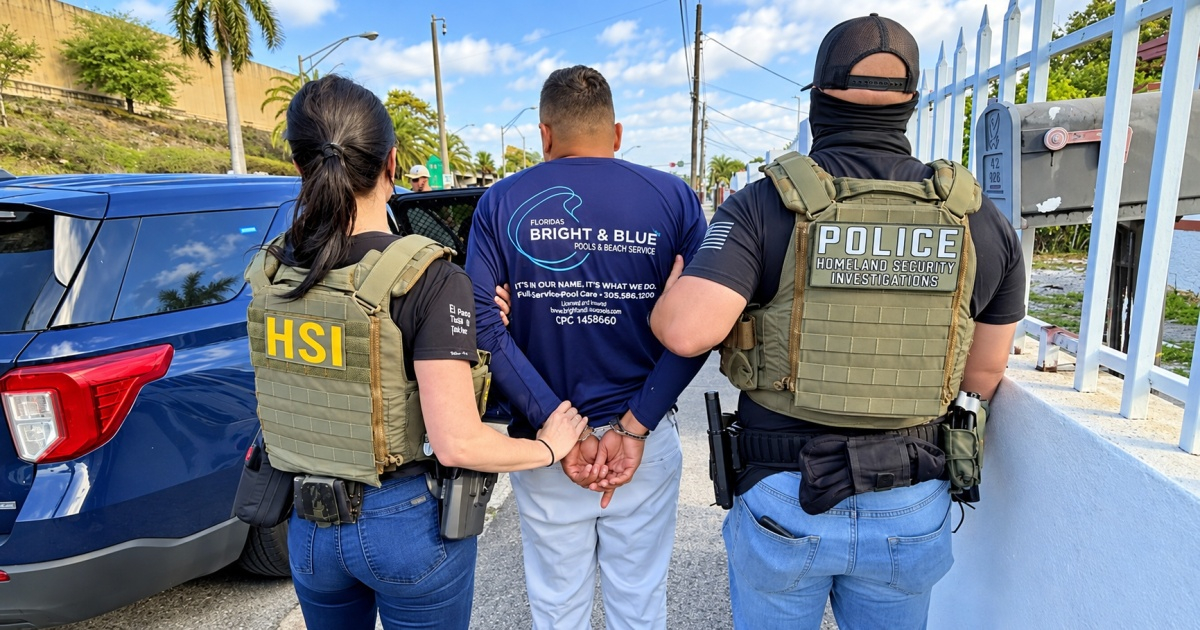
A migration detention can leave a family unsure of where their loved one is, how to communicate with them, or what will happen with their case.
For many Cubans in the United States, especially those with pending immigration matters or an old deportation order, understanding their rights can be critical.
If ICE detains you, you do not lose all your rights upon entering a detention center. You can seek legal assistance, communicate with attorneys, receive medical care, request help from an interpreter when necessary, and consult with a lawyer before signing documents that you do not understand.
This guide explains what you should be informed of when you are arrested, what rights you have during detention, and how your family can assist you. It is specifically aimed at Cubans with parole, I-220A, pending cases, or old deportation orders.
If you're concerned about what to do when agents arrive at your home or workplace, CiberCuba published a step-by-step guide for that moment. Here we explain what happens after the arrest.
You have the right to an attorney, but the government does not pay for it
In immigration procedures, there is generally no right to a government-funded attorney as is the case in certain criminal proceedings.
The Executive Office for Immigration Review (EOIR) oversees immigration courts and explains that you have the right to obtain legal representation at no cost to the government.
That is to say, you can have a lawyer, but you have to find and pay for them yourself, or get free help.
For free assistance, there is the official list of free legal service providers (pro bono), organized by immigration court.
The national ICE manual for detainees states that this list should be available at the facilities and that the officers can provide it to you.
Two important warnings:
- As a general rule, you may be represented in court by an authorized attorney or a certified representative from the Department of Justice, within the limits of their certification. "Notaries," consultants, or unlicensed managers cannot provide this representation, according to the EOIR.
- Tu abogado debe presentar el formulario G-28 para que ICE reconozca formalmente su representación y pueda compartir con él información protegida de tu caso, conforme a las reglas aplicables. Puedes consultar los ICE resources for lawyers.
What should they tell you when they arrest you?
Federal regulation 8 CFR 287.3 establishes various obligations for agents when arresting a person without a warrant and subjecting them to certain formal deportation procedures:
- Inform you of the reason for the arrest.
- Inform you of your right to have legal representation at no cost to the government.
- We will provide you with a list of free legal services.
- Be aware that anything you say can be used against you during the proceedings.
Furthermore, the regulations stipulate that, except in emergencies or extraordinary circumstances, an initial decision must be made within 48 hours following the arrest regarding whether the individual will remain detained or be released on bail or their own recognizance, as well as on the issuance of certain procedural documents. This provision includes exceptions, including the granting of voluntary departure.
The 48-hour deadline does not require ICE to release the detainee nor does it establish a general maximum duration for immigration detention. It also does not mean that all detained individuals are entitled to bail.
These guarantees do not apply in the same way to those who are subject to expedited removal, a procedure that generally allows for the expulsion to be carried out without a standard hearing before an immigration judge, although there are exceptions and review mechanisms.
That's why it's important for a lawyer to determine as soon as possible which procedure is being applied in your case.
Since anything you say can be used against you, it is wise to consult with a lawyer before providing any explanations about your entry into the country, your immigration status, or your background. Never lie or present false documents.
The documents you should not sign without understanding them
One of the most sensitive moments during an arrest occurs when they present you with documents to sign. Some of these may involve waiving a hearing, certain appeals, or the request for immigration benefits.
- Voluntary departure (voluntary departure). El ICE Manual for Detainees advierte que aceptar una salida voluntaria puede afectar la posibilidad de presentar el caso ante un juez. Según el reglamento 8 CFR 1240.26, las condiciones dependen de la etapa del procedimiento. Cuando se concede antes de que concluya el proceso, generalmente exige aceptar determinadas condiciones, retirar solicitudes de alivio migratorio y renunciar a la apelación de las cuestiones correspondientes. La salida voluntaria concedida al finalizar el procedimiento tiene requisitos diferentes. Incumplir el plazo de salida puede generar multas y restricciones de diez años para determinados beneficios migratorios, según las circunstancias y excepciones legales.
- Order of removal stipulated (stipulated removal). Es un acuerdo por escrito mediante el cual, conforme al 8 CFR 1003.25, la persona acepta las acusaciones y su deportabilidad, renuncia a solicitar determinadas formas de alivio y a apelar, y consiente la emisión de una orden de deportación sin una audiencia ordinaria. Si la persona no tiene representación legal, el juez debe comprobar que la renuncia sea voluntaria, consciente e informada.
If you do not understand a document, especially if it is in English, ask for it to be explained to you in Spanish and request to speak with your lawyer before signing it.
For a Cuban with parole, with an I-220A, or with a possible adjustment of status pathway, accepting certain waivers can have serious consequences for their immigration future.
Your rights within the detention center
The national ICE handbook for detainees outlines rights and services that you can request. Their specific implementation also depends on the standards governing each facility.
- Calls to legal services. You should have access to mechanisms for communicating with lawyers and legal assistance providers. There are free calls to certain authorized numbers, and time limits may apply. Legal communications must have confidentiality protections. Ask how to register your lawyer's number to prevent their calls from being monitored.
- Visits from your attorney. ICE standards provide for minimum access hours for legal visits, typically eight hours daily on weekdays and four hours on weekends and holidays. These time slots do not equate to guaranteed individual eight or four hours for each detainee. Family visits are subject to the schedules and rules of each facility.
- Legal library. Detention standards include access to legal materials and time to prepare the case, generally a minimum of five hours per week, with the possibility to request additional time.
- Interpreter and language assistance. You can request help to communicate in Spanish regarding medical matters, detention procedures, and other important issues. The applicable standards include mechanisms for language assistance, although their availability depends on the process and the circumstances. This does not imply that there is a general right to a personal interpreter for any conversation.
- Medical care. The centers must provide the necessary medical care in accordance with applicable standards, including mental health care. You can also request access to your medical records by following the established procedures.
- Report Abuse. You can file complaints regarding detention conditions, mistreatment, or violations of standards without fear of retaliation. You may contact an officer, submit a written complaint, or call ICE's Detention Reporting and Information Line (DRIL): 1-888-351-4024.
If you are prevented from communicating with your lawyer or are unable to access the list of free legal assistance, request to speak with a supervisor at ICE and make a written record of your request. Also inform your lawyer or a legal assistance organization.
How does your family locate you, and how can they follow your case?
Your family can try to find you using the ICE online detainee locator (Online Detainee Locator System). According to the official ICE information, the system operates 24 hours a day, is available in Spanish, and allows searches using the A-number and country of birth, or with the full name, date of birth, and country of birth.
The locator does not show individuals under 18 years old and may take time to reflect information about newly entered individuals.
However, the absence of a detainee in the system may also be due to other circumstances, including a questioned ICE policy in court.
Four legal assistance organizations filed a federal lawsuit against ICE on October 28, 2026 over a policy that, they argue, has excluded individuals detained with final deportation orders from the public locator since September. The organizations assert that this practice also hinders lawyers and family members from obtaining information about their whereabouts and providing them with legal assistance.
The lawsuit, filed in a federal court in Massachusetts, challenges the legality of that policy with arguments based on the Administrative Procedure Act, the First Amendment, and the Freedom of Information Act.
Organizations are requesting that the court annul the measure. CiberCuba reported on the litigation and its possible consequences for family members and lawyers attempting to locate detained individuals.
Therefore, if your relative does not appear in the locator, it does not necessarily mean that they have been released or deported. You can contact the local ICE office or call DRIL, which offers services in Spanish from Monday to Friday, from 8:00 a.m. to 8:00 p.m. Eastern Time. However, these efforts may not provide the location of a person affected by the reported policy. Keep a record of the calls and requests made, and seek legal assistance to try to locate them.
To find out if you have an open case in immigration court and when the hearing is scheduled, the EOIR provides its automated case information system, available online and by phone at 1-800-898-7180.
The system does not display a new hearing date until the court sets it, and notifications and court resolutions are the official references of the procedure.
If the next question is how to get out of detention, in CiberCuba we explain how to request a immigration bond and who can pay it.
How to prepare for a possible ICE detention?
If you have appointments with ICE or an ongoing immigration case, preparing certain information with your family can facilitate the process in the event of detention.
- Record your number A and keep it in a safe place where a trusted person can access it.
- Keep the name and phone number of an immigration lawyer or a free legal assistance organization handy. Try to memorize the number, as you may not have access to your cell phone.
- Keep copies of your documents: I-94, I-220A, USCIS receipts, court notifications, and evidence of your time in the United States.
- Decide who will take care of your children and who can assist you with arrangements and payments if you are detained. Check what legal authorizations would be necessary.
- If you have a final deportation order, inform your lawyer and a trusted person about it. Keep in mind that your location may not appear in the public ICE locator, according to the policy currently being challenged in court.
- Remember this rule: do not sign documents that you do not understand without first consulting a lawyer, especially if they involve accepting deportation or waiving rights.
If you have an I-220A, also review the guide from CiberCuba on what to bring to your appointments with ICE and how to prepare your family.
Aviso legal: este artículo ofrece información general con fines exclusivamente informativos y no constituye asesoría legal. Las leyes y políticas migratorias de Estados Unidos pueden cambiar. Para evaluar tu caso concreto, autorizado o un representante acreditado por el Departamento de Justicia.
Related videos:
Filed under: