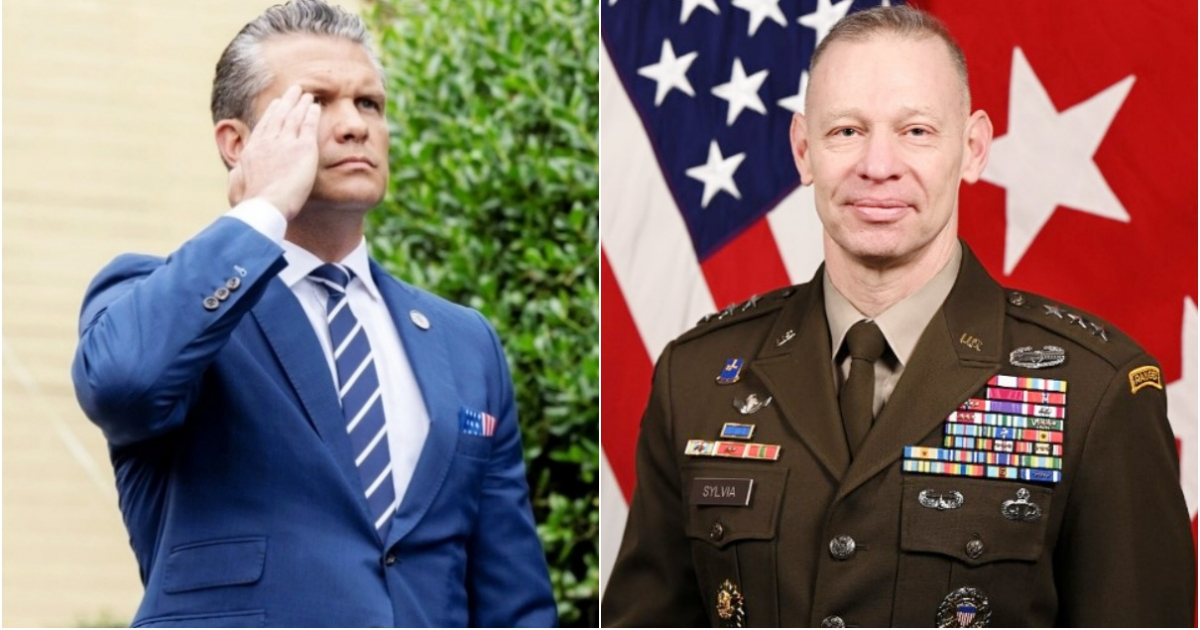
The United States Secretary of War, Pete Hegseth, dismissed Lieutenant General Brett Sylvia from his position as Director of Strategy, Plans, and Policy of the Joint Chiefs of Staff, commonly known as J5, according to sources from the Department of Defense reported to the magazine The Atlantic.
Sylvia's departure occurred without the Pentagon publicly announcing a reason or immediately appointing a replacement.
The decision aligns with U.S. military preparations in anticipation of President Donald Trump potentially ordering new attacks against Iran following the legislative elections on November 3rd.
Accusations of leaking classified information
According to CBS News, a Pentagon official who spoke on condition of anonymity accused Sylvia of leaking classified information related to the war against Iran and the conflict between Russia and Ukraine.
The source assured that the general did not pass three polygraph tests related to alleged leaks to the press and that the case was referred to the Department of Justice.
The network did not present independent evidence to support those accusations. There have also been no public reports of legal charges against Sylvia related to the allegations.
The Pentagon loses a senior military planning official
The J5 division of the Joint Chiefs of Staff plays a fundamental role in the development of military strategies and plans that support the Chairman of the Joint Chiefs of Staff and the civilian authorities responsible for defense decisions.
According to CNN, two U.S. officials indicated that the forces deployed in the Middle East would be ready to commence operations against Iran within 96 hours of receiving a presidential order.
"It will be a great effort," one of those officials stated to the network.
The preparations include the deployment of a third aircraft carrier and thousands of additional troops to the region, as well as discussions with Middle Eastern countries and regional allies about a potential large-scale military campaign and the possible Iranian reprisals.
Trump has promised to "finish the job" in Iran, and last week he left open the possibility of new military actions.
"Maybe we will do another small 'Epic Fury,'" he stated, referring to the Epic Fury Operation on February 28, 2026, which marked the beginning of the conflict eight months ago.
Sylvia is the second person in charge of the J5 section during Hegseth's management
Sylvia is the second general to leave the J5 directorate since Hegseth took over the Department of Defense in January 2025.
His predecessor, Lieutenant General Joseph McGee, was forced to retire in October 2025 after frequently clashing with Hegseth and with the Chairman of the Joint Chiefs of Staff, General Dan Caine, over matters related to Russia, Ukraine, and U.S. military operations in the Caribbean, according to news reports regarding his departure.
Sylvia had been nominated for the position by former Secretary of Defense Lloyd Austin during the final months of the Joe Biden administration. Previously, he commanded the 101st Airborne Division, based at Fort Campbell, Kentucky.
On Wednesday night, his official biography had been removed from the Joint Chiefs of Staff website.
A spokesperson for the organization issued a statement acknowledging their achievements:
"The President of the Joint Chiefs of Staff, the Joint Chiefs of Staff, and the Joint Force express their deepest gratitude to Lieutenant General Brett Sylvia and his family for their 32 years of distinguished service to our nation."
More than twenty high-ranking officials have stepped down from their positions
Sylvia's departure is part of a series of changes in the U.S. military leadership during Hegseth's tenure.
According to reports disseminated by U.S. media, at least 26 generals, admirals, and other senior military officials have been removed, forced to retire, or have left their positions by the end of October. This figure includes various forms of departure, not exclusively dismissals.
Among the most notable cases is General Randy George, who was dismissed as Chief of Staff of the Army in April during the war with Iran.
The resignation of the Secretary of the Army, Dan Driscoll also occurred in September, following months of tensions.
These departures left the Army without a confirmed Chief of Staff or a civil secretary approved by the Senate.
On September 30, Hegseth announced a plan to reduce the approximately 800 positions of generals and admirals at the Pentagon by 20% before January 1, 2027.
"I call it accountability, and it is something that should have been done a long time ago," he stated during an event at the Marine Corps Base in Quantico.
Criticism in Congress over changes in the military leadership
The dismissals and retirements of high-ranking officials have sparked criticism among U.S. lawmakers, some of whom believe that the changes are undermining the accumulated experience in the leadership of the Armed Forces.
The Democratic senator from Arizona and former naval combat pilot, Mark Kelly, questioned Hegseth's decisions:
"He has a deeply rooted resentment against military leadership."
"It is purging a generation of great leaders from the armed forces, and it will take a generation to recover from this," warned Kelly.
Related videos:
Filed under: