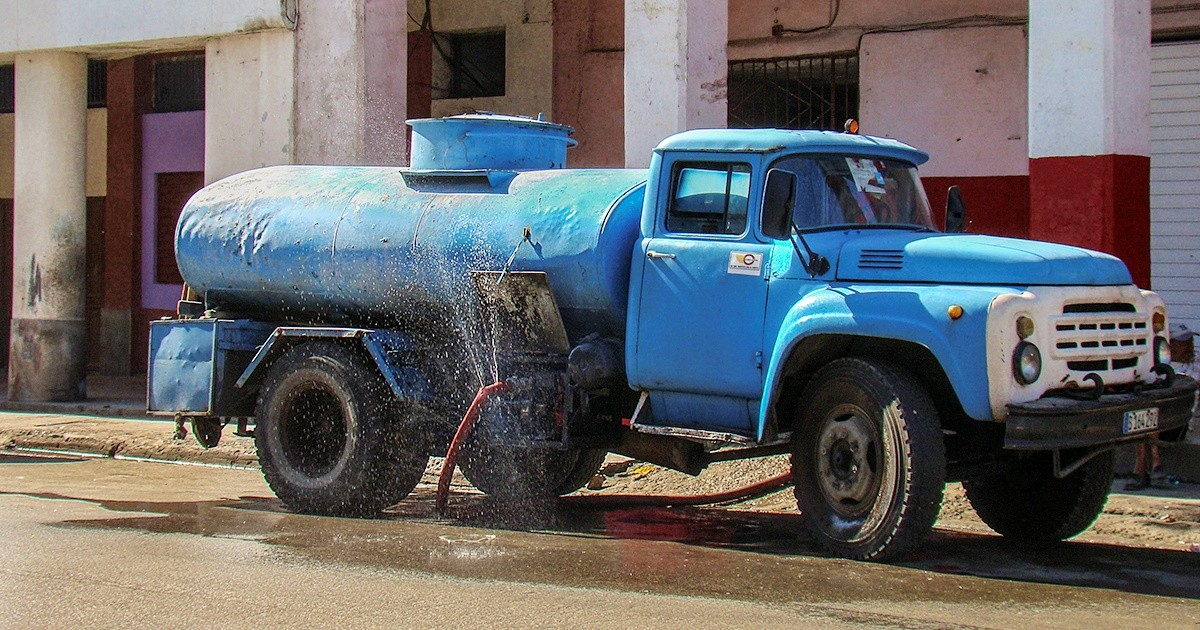
The general director of Aguas de La Habana, Yosvany Rubí Bazail, explained this Thursday the reasons for the recent interruptions in the water supply to the capital: major breakdowns in pipelines such as Cuenca Sur, failures of pumping equipment at several sources awaiting the import of parts and components, and adjustments in electrical lines where generators are being installed.
The statements were made during a check-up visit to the Benigno wells field, south of Cotorro, reported by the official Granma.
This facility, located in the municipality of Cotorro, complements the eastern system of the capital and supplies approximately 58,000 residents of the municipality of San Miguel del Padrón.
Rubí Bazail clarified that the civil infrastructure works in Benigno have been completed, and that a program to eliminate leaks is currently underway, alongside the completion of the pumping equipment.
Regarding energy support, the official detailed that the first phase of the Comprehensive Program involves installing large generators at the pumping stations.
"Now, all the large generators that supply these pumping stations are being installed, and a group of tests is being conducted, which are going well," he stated.
However, he acknowledged that the progress made has not eliminated the problems: "There are still issues remaining due to the energy contingency we are experiencing."
The host of Cuenca Sur, identified as one of the main causes of the recent outages, has a record of failures in 2026.
In August, it suffered a severe breakdown that left six municipalities without water, and on October 22 a failure in 110 kV power lines caused a complete halt in pumping and a new break in two points of the same infrastructure, affecting five central municipalities.
The stated objective of the program is for major supply sources to have their own energy protection, which would allow for the gradual restoration of distribution systems. However, the regime did not provide any specific date for the normalization of the service.
The water crisis in Havana is due to structural causes that have been exacerbated by the deterioration of infrastructure—pipes that have been in use for 60 to 70 years—and the dependence of the pumping system on the national electrical grid, which experiences frequent outages.
According to data from the National Institute of Hydraulic Resources, as of October 29th, more than 2.14 million people in Cuba were experiencing a total or partial disruption of water service through networks, and the lack of electricity along with equipment breakdowns accounted for nearly 88% of the incidents.
The long-term solution includes installing 200 megawatts of photovoltaic solar energy to make the pumping of the National Electroenergetic System independent, but that phase is not expected until the early months of 2027.
During the visit to Benigno, the First Vice Minister Inés María Chapman Waugh, the Minister of Energy and Mines Vicente de la O Levy, the President of the National Institute of Hydraulic Resources Antonio Rodríguez Rodríguez, and the top authorities of the Party and the Government in Havana participated.
Related videos:
Filed under: