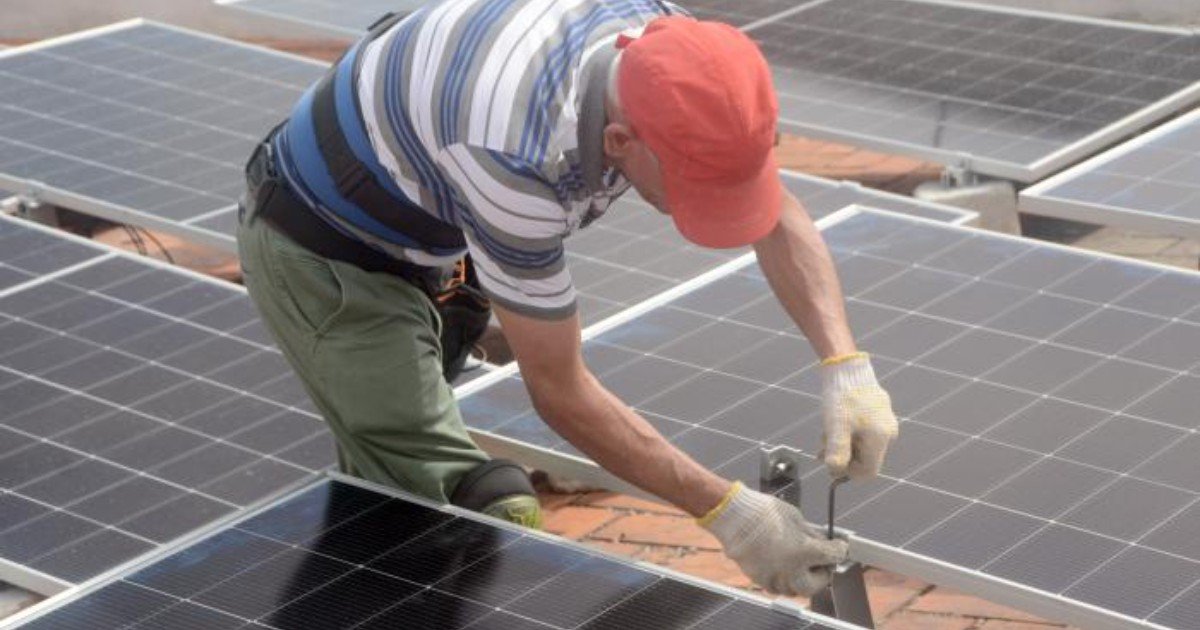
The Cuban government plans to allocate 200 megawatts (MW) of photovoltaic solar generation exclusively for water pumping in Havana, with the aim that during the first months of 2027 this service will no longer depend on the National Electric System (SEN).
According to the official newspaper Granma, the strategy aims to reduce the energy vulnerability of the hydraulic system in the capital, where power outages directly affect the operation of wells, pumping stations, and boosters, causing a severe supply crisis.
While the solar parks planned for next year arrive, the authorities will turn to distributed generation as an immediate solution. The plan includes mobilizing generators to initially support 29 selected supply sources and drivers.
So far, nearly 70 facilities have been inspected to determine what energy alternative each one needs and what infrastructure will be necessary to maintain pumping during SEN interruptions.
Miguel Díaz-Canel explained that this will be the short-term response, while the main focus for 2027 will be on renewable sources.
There would be 200 megawatts from solar parks arriving to be dedicated solely to the water pumping system, stated the leader during the program Criterio Compartido on Radio Rebelde.
The project would also include solar complexes and energy storage systems, with the aim of ensuring that hydraulic installations can continue to operate during power outages or generation deficits.
The commitment to solar pumping is not a recent development. Cuba has been installing photovoltaic systems linked to water supply in various provinces, precisely to reduce fuel consumption and dependence on an increasingly unstable electrical grid.
In Santiago de Cuba, for example, authorities had reported since 2025 on the use of solar pumping to alleviate the water crisis affecting hundreds of thousands of people.
In July of this year, with the inauguration of a solar park with storage, it was recalled that nearly 400,000 residents of the province had faced difficulties with the supply.
The expansion of this technology has also been accompanied by economic incentives. The maintains customs tax exemptions for the importation of photovoltaic solar systems, their components, and photovoltaic pumps, among other equipment related to renewable sources.
But the expansion of solar systems has been accompanied by a growing problem: thefts and vandalism against panels, cables, and batteries, including equipment specifically intended for water pumping.
In September, three individuals were arrested for the theft of 28 solar panels in Los Arabos, Matanzas. The equipment was intended for a water pumping system, and authorities reported recovering 21.
In Holguín, the situation became increasingly violent. In May, four individuals beat, gagged, and tied up the guard of a pumping station to steal the 32 solar panels that powered the facility.
Dos meses después, Four more panels were stolen from a drinking water distribution point in Holguín, afectando el sistema que abastecía a vecinos de los edificios de 18 plantas.
Also in Holguín, the theft of 180 meters of cable left a solar-powered pumping station out of service for over two months, once again highlighting the vulnerability of these facilities to vandalism.
On the other hand, in Las Tunas, repeated thefts have prompted the authorities to try an unusual identification method. In Jobabo, they began to apply an invisible marking chemical gel on solar panels installed in pumping systems.
The substance can subsequently be detected with ultraviolet light and remains adhered to the skin of those who come into contact with treated surfaces, which aims to facilitate the identification of potential perpetrators or handlers of stolen equipment.
Related videos:
Filed under: