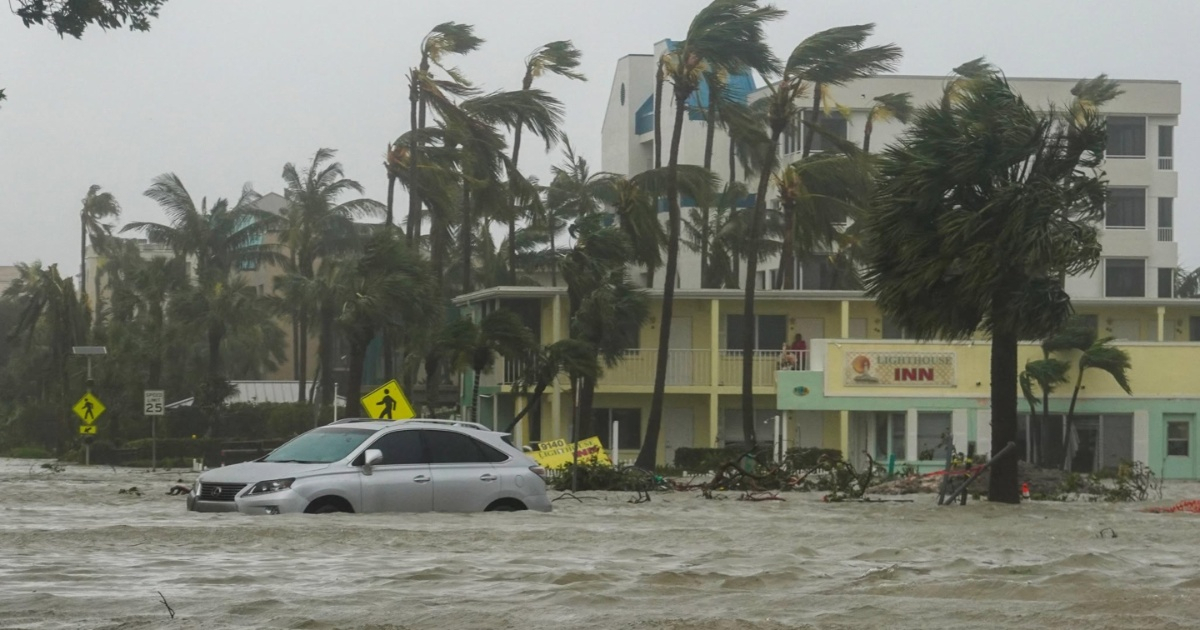
The Federal Emergency Management Agency (FEMA) approved individual assistance this Thursday for residents affected by Hurricane Isaias in eight counties in northwest Florida, according to the official statement from the Florida Division of Emergency Management dated October 29.
The president Donald Trump amended the major disaster declaration DR-4955-FL to include this form of direct assistance to households and individuals, which had remained "under review" and unavailable to the affected individuals until the day prior.
The counties eligible for this assistance are Bay, Escambia, Gulf, Holmes, Okaloosa, Santa Rosa, Walton, and Washington, all located in the Panhandle, the region most affected by the hurricane.
Assistance may include grants for temporary housing and essential home repairs, low-interest loans to cover uninsured property losses, and other recovery programs for families and individuals.
It is important to distinguish that these grants are non-refundable, while loans must be repaid; in both cases, FEMA evaluates each application individually, and program approval does not guarantee assistance to all applicants nor does it establish a fixed amount or deadline.
Those who have suffered losses in the designated counties must first file a claim with their insurance company if they have coverage, and only after that seek federal assistance.
There are three ways to request assistance:
- En línea, a través de DisasterAssistance.gov
- Through the FEMA mobile application
- By phone, calling 1-800-621-3362 (available Monday through Sunday, from 7 a.m. to 10 p.m. in the applicant's time zone)
Those using relay services, such as video relay service (VRS) or captioned telephone service, must provide FEMA with the corresponding number for that service.
Brett H. Howard was appointed Federal Coordinating Officer for recovery operations in the affected areas, and the agency warned that more counties could be added if damage assessments warrant it.
Hurricane Isaías made landfall near Destin on the night of October 9 as a Category 2 storm, with sustained winds of 105 mph (169 km/h). The impact left approximately 448,000 homes and businesses without electricity in Florida, with Santa Rosa reporting 90% of its customers without power.
The governor Ron DeSantis confirmed six fatalities in Florida as a direct or indirect consequence of the hurricane, and the insured losses in the state reached approximately 582 million dollars, with nearly 55,000 claims filed with insurers.
Thursday's approval represents the latest step in the federal response: Trump had signed the major disaster declaration on October 27, but that initial version only included Public Assistance, which reimburses local governments and organizations for infrastructure and emergencies, without directly benefiting households.
Miami-Dade and Broward, where a significant portion of Florida's Cuban community resides, are not included in any of the designations of declaration DR-4955-FL.
The information regarding the disaster declaration that Florida received for Hurricane Isaias should be updated in light of this announcement, as Individual Assistance has already been approved and registration is open for the eight counties in the Panhandle.
Related videos:
Filed under: