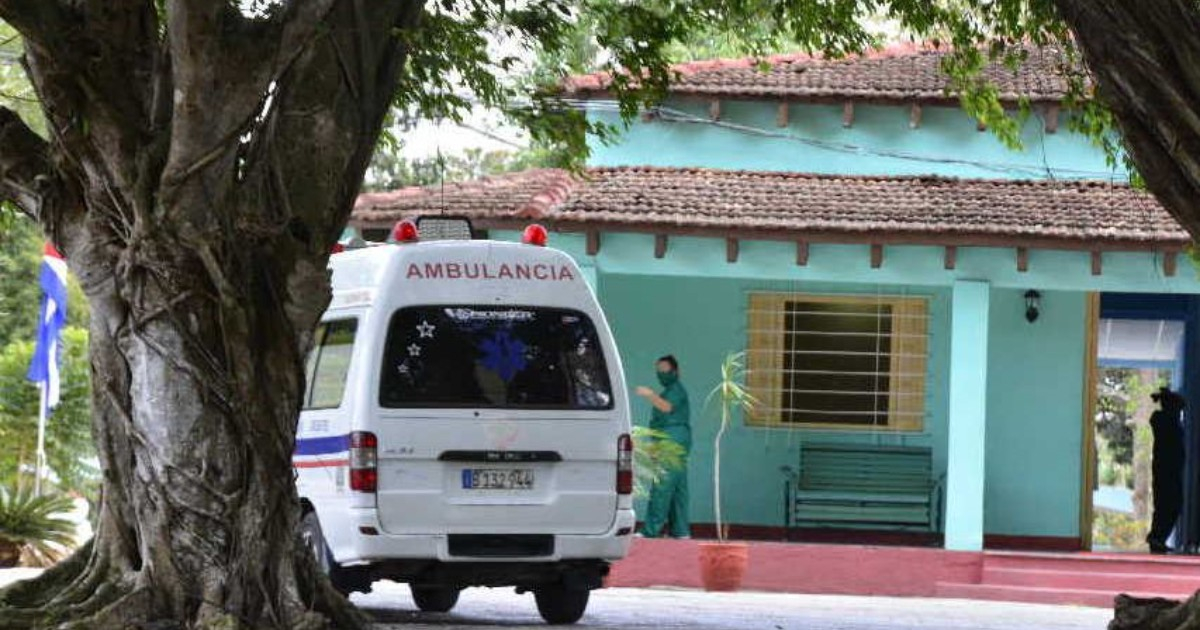
The energy crisis and fuel shortage affecting Cuba are disrupting the income cycle of patients with multiple sclerosis at the Doctor Faustino Pérez Hernández Provincial Rehabilitation Hospital in Sancti Spíritus, the only national referral center for this disease outside of Havana, according to its director in an interview with the newspaper Escambray this Friday.
Dr. Greidys Montano Águila, the director of the hospital in Sancti Spíritus, explained that the lack of fuel makes it difficult to transport patients from various provinces of the country to the center, while the absence of electricity at night compromises the prolonged stay required by treatment protocols.
According to these protocols, the initial admission of a patient with multiple sclerosis lasts six weeks; subsequent readmissions last four weeks and are determined on a case-by-case basis by a multidisciplinary team.
The program has been in operation for 23 years—since 2003, in coordination with the International Center for Neurological Restoration in Havana—and has served more than 300 Cubans throughout its history.
The situation at the hospital reflects a widespread deterioration of the Cuban healthcare system in 2026. Sancti Spíritus has experienced power outages of up to 50 consecutive hours, with generation deficits reaching up to 92 MW at the provincial level, and the collapse of interprovincial transportation directly exacerbates the ability of patients from other regions to reach the center.
Doctor José Alberto Luna, advisor for Rehabilitation Services at the General Directorate of Health, added that the shortage also leads to a lack of replacement parts for ultrasound heads and hydrotherapy equipment filters, which are manufactured by foreign companies that Cuba cannot easily access.
Luna highlighted, however, the work of the Provincial Center for Clinical Engineering and Electromedicine in Sancti Spíritus, whose technicians seek viable solutions so that treatments are not interrupted due to the obsolescence of the equipment.
The pattern of hospitals affected by power outages is repeated across the island. In October, patients in intensive care at the Hospital of Cárdenas were transferred to another facility following an electrical failure, and in Holguín nurses had to manually ventilate newborns with resuscitators during the power cuts.
The licensed psychologist Milvia Consuegra Álvarez, responsible for Teaching and Research at the hospital, emphasized the importance of the program for its participants: "Many arrive with difficulties walking; however, when they leave, they feel better and no longer need the walker."
Consuegra noted that the treatment encompasses not only the cognitive sphere but also motor skills, gait, balance, quality of life, and self-esteem, involving physiatrists, neurologists, nutritionists, speech-language pathologists, psychologists, podiatrists, and physical and occupational therapists.
"The importance of the continuity of a project like this, which advocates for rehabilitative treatment for these patients and has achieved encouraging results over more than two decades," concluded the doctor.
Multiple sclerosis is a chronic, degenerative, and autoimmune inflammatory disease that damages the central nervous system and is the leading cause of neurological disability in young adults. Cuba had 1,235 patients registered with this diagnosis according to data from December 2025, with a higher prevalence in the central provinces.
Related videos:
Filed under: