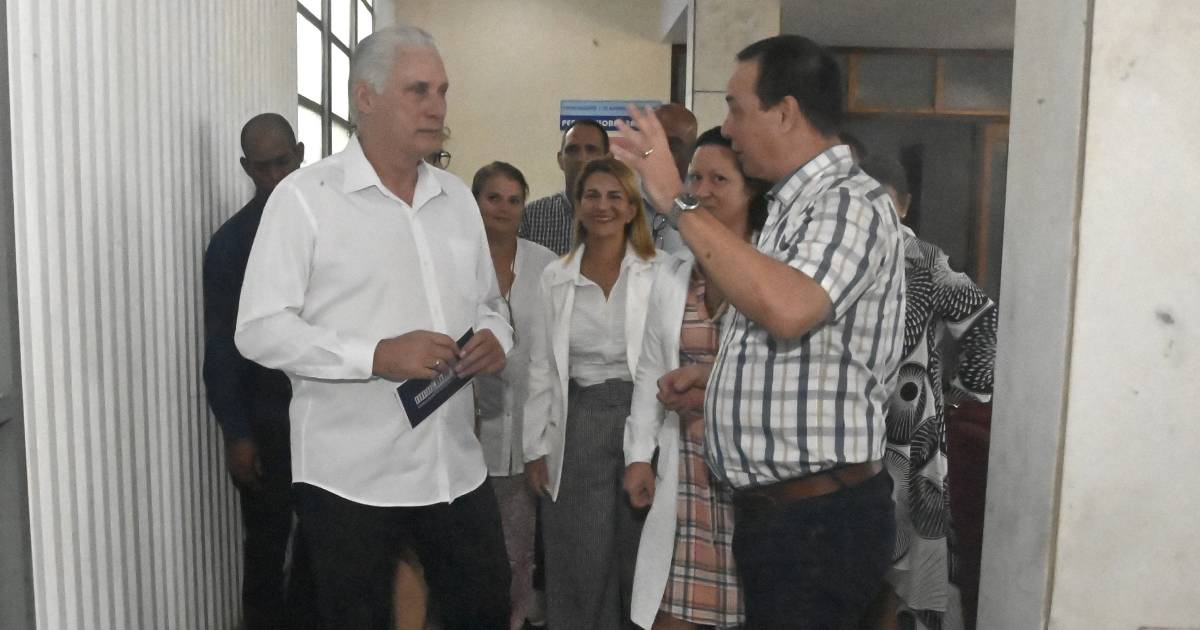
The Cuban leader Miguel Díaz-Canel celebrated on Thursday what he called a "victory" in the recent vote against the U.S. embargo at the United Nations, during a visit to the "William Soler" University Pediatric Hospital in Havana, even though Cuba has just recorded its worst diplomatic outcome in that resolution in three decades.
"You are part of the victory we achieved at the UN, because that respect for the country relates to what you have done in Cuba and in internationalist missions," he stated before doctors, nurses, and other workers at the center, as reported by the Cuban Presidency.
The annual resolution calling for the lifting of the embargo was approved on Wednesday with 130 votes in favor, 17 against, and 25 abstentions, compared to the 165 votes obtained in 2025 and the 187 recorded in 2024.
In just one year, Cuba lost 35 favorable votes, while the votes against increased from seven to 17.
Among the countries that spoke out against the resolution are Colombia, Costa Rica, Ecuador, Morocco, Trinidad and Tobago, and the United Arab Emirates. Several of them changed their previous positions.
Díaz-Canel acknowledges the lack of medications, fuel, and electricity
During his meeting with the healthcare staff, the president also referred to the difficult conditions under which Cuban health professionals work.
"As part of what we did during these difficult times, and how we overcame them, there will always be an important emphasis on everything that the healthcare personnel did, without fuel, without transportation, without medication, without energy," he expressed.
In August, Díaz-Canel himself acknowledged that only 30% of the basic medicine supply was available in Cuba, a situation that directly impacted pharmacies and hospitals.
The Cuban healthcare system was declared "on the brink of collapse" by the Minister of Public Health himself, José Ángel Portal Miranda, in February of this year, and the WHO issued an alert about the health situation on the island in March.
During the visit, the Cuban ruler toured the hospital facilities, including the Virtual Simulation Classroom, the Telemedicine department, and the Surgery Room.
The director of the center, Alena Fontane Valdés, presented several of its specialized programs, including those related to neonatal surgery and pediatric transplants.
Although the Cuban government presents the outcome as a political victory, the is not legally binding and does not imply the lifting of US sanctions.
Related videos:
Filed under: