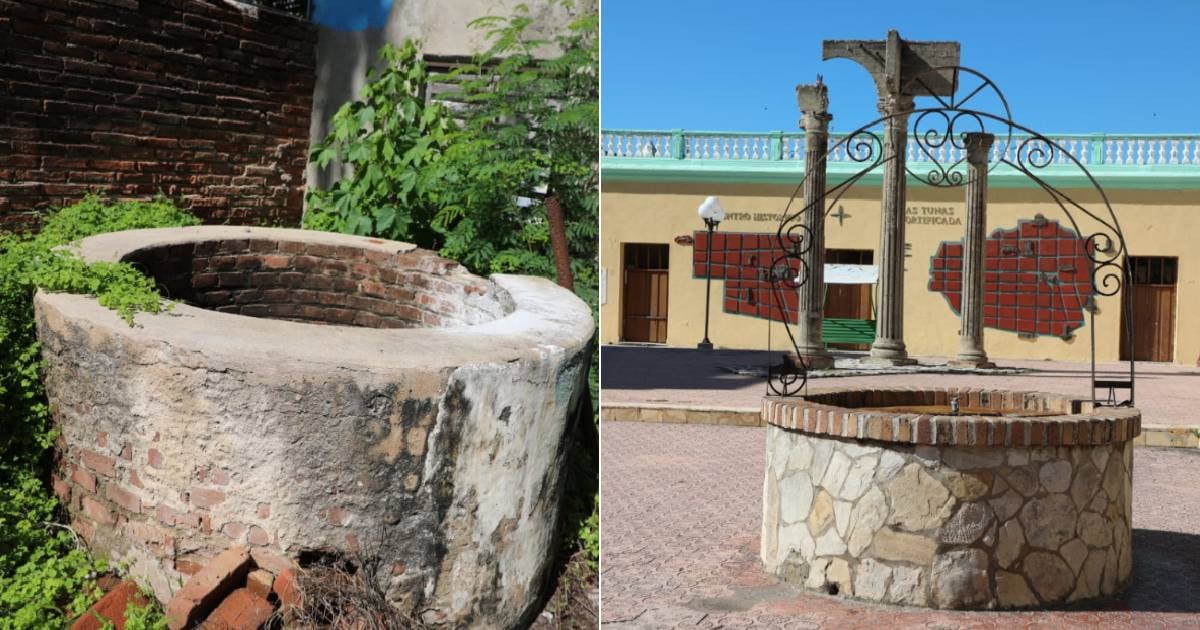
Drilling an artisan well in Las Tunas costs around 20,000 Cuban pesos per meter, while about 5,000 such excavations have been constructed in the province due to difficulties with the water supply service.
The extent of the expenditure is illustrated by the case of a neighbor who has drilled 13 meters without finding water. Each new segment increases the family's spending without guaranteeing eventual access to the resource, reported this Friday by the provincial newspaper 26.
The practice has expanded in recent years. According to sources consulted by the media, the province has around 5,000 artisanal wells, a number that continues to rise due to the difficulties of the supply system.
The sub-delegate of Hydraulic Resources, Erichel Martínez Betancourt, recalled that since 2017, Law 124 on Surface Waters allows for the excavation of wells for domestic use without prior authorization. "No authorization is required for the extraction of groundwater for domestic purposes, or for animal supply for rational self-consumption," he explained.
However, the technical advice from Hydraulic Resources depends on requests from interested parties. Additionally, the laboratories of that entity are not designed to analyze the quality of water from private wells.
Economic and technical problems are compounded by the risk of contamination. The Deputy Delegate for Territorial Planning and Urbanism, Tania Vázquez Góngora, warned that Cuban regulations establish a minimum distance of 15 meters between wells and any pit or sanitary latrine, a distance that is difficult to ensure in urban areas.
"Many of the people who build wells without guidance do not realize that within a block there are several plots and homes, and each of them has a solution for wastewater," he noted.
The dimensions of the land exacerbate the problem. In Las Tunas, the plots measure between 150 and 200 square meters in area, with depths of only 15 to 20 meters, leaving little room to meet the required sanitary distance.
The Provincial Center for Hygiene, Epidemiology, and Microbiology does not have all the necessary resources to evaluate water. The shortage of reagents limits the analyses to physical-chemical tests and part of the bacteriological examination.
Her director, Yumara Acosta García, acknowledged the challenges in managing the increase in requests. "We are reorganizing the collection of samples due to the rise in wells in the area, mainly in the city of Las Tunas," she stated.
In May, the Provincial Government stated that it is "worried" about the uncontrolled drilling of wells due to the water crisis affecting the population.
"Health must examine how potable those waters are. What measurement criteria are in place for the construction of these wells? There must be a study on the water; it cannot be mixed with wastewater," warned at that moment Osbel Lorenzo Rodríguez, first secretary of the Communist Party in the eastern territory.
According to official data, the provincial aqueduct pumps only between 420 and 430 liters per second, compared to the 600 or 700 liters needed to ensure distribution cycles every three days.
In March, the deterioration of the water supply also spurred an informal market for water tankers, with prices reaching up to 7,000 pesos per trip.
In Matanzas, the proliferation of improvised excavations has been linked to outbreaks of hepatitis A. In May, for example, 18 active cases were confirmed in the Versalles neighborhood.
At the beginning of October, authorities acknowledged that about 2.7 million Cubans were facing difficulties with the supply of drinking water in their homes. As the public system fails to ensure the supply, more and more families are forced to seek private solutions and bear their costs and risks.
Related videos:
Filed under: