
Related videos:
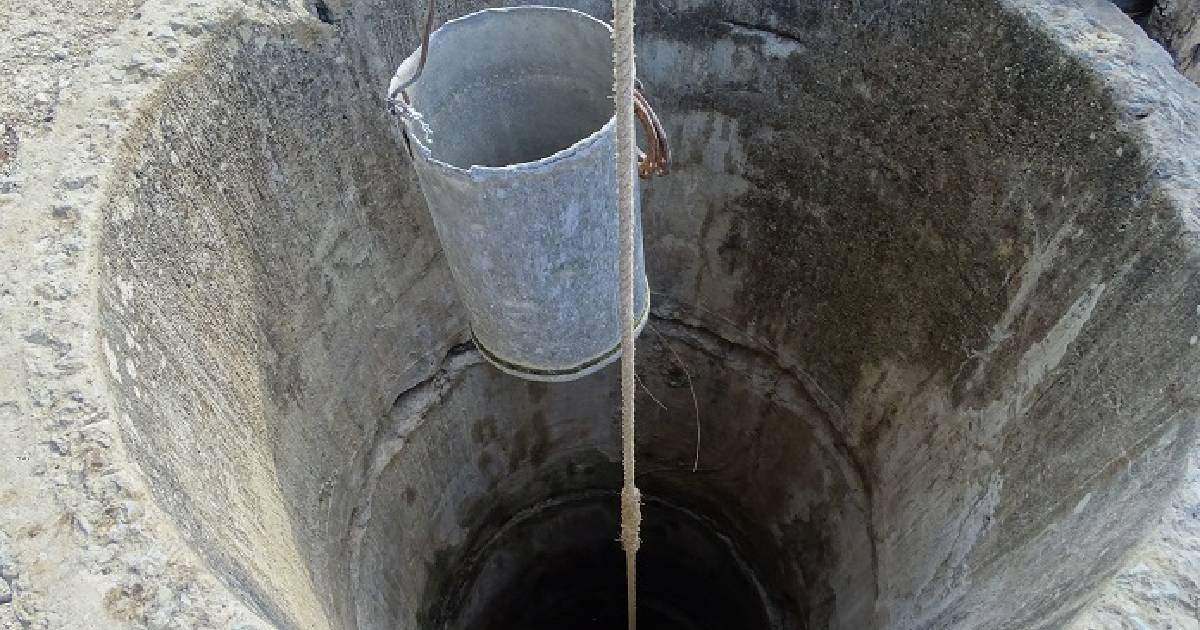
The Provincial Government Council of Las Tunas met this Saturday and openly acknowledged the uncontrolled proliferation of wells drilled by the population due to the chronic water shortage affecting the province, with the municipalities of Jobabo and Manatí being the hardest hit.
The first secretary of the Communist Party in the eastern territory, Osbel Lorenzo Rodríguez, was the most emphatic in addressing the issue and acknowledged that the water crisis in the region "is not something new," highlighted a report from the official newspaper 26.
However, rather than announcing structural solutions, Lorenzo focused his remarks on the risks posed by the wells that citizens are desperately digging to obtain water.
"Health must review how potable that water is. What measurement criteria exist for the implementation of these wells? There should be a study on the water; it cannot be mixed with wastewater," stated the PCC official.
The leader also urged the study of renewable energy sources to optimize pumping hours, although without specifying deadlines or concrete resources to achieve this, the source clarified.
The crisis currently concerning the authorities has deep and well-documented roots. In September 2025, the water distribution cycles were extended to 10 days per circuit, affecting more than 90,000 people.
In November 2025, despite the reservoirs being at 96% capacity after Hurricane Melissa, households were still without water because the pumps at the water treatment plant were malfunctioning.
The aqueduct system barely pumps between 420 and 430 liters per second, well below the 600-700 liters needed to ensure a stable distribution cycle every three days.
In March, the collapse of the aqueduct sparked the informal water truck market with prices reaching up to 7,000 pesos per trip, equivalent to more than three minimum wages.
The drilling of wells without technical or sanitary control is a desperate response occurring throughout Cuba in the face of the collapse of supply systems, a direct consequence of decades of disinvestment and poor management by the regime.
In Matanzas, this same phenomenon led to outbreaks of hepatitis A this year, after residents dug more than 40 improvised wells in sidewalks and yards due to the lack of water.
In the Government Council session, the labor situation in the province was also discussed, with 905 people detached from the job market and over 4,000 available jobs that citizens are rejecting, acknowledged the director of Labor and Social Security, Yicel Sosa Valdivia.
Governor Yelenys Tornet urged the integration of community productive forms into services and emphasized the importance of ensuring sanitary and hygiene measures as summer approaches, without presenting a concrete plan to address the water shortage issue that has persisted for years.
Filed under: