
Related videos:
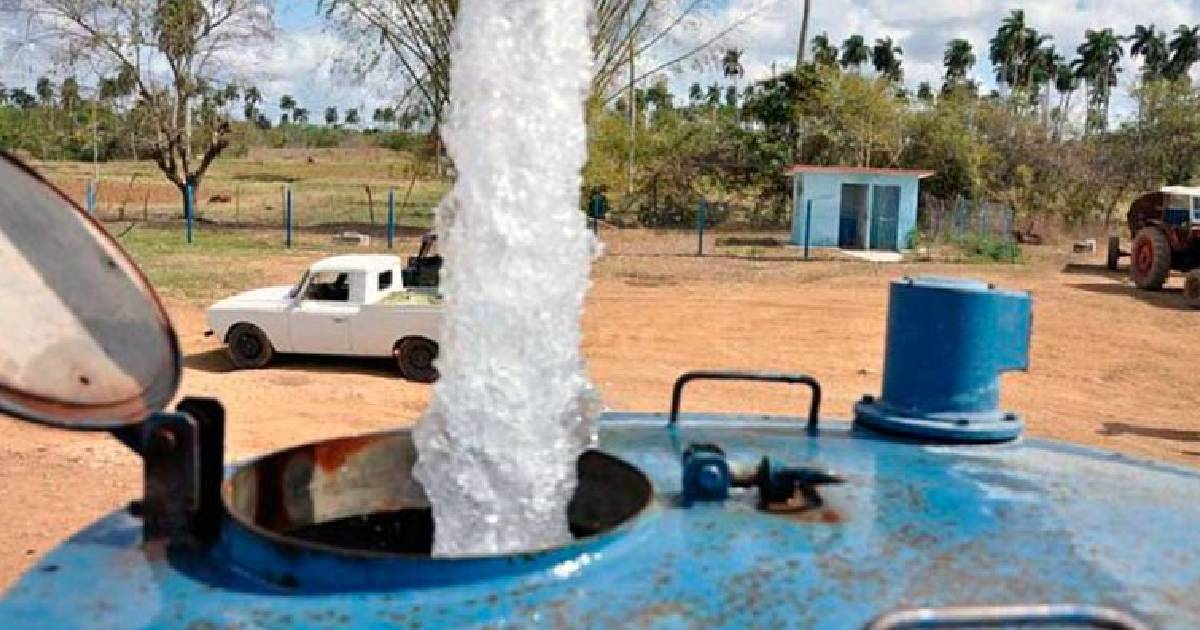
The collapse of the water supply system in Las Tunas has triggered the informal market for water trucks, whose prices can reach 7,000 pesos per trip, while authorities acknowledge serious technical failures, losses, and pumping deficits.
The rising cost of water supply through tankers has become one of the most visible consequences of the supply crisis facing the eastern province, reported this Friday by the official newspaper 26.
According to authorities from the water supply system, residents have reported prices of up to 7,000 pesos for a delivery, equivalent to more than three minimum wages (2,100 pesos).
In response to these complaints, the municipal director of Water Supply and Sewage in the capital city, David Legrá, explained that the loading stations controlled by the company no longer allow unauthorized tractors to be supplied.
According to the official, only tankers belonging to the state system or formally associated with authorized entities are allowed to operate.
Despite these controls, the high cost of the service reflects the increasing pressure on the supply, in a context where many communities rely on this alternative mechanism to obtain water.
Structural deficit
The provincial aqueduct system is currently facing a structural deficit. The city of Las Tunas needs between 600 and 700 liters per second to maintain a stable distribution cycle every three days, but the system barely manages to pump between 420 and 430 liters per second.
One of the main supply points, the Rincón station, has a capacity of 500 liters per second, although it currently only contributes about 375 liters with three pumps in operation. A fourth pump is under repair after being damaged during a cyclone.
In Piedra Hueca, which is supposed to provide 110 liters per second, the pumping has decreased to about 50 liters due to the breakdown of a pump sent for repair. A similar situation occurs in the Callejo system, where several leaks and illegal manipulations have also been detected.
The reduction in available volume explains why many peripheral areas of the city do not receive water regularly.
Located at the end of the distribution circuits, these neighborhoods depend on the pressure generated by the entire system, which is currently insufficient.
Authorities also acknowledge significant water losses throughout the network. In the pipeline connecting Río Ramírez to the town of Omaja, for example, there are several large leaks that cause only between 12 and 15 liters per second to reach the plant, instead of the 28 liters that should arrive.
These losses are compounded by illegal diversions of water for agriculture, rice cultivation, and livestock farming, a practice that, according to the authorities themselves, worsens the supply crisis.
Similar problems are reported in Jobabo, where the illegal manipulation of system valves has damaged a pipeline installed in 2018 and facilitates the unauthorized extraction of water.
The province has 206 pumping stations for water supply, although several are out of service due to breakdowns or lack of resources, as explained by the provincial director of Aqueduct and Sewerage, Oscar Carralero.
One of the most complex scenarios is found in the municipality of Puerto Padre. There, the pumping station at the stadium was out of operation for about 15 days after a pump broke down, and the transport to the only specialized workshop, located in San José de las Lajas, Mayabeque, was complicated due to a fuel shortage.
In that same area, the La Trocha pumping system has been operating for a week with an alternative team, which has provided some stability, although it has not fully met the demand.
Impact of the energy crisis
The instability of the electrical supply also affects the operation of the system. Authorities maintain daily coordination with the Electric Union to protect strategic circuits, but power outages continue to impact pumping.
Las Tunas has become a national reference in the use of photovoltaic systems for water supply. Currently, there are 142 stations equipped with solar panels, although 19 remain inactive due to various technical reasons.
Despite the investments made in recent years, including the delivery of 12 additional pumps, authorities acknowledge that the water crisis in the province is not only a technical or energy-related issue but also a social one.
“There are places where water reaches and is wasted,” Legra warned, pointing out that waste and illegal activities in the network also contribute to many communities remaining without regular access to the service.
Filed under: