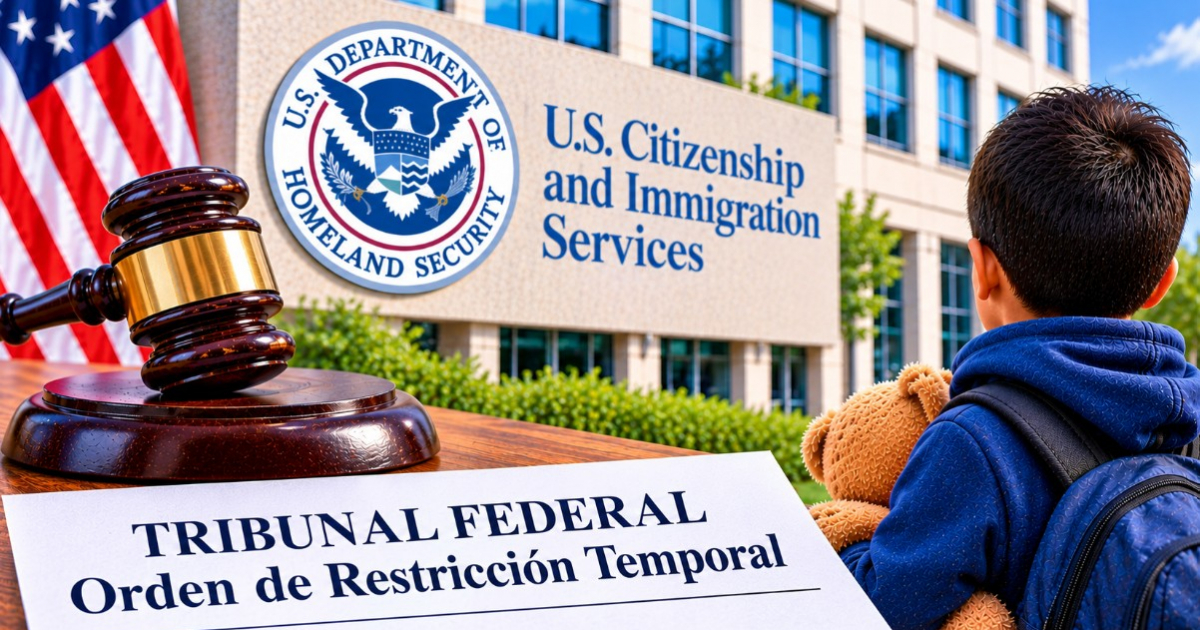
A federal judge suspended USCIS policies that, since September 2026, had notified unaccompanied minors of asylum interviews with just hours' notice and required "exceptional circumstances" to reschedule them.
The temporary restraining order, issued on October 30 at 12:00 PM by Judge Brendan A. Hurson of the Maryland District Court, has nationwide effect and requires the agency to reinstate the prior notice of at least 21 days before each interview.
The resolution, identified as Doc. 54 in the case The Door et al. v. Edlow et al. (Civil No. 26-4326-BAH), responds to a lawsuit filed in October by six legal aid organizations: The Door, Amica Center for Immigrant Rights, Florence Immigrant and Refugee Rights Project, Galveston-Houston Immigrant Representation Project, Immigrant Defenders Law Center, and Jewish Family and Community Services Pittsburgh.
The organizations documented that, starting in September 2026, USCIS began notifying appointments with "few days' notice — and in some cases less than 24 hours —" whereas the previous policy guaranteed at least three weeks.
Preparing a minor for their asylum interview may require between 10 and 30 hours of work per client, according to the records, and involves gathering evidence, analyzing complex legal issues, and assisting the child in recounting traumatic experiences.
Este fallo es parte de un panorama migratorio en constante cambio. Sigue todas las novedades sobre procesos de asilo, USCIS y derechos de los inmigrantes en nuestra sección de
Judge Hurson also suspended the policy announced by USCIS on August 21, 2026, which only allowed the rescheduling of an interview by attesting to "exceptional circumstances."
The organizations documented cases in which the agency denied requests for rescheduling even when the minor's attorney had two simultaneous commitments in different locations, or when they had been involved in a traffic accident.
The order imposes two specific obligations on USCIS. First, to generate written notice at least 21 days before each scheduled interview and promptly send it to the applicant and their legal representative. Second, to reinstate the previous policy that allowed the appointment to be rescheduled automatically once and a second time for "good cause," taking into account the availability of the attorney, scheduling conflicts, the need to gather evidence, and the minor's ability to attend.
The government has 48 hours from the order to submit a compliance report. The measure expires on November 13, 2026, at 12:00 PM, unless the court decides otherwise.
The order has national effect because it was issued as a suspension under Section 705 of the Administrative Procedure Act, a mechanism that is not limited to the parties involved in the litigation. The judge noted that the government did not contest this scope in its response.
The resolution applies to any minor who meets the legal definition of "unaccompanied minor" established in 6 U.S.C. § 279(g)(2): a person under the age of 18, without legal immigration status in the United States, and without a parent or legal guardian available in the country to take physical custody. This may include who meet those conditions, although the litigation does not identify specific Cuban cases.
Judge Hurson was emphatic in assessing the public interest: "It is difficult to argue that society has a stake in perpetuating a chaotic system that could lead to vulnerable children being erroneously expelled to places where they might suffer abuse or even death."
Related videos:
Filed under: