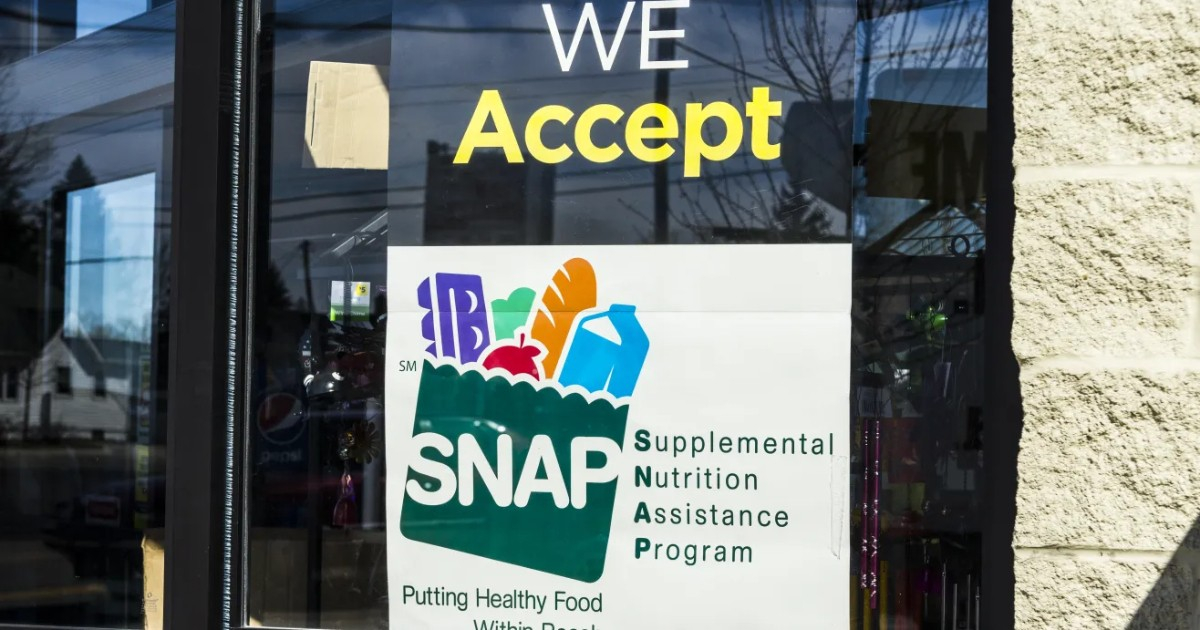
The United States Department of Justice and the inspector general of the Department of Agriculture (USDA) have designated South Florida as the first national pilot site for the HEAT (Hunger Assistance Enforcement and Accountability Teams) initiative, a program for interagency coordination created to investigate and criminally prosecute fraud against federal food assistance programs.
The official launch took place this Friday in Miami, where federal prosecutor Jason A. Reding Quiñones of the Southern District of Florida and the USDA inspector general, John Walk, led a roundtable with representatives from over 17 federal, state, and local agencies.
The choice of South Florida as a starting point was not coincidental: authorities cited its large and diverse population, its extensive network of retail businesses, and its international connections as factors that facilitate sophisticated fraud schemes.
HEAT targets specific forms of abuse: electronic theft of benefits through EBT cards, trafficking of SNAP benefits, fraud in authorized retailers, identity theft, and cyber methods.
"Federal food assistance programs are a lifeline for families in need, not a source of profit for scammers and criminal organizations," stated Reding Quiñones. "Our message is simple: if you exploit programs designed to feed Americans in need, expect to face federal justice."
For its part, Walk warned that criminal organizations are increasingly resorting to sophisticated methods to divert funds from SNAP and the Child and Adult Care Food Program (CACFP). "We seek to work together on investigations and the criminal prosecution of these crimes against the neediest Americans," he stated.
On the same day as the announcement, the prosecutor's office brought charges against Al Amin, 52 years old, owner of the Kwik Stop 72 store in Hollywood, accused of a SNAP fraud scheme exceeding $500,000 between October 2023 and March 2026.
According to court documents, Amin was buying EBT cards from beneficiaries for about half of their value and using the funds to purchase merchandise in bulk. During an undercover operation, an investigator handed over cards with nearly $64,388 in benefits and received $29,474 in cash in return. Amin is facing up to five years for the charge of SNAP fraud and up to twenty for conspiracy to commit electronic fraud.
The case adds to a series of recent investigations in the region. Last July, a federal grand jury charged four men with embezzling over 19 million dollars from the SNAP program between 2019 and 2026 through businesses in Miami-Dade and Broward.
And on Friday, a day before the release of HEAT, Anwar Jouda, 51, was arrested, accused of diverting nearly $862,000 through identity theft and fraudulent business applications related to a SNAP business in Miami.
It is important to emphasize that HEAT is a distinct framework from the Operation Heat Check executed by the Secret Service in August, which was a one-time inspection operation of establishments. On that occasion, 13 card cloning devices were confiscated in 378 establishments in South Florida, preventing estimated losses of 13.5 million dollars.
Authorities clarified that the HEAT initiative does not involve any changes to the eligibility of SNAP beneficiaries, nor to payment dates or the obligations of those receiving food assistance. Its aim is to target those who exploit the programs, not the families who rely on them.
A concerning fact that directly impacts beneficiaries: starting December 20, 2024, stolen SNAP funds due to card cloning will no longer be federally replaceable, making the protection of EBT cards an urgent priority for the most vulnerable families.
Related videos:
Filed under: