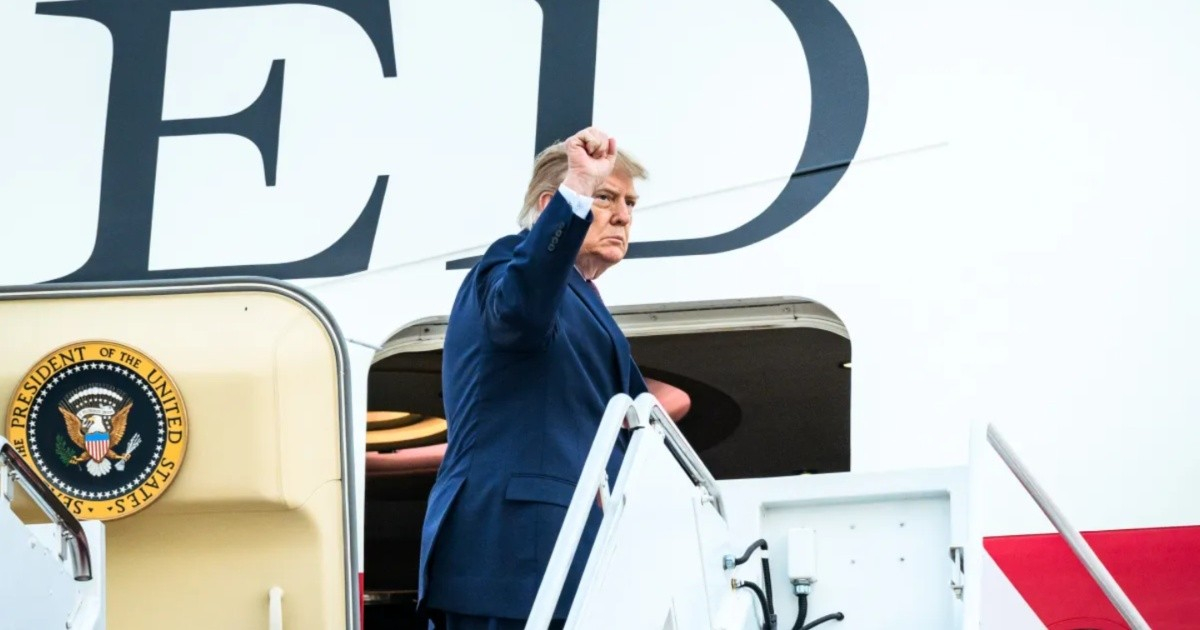
Donald Trump warned this Sunday that he will resort to presidential vetoes en masse if the Democrats regain control of Congress in the midterm elections on Tuesday, a strategy that the president described with a straightforward phrase: “I guess I will become 'Mr. Veto'.”
He made the statement in an interview with Fox News, where Trump detailed how he would act in a Congress controlled by the opposition: systematically blocking all Democratic legislative initiatives for one or two months to force negotiations.
"It wouldn’t be the first time. You have a president who doesn’t have the House of Representatives or the Senate; they send proposals, he vetoes them, and finally, after a month or two of vetoing everything, they come around and close a deal," argued the president.
Despite outlining that scenario of confrontation, Trump expressed confidence that the Republicans will retain control of both chambers after Tuesday's elections, which would make resorting to that tactic unnecessary.
The polls for the legislative elections show a challenging landscape for the Republicans. The RealClearPolitics average places the Democrats at 51.1% compared to 42.8% in voter intention for the House of Representatives, while the Cook Political Report projects that the opposition could secure between 227 and 240 seats, surpassing the 218 needed for the majority. Decision Desk HQ estimates an 80% probability that the Democrats will take control of the House.
The Senate presents a tighter contest, although still unfavorable for Trump's party. The same firm projects 51 Democratic seats compared to 49 Republican, with a 60% probability that the opposition will retain control of the Upper Chamber. Polymarket raises that probability to 71%.
The political context further complicates the president's position. His approval rating has fallen to 32% according to Reuters/Ipsos and 33% according to ABC News/Washington Post/Ipsos, both historical lows. Only 17% of Americans approve of his handling of the cost of living, the main issue for voters, exacerbated by the war with Iran—started in February 2026—and by gasoline prices, which have exceeded 4 dollars per gallon. 69% of citizens believe that this conflict has not been worth it.
To try to reverse that outlook, Trump wrapped up a marathon campaign of 28 events in 31 days with two rallies in Iowa and Kansas, states he won by double digits in 2024 but where Republican support has declined.
In Iowa, the tight Senate races include the contest between Republican Ashley Hinson and Democrat Josh Turek, with both candidates within the margin of error in the latest polls.
In Kansas, Republican Senator Roger Marshall is running for reelection against Methodist pastor Adam Hamilton. A loss for Marshall would be particularly painful: Kansas has not elected a Democratic senator in 94 years.
If the Democrats win Congress, the presidential veto would be the main constitutional tool left for Trump to halt the opposing legislative agenda. Overriding a veto requires two-thirds of votes in both chambers—290 in the House and 67 in the Senate—a threshold that the Democrats would hardly reach on their own. The rally in Salina, Kansas, will mark the end of the campaign and will be the last one in which Trump, who is legally barred from running for reelection, has his own political future directly at stake.
Related videos:
Filed under: