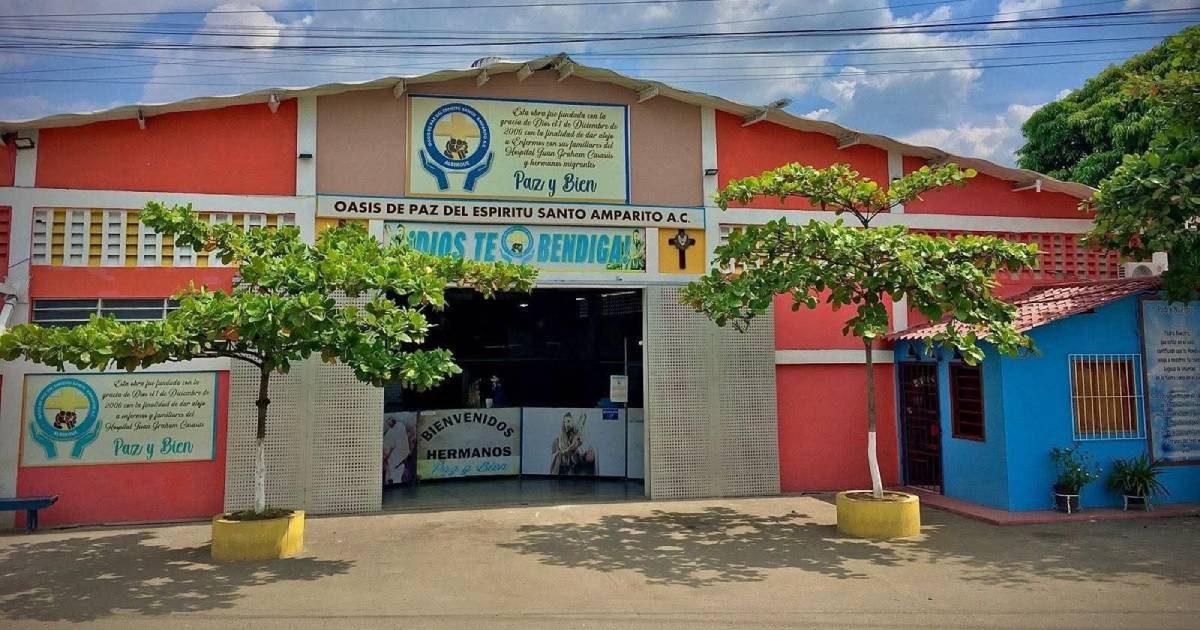
About 40 elderly Cuban adults, many of whom were deported from the United States and are facing health issues, will have to leave the shelter where they are currently staying in Villahermosa, Tabasco, before January 1, 2027, because the institution no longer has the necessary resources to continue caring for them.
In light of this situation, the System for the Integral Development of the Family (DIF) of Tabasco, in coordination with the National DIF, has begun efforts to move them to a specialized center in Mexico City, although it has not yet been confirmed when their relocation will take place.
The coordinator of the DIF in Tabasco, Víctor de Dios Gómez, explained that the authorities are working to find a solution that ensures care for migrants, especially those suffering from chronic illnesses.
"We are looking for ways to address the issue of elderly Cubans, and our plan is to send them to Mexico City to a special center that has been designed for them. We are already coordinating with the National DIF," the official stated to the Diario de Tabasco.
Without resources to continue serving Cubans
The Amparito shelter, officially named Oasis de Paz del Espíritu Santo, announced that as of January 1, 2027, it will stop receiving and assisting migrants, focusing exclusively on the families of patients at the Dr. Juan Graham Casasús Regional High Specialty Hospital.
The institution, which has been operating since 2006 and relies on donations, began receiving Cuban migrants deported from the United States, many of whom are elderly individuals without close family or resources to support themselves.
According to a report by 14ymedio, since last year the shelter has assisted around 200 Cubans, many of whom were expelled during the Donald Trump administration.
However, the increase in care needs has surpassed their economic and operational capacity.
The sub-coordinator of the shelter, Josué Martínez Leal, explained that among those seeking refuge are individuals who are no longer of working age, lack support networks, and suffer from chronic illnesses.
"The shelter, as such, no longer has a specialized medical area, nursing services, or social work," he warned.
The shelter administration assures that it had communicated the situation to the authorities since May, due to the inability to continue providing adequate care for the most vulnerable migrants.
The lack of documents complicates their transfer
One of the main obstacles to relocating Cubans is their immigration status.
Dios Gómez confirmed that several individuals lack official Mexican documents, which complicates the administrative procedures necessary to ensure their care and transfer.
The authorities established coordination with the Ministry of Health and IMSS-Bienestar to facilitate access to medical services, regardless of their documentation status.
“Amparito shelter can no longer support these individuals and has initially been providing food,” explained the DIF coordinator to 14ymedio.
According to information published by Ahora Tabasco, the immigration regularization process could take between eight months to a year, a timeline that presents challenges given the planned suspension of shelter services in January.
The authorities are holding a working group with government and migration agencies to seek an alternative.
In December 2025, a report on deported Cubans surviving undocumented in Mexico documented the vulnerable conditions faced by migrants who had been sent to Villahermosa.
For now, no definitive date has been reported for the relocation, nor what will happen if the immigration procedures are not completed before the shelter stops providing assistance.
Related videos:
Filed under: