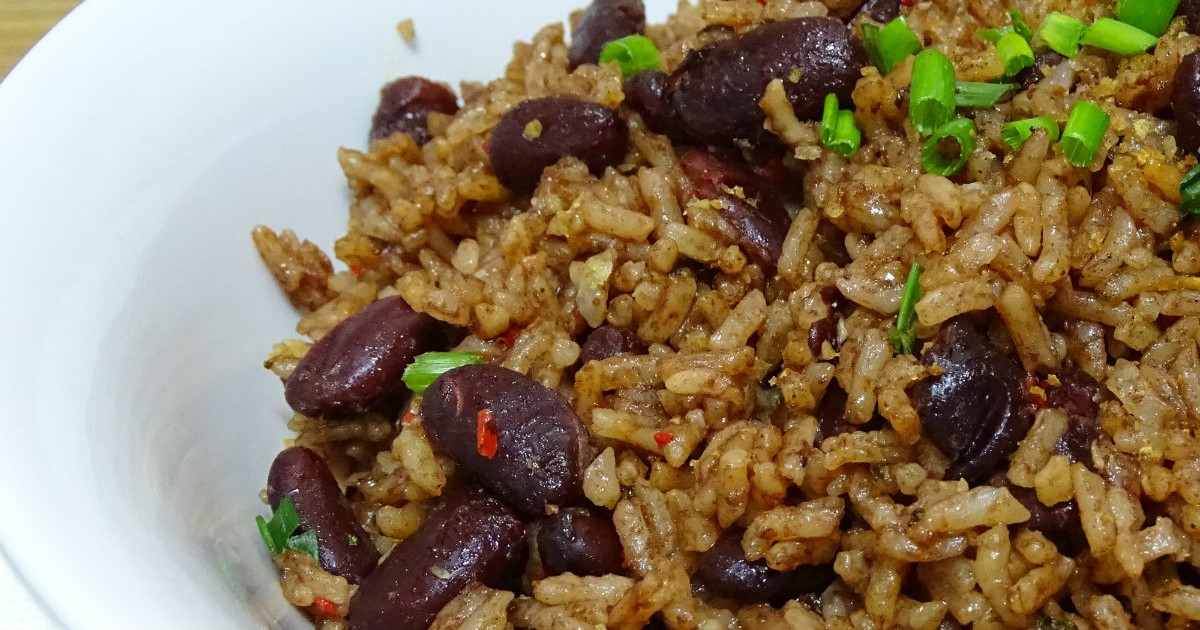
To prepare Cuban congrí with loose grains, the simplest option to find in a supermarket in the United States is conventional long grain white rice, labeled as long grain white rice. You can also cook it with jasmine rice or parboiled rice, but they do not behave the same: the former tends to be softer, while the latter remains firmer.
The difference matters when cooking rice with beans and their broth. If you switch varieties without checking the package instructions, you might end up with a congrí that is too wet, mushy, or with the center of the grain still hard.
Which rice should I buy to ensure the congrí is fluffy?
Long grain white rice (Arroz blanco de grano largo). It is the first choice when seeking a fluffy texture and a flavor that does not compete with the sofrito. The American association USA Rice explains that its grains typically remain light and separated after cooking. Look for the conventional presentation; if the bag also mentions jasmine, parboiled, or instant, it is a different variety or processing.
Jasmine rice (arroz jazmín). It is also long-grain but is aromatic and tends to be softer, moister, and more likely to clump together. It can be used to make congrí if you prefer that texture, although it's important to monitor the liquid and avoid stirring it while cooking. There's no need to discard it just because it's jasmine; you simply shouldn't expect precisely the same result as with conventional long-grain white rice.
Parboiled rice (parboiled rice or converted rice). It has undergone a treatment with water and steam before being milled. Once cooked, its grains tend to remain separate and firmer than those of regular white rice. It can be a good alternative when you prefer a congrí that is more resistant to softening, but it usually requires adjustments in liquid and cooking time. It is not the same as instant rice.
How to recognize packages in the United States
For a classic preparation, look for long grain white rice. If you prefer an aromatic rice, the term jasmine will help you identify it. For the variety that has been treated with steam, look for parboiled or converted. Instant, quick cooking, or ready to heat rice has already been precooked or prepared for quick heating and should not be substituted without adjustments in a recipe designed for raw rice.
The brown rice maintains more layers of the grain and typically requires a longer cooking time. Medium grain or short grain tends to be more cohesive, so it wouldn't be my first choice if you're looking for well-separated congrí. None of these labels alone identifies an essential brand: the type of rice and its cooking method are more important.
How much water or bean broth is needed?
In a congrí, water is completely or partially replaced by the broth in which the beans were cooked. Therefore, the broth counts as cooking liquid: it is not added separately from all the water indicated in a white rice recipe. If you use pre-cooked beans, reserve their broth, measure it, and keep in mind the moisture contributed by the other ingredients.
As a guideline for cooking rice alone, USA Rice provides an approximate ratio of two parts liquid to one part long-grain white rice and two and a quarter parts for parboiled rice. These are not universal quantities for congrí: the bean broth, the pot, the heat, and the recipe all influence the outcome. Follow the reference on the package and adjust it to the preparation you are making, rather than automatically copying the measurements from another variety.
The starts with softened red beans, makes use of their broth, and recommends using long-grain rice. For the black bean version, you can check the . In both cases, ensure that the reserved broth is not too thick, making it difficult to gauge the final moisture.
How to cook congrí in a pot without it sticking
First, cook the beans until they are tender but not mushy; separate the beans and reserve some of the broth. Prepare a sauté with garlic, onion, pepper, and the spices from your recipe. Add the uncooked rice and briefly mix it with the sauté before incorporating the cooked beans and the measured liquid.
When the contents come to a boil, lower the heat and cover the pot. Avoid lifting the lid constantly and do not stir the rice throughout the cooking process: the movement encourages the release of starch and can make it sticky. USA Rice also advises keeping the lid on and fluffing the grains with a fork once finished.
Cooking times vary depending on the type of rice. The USA Rice guide indicates approximately 15 to 18 minutes for basic cooking of long-grain white rice, while parboiled rice may require more time. When preparing congrí, you should check the actual doneness and follow the instructions on the package, as those times are not a guarantee for every pot or any quantity of beans.
Can you make congrí in a rice cooker?
Yes, as long as the rice cooker accommodates the ingredients and quantities you are going to use. Cook the beans first and prepare the sofrito separately if the appliance does not have that function. Then, add the rice, beans, sofrito, and measured broth to the pot, adhering to the manufacturer's capacity and instructions for the type of rice chosen.
The water scale of some rice cookers is designed for rice and water, not for a mixture with beans and oil. It's advisable to use the same measuring cup, check the maximum capacity, and not to assume that the line for white rice also applies to parboiled or brown rice.
Errors that cause the congrí to be mushy or hard
Too much liquid. If the broth is plentiful, especially with jasmine, the grains may become overly soft. Measure all the liquid from the beginning, including the bean broth; don't add extra just because you are making congrí.
Avoid constantly removing or uncovering the pot. The rice releases starch when stirred, and when you lift the lid, it loses steam. Once the ingredients are evenly distributed, allow it to finish cooking on low heat. Then, let it rest for a few minutes and fluff it with a fork.
The rice is hard in the center. It may lack liquid or time. If the broth has already been absorbed, add a small amount of hot liquid, cover, and continue cooking over low heat until the grains are tender; do not add a large amount of water all at once.
Wash without looking at the packaging. In the United States, it is common to find enriched white rice (enriched). USA Rice warns that rinsing it may wash away some of the added nutrients; follow the instructions on the bag before rinsing it repeatedly.
If you're going to buy rice for your first congrí in the United States, start with a bag of conventional long grain white rice. Once you master the broth and the cooking point, try jasmine if you prefer a softer grain, or parboiled if you're looking for a firmer one.
Related videos:
Filed under: