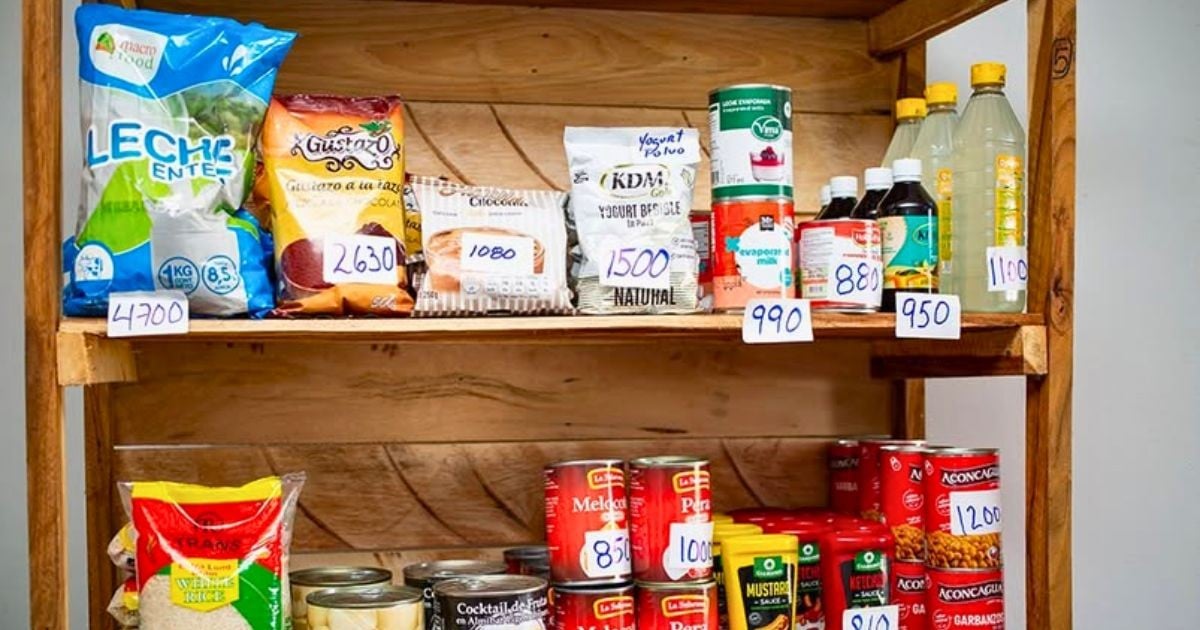
The Cuban journalist and art critic Jorge Rivas Rodríguez published on Saturday on his Facebook profile a text titled "Neighborhood Markets: Unaffordable Prices", in which he criticizes that the new commercial network promoted by the regime to replace the bodegas and the ration book does not fulfill its promise of making basic food affordable.
Rivas, linked to the newspaper Trabajadores since the 1980s and awarded the National Prize for Cultural Journalism José Antonio Fernández de Castro in 2022, is not an external critic of the system: his voice comes from within the very structure of the official cultural framework, which lends a particular symbolic weight to his questioning.
The Neighborhood Markets project, regulated by the —in effect since August 2026— is part of a package of 176 economic transformation measures implemented by the Government. The regime promised that these establishments would offer around twenty basic products at prices 10% to 15% lower than those of other stores; in some statements, it even announced greater discounts.
But Rivas warns that this promise has not come to fruition. "There is no clear and widespread evidence of that reduction anywhere. On the contrary, some products are even cheaper among self-employed workers than in the so-called Neighborhood Markets," he wrote, citing powdered milk, rice, and wheat flour as examples.
The prices recorded in various Cuban establishments during September and October of 2026 reflect the deterioration of purchasing power: packages of rice were reported at 850 Cuban pesos (CUP), powdered milk around 3,800 CUP per kilogram, eggs at 150 CUP each, and vegetable oil between 2,200 and 2,800 CUP, depending on the packaging and point of sale. The photo with which Rivas illustrates his post shows some prices that are even higher.
In Media Luna, Granma province, a user calculated that purchasing one unit of each of the 22 products advertised in a new neighborhood market would cost 12,740 CUP, which is equivalent to nearly four monthly minimum wages of 3,210 CUP. This last income represented just over 4 dollars at the informal exchange rate for the dollar recorded at the beginning of October.
The journalist also points to a structural paradox: "While operators receive tax benefits and incentives to occupy state premises, consumers do not find products that are effectively benefited by these measures. The alleged reductions do not reach the pockets of those who need them the most."
The official year-on-year inflation reached 25.19% in August 2026; independent estimates place it at much higher figures by including prices from the informal market. In that context, Rivas describes the purchase of food as "a distressing decision: buying rice or milk can mean giving up medications, transportation, or other essential expenses."
The journalist also questions the political background of the transformation. The ration book, established in 1962, guaranteed at least a regulated share of basic products; its gradual dismantling, he argues, has not brought abundance but rather a new form of exclusion. "The paradox is evident: a state system that, although insufficient and marked by scarcity, guaranteed at least a regulated share of basic products is being dismantled and replaced by a commercial network whose prices depend on payment capacity," he wrote.
The regime has selected 1,913 of the more than 12,000 existing bodegas to serve vulnerable individuals, with a monthly allocation of five pounds of rice, one pound of sugar, and one pound of beans for 883,000 beneficiaries. Prime Minister Manuel Marrero has proposed replacing the generalized subsidy with this targeted model, but Rivas concludes that the change, lacking transparent controls and genuinely affordable prices, does not constitute a reform: "it is merely a replacement of managed scarcity with commodified inequality."
Related videos:
Filed under: