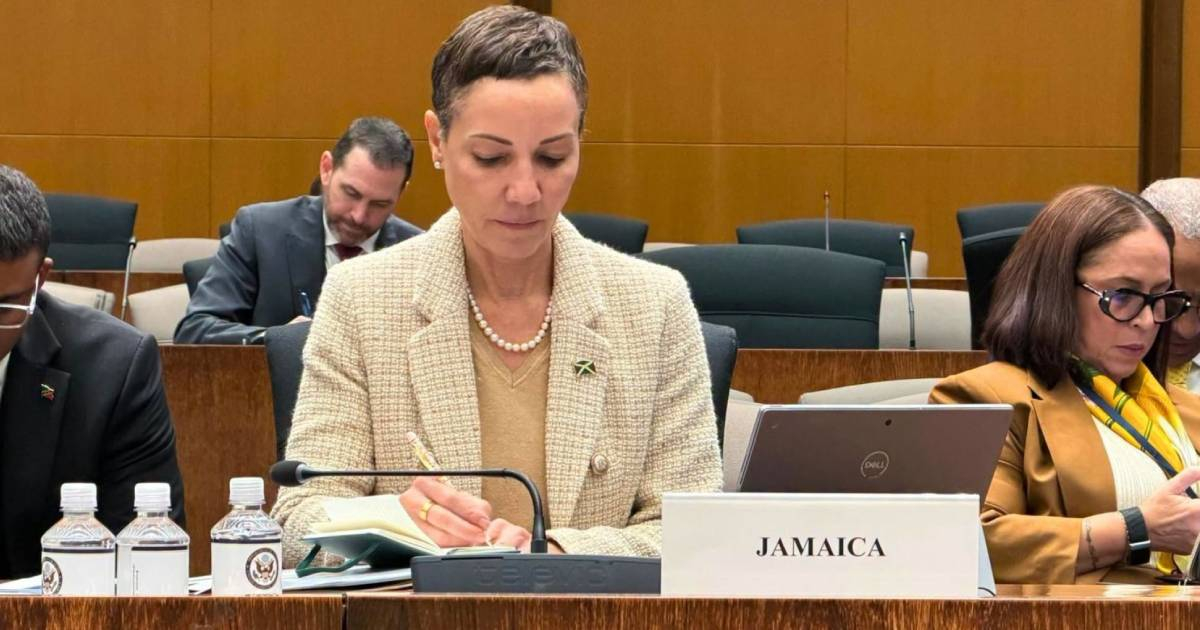
The Minister of Foreign Affairs of Jamaica, Kamina Johnson Smith, rejected this Sunday the accusations from former Prime Minister P. J. Patterson, who described as "abominable treason" the decision of her country to abstain in the United Nations vote on the U.S. embargo against Cuba.
The chancellor assured that Jamaica has not changed its opposition to the embargo and denied that the abstention represents support for economic sanctions against the island.
"The suggestion by Mr. Patterson that an abstention equates to supporting the embargo, or remaining silent in the face of Cuban suffering, is simply incorrect," stated Johnson Smith in a statement released on November 1 on the official page of the Ministry of Foreign Affairs and Foreign Trade of Jamaica.
"Jamaica did not vote against the resolution. We abstained. And we did not remain silent either. We formally explained our position immediately after the vote," he added.
Former prime minister accuses the government of betraying Cuba
The controversy began after Patterson, who governed Jamaica from 1992 to 2006, harshly criticized the abstention of his country in the UN General Assembly on October 28.
Jamaica had supported for over three decades the resolution calling for an end to the U.S. embargo, but this year it chose to abstain.
For the former leader, the change represented a break with Jamaica's traditional diplomatic solidarity with Cuba.
Patterson described the decision as an "abominable betrayal that history will never forget" and accused the Government of compromising the sovereignty and historical principles of the country's foreign policy.
He also questioned why the abstention occurred just one day after the Jamaican Parliament approved, without any votes against, a motion regarding the Cuban economic and humanitarian situation.
The former prime minister stated that this contradiction represents a serious offense against parliamentary authority and went on to propose that, in similar circumstances, there should be censures and ministerial resignations.
Chancellor defends the abstention and points out internal problems in Cuba
Johnson Smith responded that Patterson's criticisms were based on interpretations that, in his opinion, could not withstand scrutiny of the facts.
He explained that the Jamaican delegation at the UN acknowledged the effects of external economic restrictions on Cuba, but also referred to the internal economic and structural problems affecting the country.
The chancellor defended the need to seek alternatives that contribute to improving the living conditions of Cubans, rather than simply supporting a resolution each year that has not achieved its main goal.
He also recalled that Jamaica requested a reduction of economic restrictions, the promotion of dialogue, and the facilitation of greater integration of Cuba into the international economy.
Johnson Smith rejected the claim that the Government disobeyed Parliament, stating that the approved motion did not order a vote in favor of the United Nations resolution.
He also denied that the decision was motivated by foreign pressures or the pursuit of favors from other governments.
The minister insisted that each administration has the responsibility to make its own foreign policy decisions in line with national interests.
The resolution against the U.S. embargo was approved with 130 votes in favor, 17 against, and 25 abstentions.
Related videos:
Filed under: