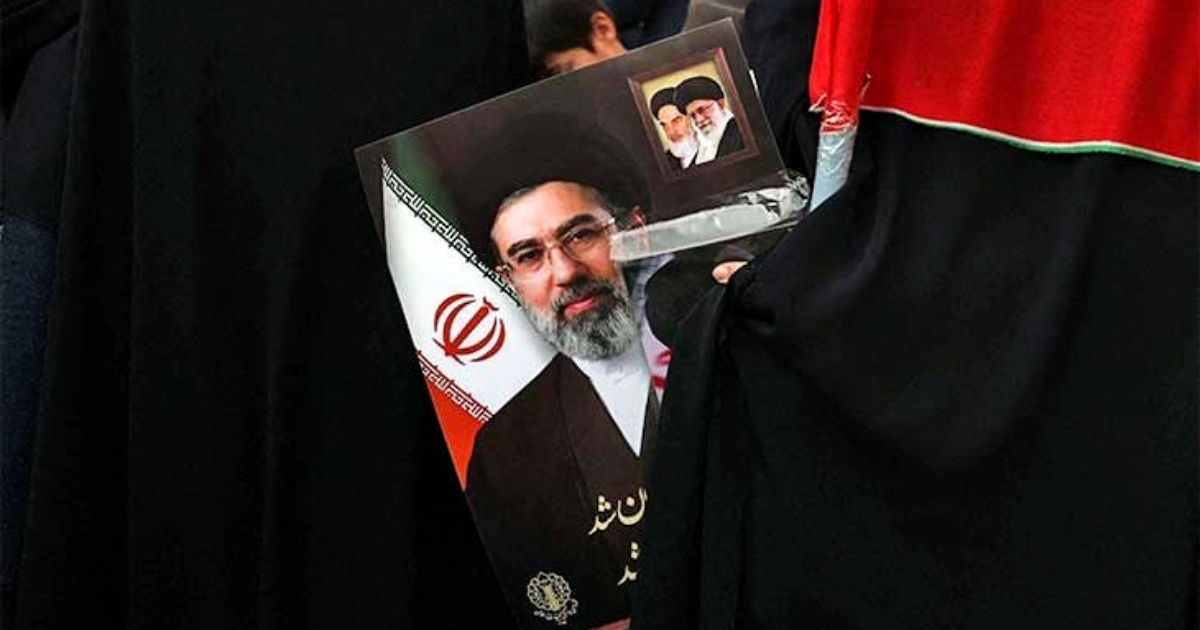
The supreme leader of Iran, Mojtaba Jamenei, dismissed this Wednesday the idea that the Democratic victory in the U.S. midterm elections would change Washington's stance towards the Islamic Republic, warning that those who place their hopes in such a change are "deeply mistaken," according to the agency EFE.
Jamenei issued the message on the occasion of the 47th anniversary of the seizure of the U.S. embassy in Tehran, a date laden with symbolism in the anti-American rhetoric of the Islamic Republic, which this year coincides with the day following elections that stripped the Republicans from Donald Trump of control of both chambers of Congress.
If there are still those who hold any hope for a change in behavior or for alternations between parties and factions within the system of domination, or believe that by making concessions to the United States they can make it abandon its animosity toward the Iranian nation, they are deeply mistaken, stated the Iranian supreme leader.
Jamenei flatly rejected any concessions to Washington and maintained that the true objective of the U.S. is to subjugate Iran: “The Great Satan's desire is the unconditional surrender of the Iranian nation,” he declared, warning that any show of submission would only encourage further demands, wars, and aggressions.
The leader also asserted that the U.S. is experiencing an irreversible decline. “The declining power and hegemony of the United States have experienced an irreversible drop in both its military power and its international soft power, and the process of its collapse has accelerated,” he stated.
In reference to the ongoing conflict in the Strait of Hormuz, Jamenei stated that the situation there has demonstrated "the falsehood of the myth of American invincibility" and Washington's inability to protect its allied Arab states that host U.S. military bases, against which Iran has launched dozens of attacks since the onset of the war. He further defended the strategy of "a progressively stronger Iran" as the only path to achieving absolute deterrence.
The statements come at a time of heightened tension. The conflict between the two powers erupted on February 28, 2026, with Operation Epic Fury, a coordinated air offensive by the U.S. and Israel against Iranian nuclear and military facilities.
Iran responded with its own operation and extended the confrontation to the Strait of Hormuz, where it intensified its attacks on oil tankers in the weeks leading up to the elections, driving up oil prices.
On Monday, the U.S. attacked Iranian targets on Qeshm Island in an action described as "defensive" and limited. Days earlier, Secretary of State Marco Rubio had stated that Trump had not yet decided whether to resume large-scale attacks against Iran, although the military option remained on the table.
The interpretations of the electoral results vary even within the Iranian leadership. The Speaker of Parliament and chief negotiator, Mohamad Baqer Qalibaf, interpreted the Democratic victory as a citizen vote of "no to war" and warned that if Trump betrayed this popular will, he would find an "Iranian nightmare." Trump, for his part, acknowledged this Wednesday that the war contributed to the Republican defeat in the elections.
Negotiations between both parties continue with the mediation of Qatar and Pakistan, although they remain stalled, while uncertainty persists about whether Washington will choose to resume large-scale military operations following the electoral turnaround.
Related videos:
Filed under: