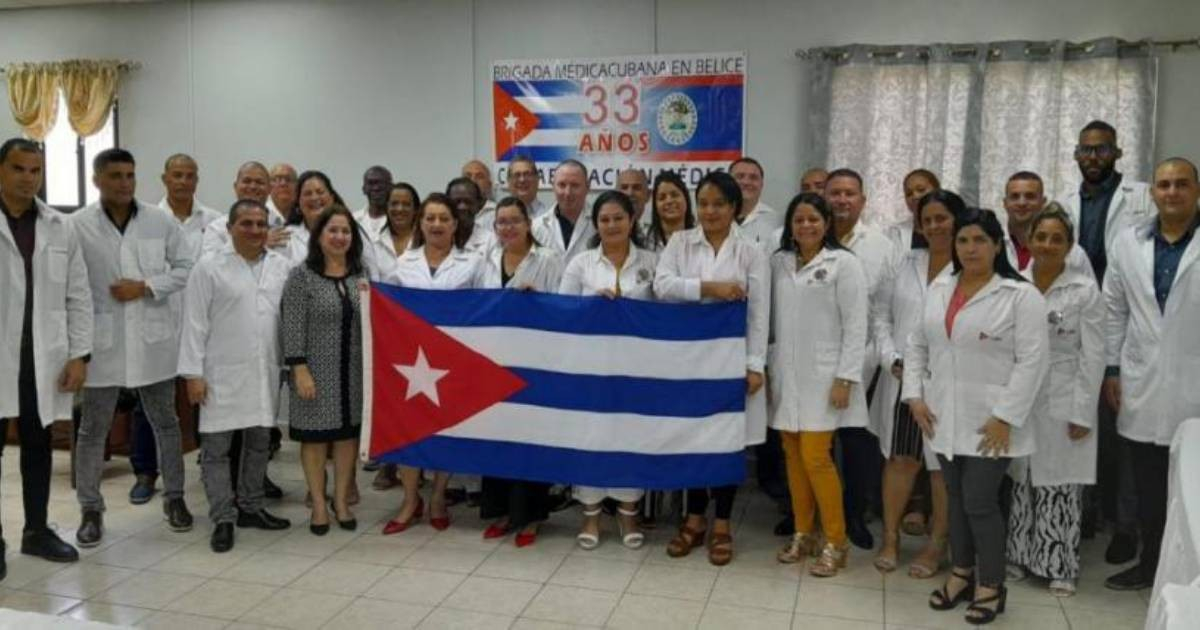
The Government of Belize announced that both countries will not renew the medical cooperation agreement in place since 1990, although Cuban professionals will be able to continue working in Belizean territory under individual contracts.
The decision, communicated on Tuesday, November 3, by the Belizean Ministry of Foreign Affairs, marks the end of 36 years of collaboration under the medical brigade model, although it does not necessarily imply the departure of healthcare workers from the island.
According to a report by 7 News Belize, the Government confirmed that the Ministry of Health and Wellness will sign individual contracts with each Cuban professional to ensure the continuity of medical services.
The measure impacts a mission composed of about 92 healthcare professionals, including doctors, specialists, nurses, and technicians, according to figures provided in September by the Minister of Health, Kevin Bernard.
The presence of these workers is particularly important in communities with a shortage of healthcare personnel. In the Toledo district, for example, eight of the 16 available doctors are Cuban, a situation that has raised concerns about the possibility of the brigade's withdrawal.
Bernard previously warned that losing those professionals would exacerbate the difficulties of the public health system, which is already struggling to fill medical positions in rural areas.
A decision amid pressures from the United States
The announcement comes after months of negotiations with Havana and amidst pressures from Washington to terminate the state agreements of Cuban medical missions, which have been scrutinized for potential forced labor practices and exploitation.
The Cuban government rejects those accusations and defends its brigades as international cooperation programs.
However, the Prime Minister of Belize, John Briceño, stated in May that his country was already paying Cuban doctors directly, without transferring their salaries to the Government of the island.
Briceño had defended the need to find an alternative that would allow for the maintenance of health services and ensure that Cuban professionals could work voluntarily.
Although the Belizean government has now confirmed the individual contracting, it still has not specified when the contracts will be signed, what the salary conditions will be, nor whether all members of the mission will accept to stay in the country.
There has also been no official response from Havana regarding the conditions of the new labor scheme.
Belize joins other Caribbean countries that have reassessed their medical agreements with Cuba, including Jamaica and Guyana, amid a growing international scrutiny of the operations of Cuba's health missions.
Related videos:
Filed under: