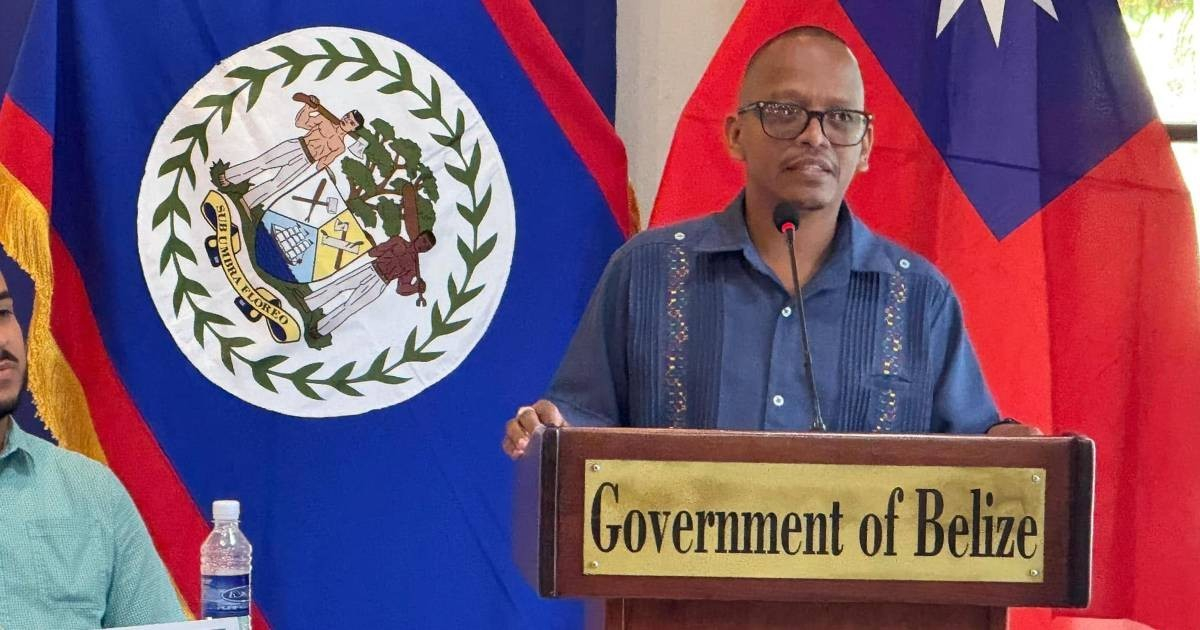
The future of 92 Cuban health professionals working in Belize must be defined before the end of September, while the government of that country negotiates a restructuring of the agreement with Cuba amid pressures from the United States to end the program.
The Minister of Health and Wellness, Kevin Bernard, confirmed this Monday to Greater Belize Media that he expects a decision before the end of the month and warned that the departure of the Cubans would have significant consequences for a healthcare system that is already facing a staff shortage.
"If they were to leave, it would certainly worsen the situation of our already overwhelmed healthcare system. We have a severe shortage of doctors, medical assistants, and nurses," Bernard acknowledged.
The 92 professionals include specialists, general practitioners, technicians, radiologists, rural nurses, and a psychiatrist, distributed from the Karl Heusner Memorial Hospital, the country's main referral hospital, to rural communities.
Dependency is particularly high in the Toledo district, in southern Belize, where eight of the 16 available doctors are Cuban.
"If you can imagine doing without them, it would create a lot of pressure. We are already struggling to find doctors or local staff willing to work in the south," explained the minister.
The Belizean government is considering various alternatives. Among these are the gradual elimination of the program and the possibility for some Cuban professionals to remain in the country through individual contracts, work permits, or permanent residency.
"We are working on restructuring that agreement. We hope to finalize and resolve this matter by the end of this month and move forward," Bernard stated.
The review began about six months ago at the instruction of the Cabinet, amid increasing pressure from Washington. The Chargé d'Affaires of the U.S. Embassy in Belize, Katharine Beamer, recently stated that her country is "very actively" supporting the end of the program.
The United States argues that Cuba's international medical missions exhibit characteristics of forced labor, including the retention of a portion of salaries and restrictions imposed on the professionals. In April 2026, the Inter-American Commission on Human Rights recommended that countries in the region withdraw from these programs, after warning of signs of forced labor and human trafficking.
Bernard acknowledged the delicacy of the negotiations. "We must handle this situation with great care. Belize is ready and prepared to discuss measures that will allow us to reach a consensus," he stated.
The minister also addressed the rumors that emerged in late August when images of boxes connected to Cuban doctors at an airport fueled speculation about a possible withdrawal. Bernard denied at that time that they were leaving the country and assured that these were professionals traveling on vacation and sending items to their families.
Although he highlighted the historical relationship between both countries and Cuba's support during Belize's independence process, Bernard acknowledged that the government will have to prioritize the current needs of the country.
"Sometimes difficult decisions must be made. They may not be politically popular, but we need to make thoughtful and realistic decisions that benefit the Belizean people," he stated.
The controversy surrounding Cuban missions has already led to changes in other countries in the region. Cuba withdrew its medical brigade from Jamaica in March, following the cancellation of an agreement in place since 1976, while Honduras decided not to renew its agreement in February.
Related videos:
Filed under: