
Related videos:
The government of Jamaica revealed new details about the reasons that led to the end of the historic medical cooperation program with Cuba, a relationship that for nearly five decades allowed the presence of hundreds of Cuban healthcare professionals in the health system of the Caribbean island.
In an official statement, which was echoed by local media, the Ministry of Foreign Affairs and Foreign Trade explained that the country reviewed the implementation of the agreement following international concerns regarding Cuban medical programs. According to Jamaican authorities, the aim was to ensure that the agreement complied with local legislation and international labor standards.
The review confirmed that there were no issues regarding labor treatment, accommodation, licenses, or the freedom of movement of Cuban professionals in Jamaica. However, the process also revealed concerns that the government deemed troubling and that, as explained, required immediate correction.
Among them, the authorities noted that many Cuban professionals did not have their own passports. After detecting this situation, the government assured that it took measures to ensure that the workers could keep their travel documents.
The review also found that the salaries of Cuban doctors, although calculated at the same level as their Jamaican counterparts, were not paid directly to the professionals. According to the statement, Jamaica transferred the payments in US dollars to the Cuban government, while the doctors only received directly from the Jamaican government the payments for overtime.
The authorities also indicated that the agreement did not contain any clause specifying what portion of those salaries should ultimately be given to the workers, a situation that, according to the government, raised concerns regarding the country's labor and tax legislation, as well as international treaties.
In light of this situation, Jamaica stated that for months it tried to renegotiate the agreement with Havana to align it with its laws. Formal talks began in July of last year, and subsequent official proposals were made in October and December.
"For absolute clarity, the Government of Jamaica proposed the continuation of the program with adjustments," the document states. However, according to the statement, despite attempts to engage in dialogue with Cuban diplomatic representatives, "no substantive response was ever received" from the island's authorities.
The Jamaican government stated that the lack of response kept in place an arrangement that could no longer be legally justified, leading to the conclusion that continuing the program under its existing terms was unsustainable.
The announcement comes after Jamaica reported on March 5 that it would stop renewing the medical collaboration program with Cuba, which has been in place since 1976. Jamaican authorities indicated that those professionals will be able to complete their current contracts and that the Ministry of Health has the option to hire them individually under local labor legislation.
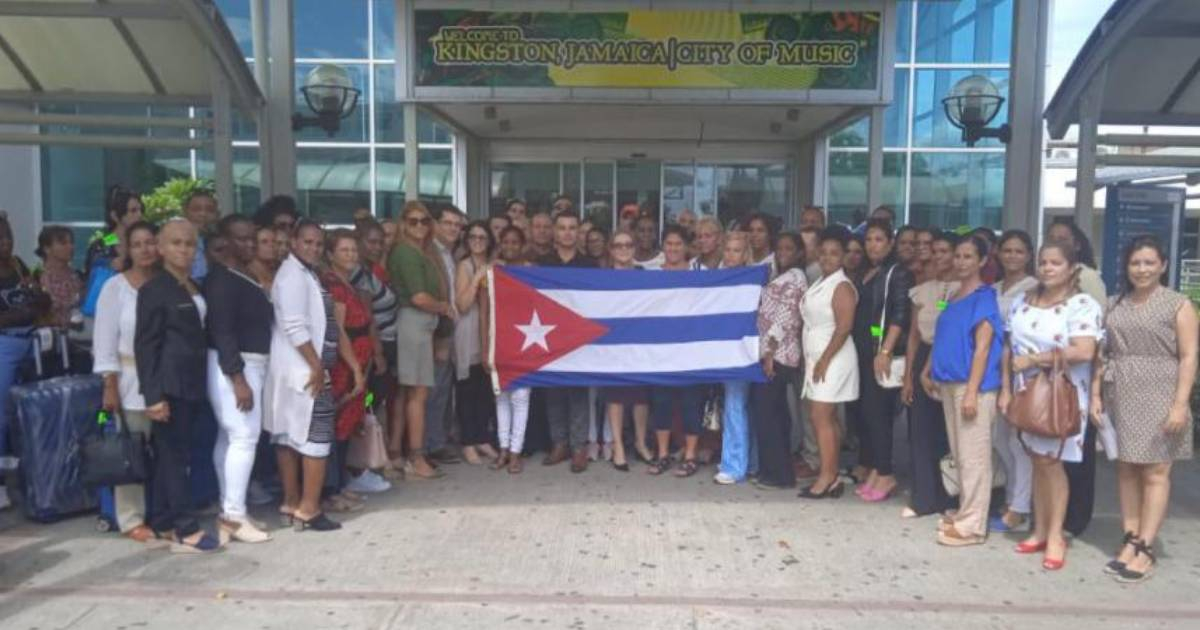
After the decision, the Cuban government announced the withdrawal of its medical brigade from Jamaica and stated that the measure was a response to pressure from the United States against the island's medical programs.
According to official data released by Havana, 277 Cuban health professionals were providing services in Jamaica at the time the agreement was canceled. The Cuban government stated that for decades, thousands of doctors from the island have treated millions of patients in the Caribbean nation and participated in public health programs, disease control, and ophthalmological care.
The end of the program has also triggered reactions within Jamaica. The opposition health spokesperson, Dr. Alfred Dawes, described the decision as “deeply unfortunate”, while Senator Donna Scott-Mottley, opposition spokesperson for foreign affairs, called on the government to provide a complete explanation regarding the reasons that led to the termination of the agreement and to clarify how the continuity of health services will be ensured in the facilities where Cuban doctors worked.
The topic has also generated public debate. Jamaican-American actress Sheryl Lee Ralph asked on social media whether the United States will send doctors to meet the island's healthcare demands following the departure of the Cuban brigade.
The cancellation of the agreement in Jamaica comes amid increasing international scrutiny of Cuba's medical missions, which are one of the main sources of foreign currency revenue for the Havana government and have been questioned by Washington, which accuses them of involving labor exploitation. Cuba rejects these accusations and defends its health cooperation programs in dozens of countries.
Filed under: