The accident that occurred this Wednesday in Biscayne Bay, near Bill Baggs State Park, in Key Biscayne, Miami, where a helicopter with three people on board crashed, resulted in one death and two serious injuries, as confirmed by the United States Coast Guard on X.
The incident occurred around 11:15 a.m., in front of block 1200 of Crandon Boulevard, southwest of Key Biscayne.
The Federal Aviation Administration (FAA) identified the aircraft as a Robinson R44 helicopter and indicated that it fell into the water east of Miami Executive Airport.
The Coast Guard, through its official account, stated that the agencies responded to the accident "at approximately 11:30 a.m." and that "one person was reported deceased and two were transported by emergency medical services to a higher level of care."
The Miami-Dade Fire Department (MDFR) received the alert at 11:26 a.m. and deployed a mutual aid operation alongside the fire departments of the City of Miami and Key Biscayne.
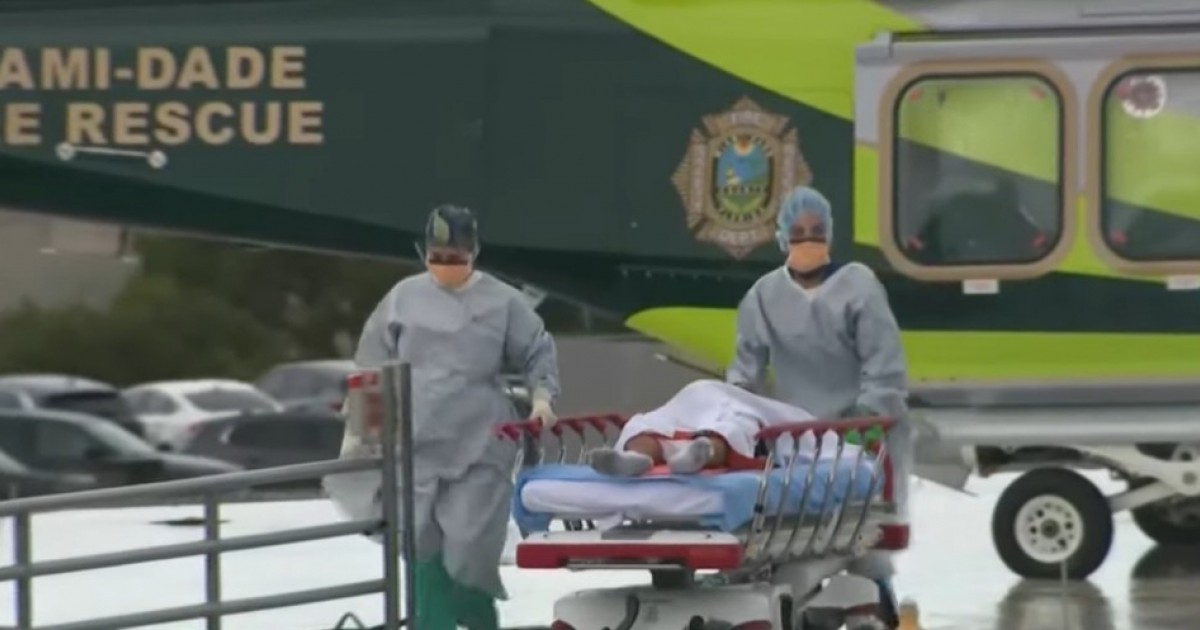
The two survivors, described as adult men in a state of traumatic alert, were transported by ground units to a designated landing area, from where the air rescue from Miami-Dade took them to the main trauma center in the region.
Emergency teams operated from No Name Harbor, within Bill Baggs State Park itself. Footage captured by television helicopters showed a yellow tarp covering what appeared to be the body of the deceased victim, as well as yellow buoys on the water marking the remains of the submerged aircraft.
According to Telemundo 51, a flight tracker recorded a significant drop in altitude prior to the impact, although this information alone does not determine the cause of the accident. The identities of the three occupants, the aircraft registration, and the exact circumstances of the incident had not been publicly disclosed by the time the initial reports were closed.
The Robinson R44 is one of the most common light helicopters in the world, capable of accommodating one pilot and three passengers. It is widely used for flight training, tourism, patrol, and private transportation.
The area where the accident occurred is a zone of intense recreational and tourist activity in southern Florida, which has also been the scene of other water incidents in Key Biscayne.
It is not the first time that Biscayne Bay has recorded emergencies of this kind. Last October, a helicopter flew over the port of Miami under circumstances that also prompted local authorities to respond.
The FAA and the National Transportation Safety Board (NTSB) announced that they will jointly investigate the accident.
The investigations by the NTSB, the independent body responsible for determining the probable cause of aviation accidents, can take months before reaching definitive conclusions.
Related videos:
Filed under: