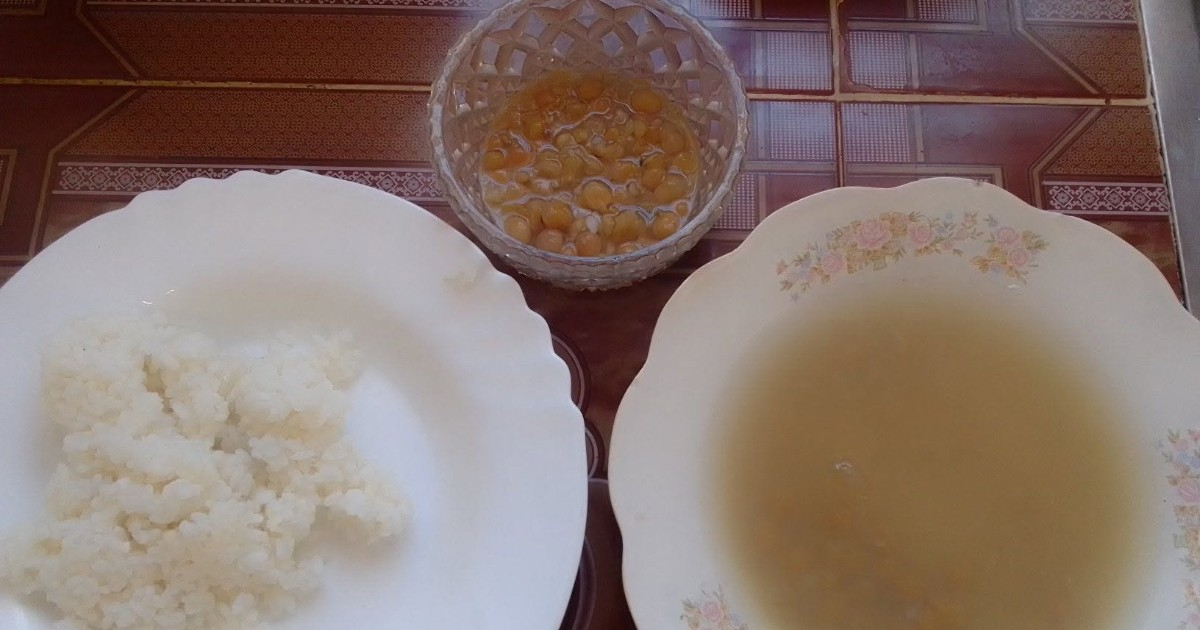
Elizabeth González Aznar published this Wednesday on Facebook a complaint addressed to President Miguel Díaz-Canel and the Cuban government, in which she recounted the conditions in which her father lives, an 81-year-old retired scientist who receives food assistance from the Family Care Service (SAF) in San Agustín, in the municipality of La Lisa, Havana. González is the daughter of Raúl González Hernández, the creator of the anti-anemia medication Trofin.
The trigger was a phrase her father said to her, which Elizabeth described as one of the most painful experiences of her life: "Hearing from my father today, an 81-year-old retired scientist, the words 'my daughter, try to leave with Fred before these bastards kill you too' has been one of the hardest things of my life; it broke my heart," she confessed.
Elizabeth clarified that she does not intend to leave him or the country, but that phrase captures the exhaustion of an entire generation: "I never thought I would leave my country and leave my father alone and I won’t do it, but this is what you all have achieved in my generation."
For her, her father's words convey a complete loss of hope: "That expression sounds like surrender, like having no hope for a better Cuba and knowing one will die soon, because surviving as they do today, without electricity, without water, without gas, without medicine and food after having given their youth, adulthood, and old age for this country is consuming them."
According to him, his father has been attending the SAF in San Agustín since April 15 after months of efforts with the Labor and Social Security authorities. González shared photographs of the daily rations, identified as lunch and dinner: a plate of white rice, a very watery broth, and a container with few beans in liquid. "Look at today's lunch and dinner. Rice and white beans. Look at the beans, water, and a few grains at the bottom. This has been the case since the first day, for months. Days of just rice, sweet potato, and a broth called a substance soup."
She also reported that beneficiaries must bring their own containers and that, despite the fact that the establishment has tables and chairs, they are not allowed to eat there. "We often see many of them sitting on the sidewalk across the street eating that as if it were the finest delicacy. Do you know why? Because they are hungry."
Elizabeth assured that she had exhausted institutional channels without result: "We had the municipal director of labor and social security of La Lisa and the mayor sitting in our living room. We told them everything. And? Nothing happens."
"They are people, they are human beings, not animals. Most of them are elderly, and this is what they are given," he criticized.
In the same post, he denounced the rising prices of basic products in the informal market: rice at 450 Cuban pesos (CUP) per pound, sugar at 600, ground beef at 700, chicken at 850, and toilet paper at 300 CUP per roll.
"The people are suffering from hunger and need. This is life in a concentration camp. This is GENOCIDE. And no one deserves this, especially that generation. How much longer must we endure their words disconnected from the real context we live in? Enough already," he concluded.
Despite the multiple criticisms, the SAF continue to fail in providing a dignified meal for the elderly. A dining hall on Monte Street in Havana, which served 269 people daily, only provided chicken once throughout the year; in Santiago de Cuba, images of a dark liquid without solids presented as soup were circulated; and a dining hall in Vedado acknowledged that the state quota covers barely 10% of the necessary food.
Related videos:
Filed under: