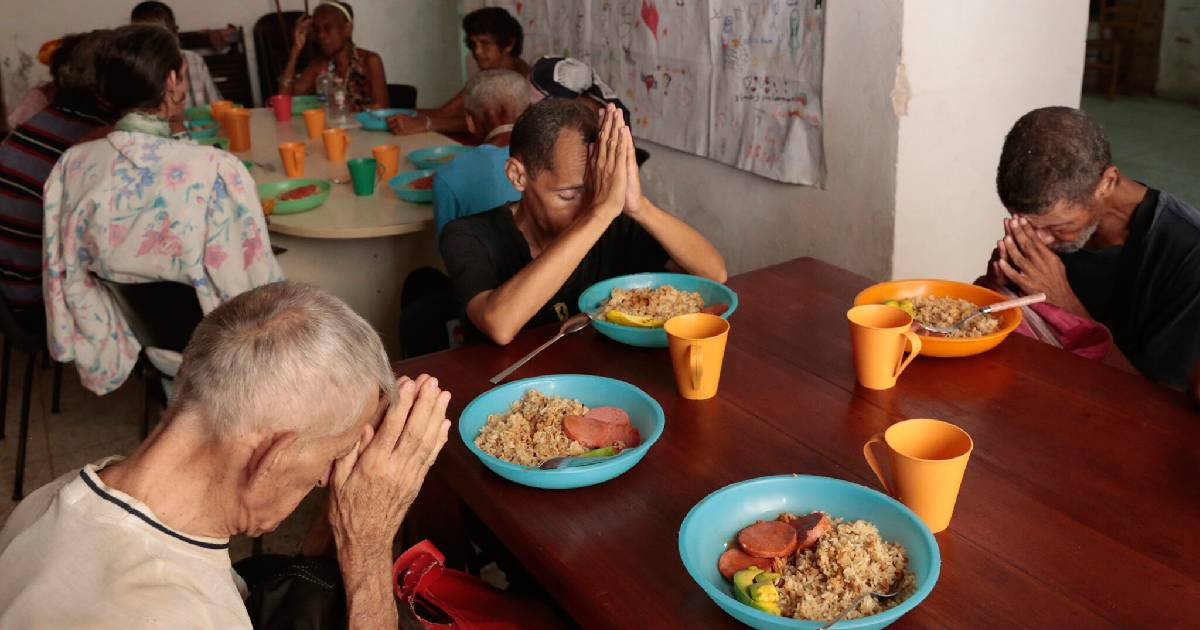
The dining hall of the Family Care System (SAF) on Monte Street in Havana has served chicken only once so far in 2026, stated its economic manager, Lázara Rosell, to the news agency Inter Press Service (IPS) in a report published on Thursday and authored by accredited correspondent Dariel Pradas.
The establishment serves 269 people daily, a number higher than in 2025, while the usual protein, some form of cold cut, arrives approximately every two weeks. Last year, however, it was served daily.
On Tuesday, October 13, the users had an exceptional reason to feel fortunate about lunch, as the cafeteria secured beans at the last minute. Without that supply, the meal would have consisted, as it does on most days, solely of bread, rice, and broth.
Sista Daisy Cabrera, 71 years old and a recipient of the service, described the worsening of the rations. "White rice and broth is all there is. Nothing more. This problem started in 2026. In 2025, the food was a bit better and better cooked," she stated.
The elderly woman also described the difficulties she faces in finding food outside the dining hall. "There are days when I have no food and I go without eating anything, if I have anything at all, just a piece of bread. My daily life is desperate, it’s an awful stress," she shared.
In response to the shortcomings of state assistance, private and religious initiatives have attempted to address some of the needs. Since June, the La Hermana Cazuela project, organized at San Francisco el Nuevo Church in Havana's Historic Center, has been providing lunches three days a week to about 70 people. The initiative is primarily funded through donations from the Cuban diaspora and support from the Catholic Church.
His coordinator, journalist Maykel González, acknowledged that the reach of this assistance is limited. "The solutions we can offer to individuals or small groups will always be very limited. I will never have enough food here to give to everyone who arrives at the church door," he noted.
Created 30 years ago during the economic crisis of the 1990s, the SAF emerged to provide subsidized meals to elderly individuals and those in need. It currently has more than 4,400 food service units.
The situation of these establishments adds to other reports regarding the deterioration of social dining facilities in Cuba. In June, SAF 0204 Villanueva, in Boyeros, had been without liquefied gas for five months and was resorting to firewood to cook for 129 elderly people.
In September, images shared on social media showed a SAF dining hall in Santiago de Cuba serving elderly people a liquid described as "chopped culantro and green onion water".
The demand for the program has increased, from about 59,000 beneficiaries in 2023 to over 66,000 in 2025, while the supply has deteriorated significantly this year. The rise in the number of people needing the service contrasts with the inability to ensure sufficient and regular food supply in some of these centers.
Food insecurity affects an increasingly aging population. By the end of 2025, 26.7% of Cubans were 60 years old or older, according to the provided data.
Additionally, a survey conducted by the Independent Trade Union Association of Cuba among 506 retirees from five provinces revealed that 99% deemed their pension insufficient to cover expenses for food, housing, and medicine.
In August, the Government approved, through Resolution 14/2026 of the Ministry of Domestic Trade, the participation of micro, small, and medium enterprises (mipymes) and other non-state actors in the management of SAF dining facilities. The measure allows for the administration of these establishments to be opened to new operators, although the State retains ownership of the properties and control over the beneficiaries.
The opening up to non-state management appears as a way to modify the functioning of these services, but the documented shortcomings in the cafeterias reflect the magnitude of the problem that authorities must face to ensure food security for the most vulnerable people.
Related videos:
Filed under: