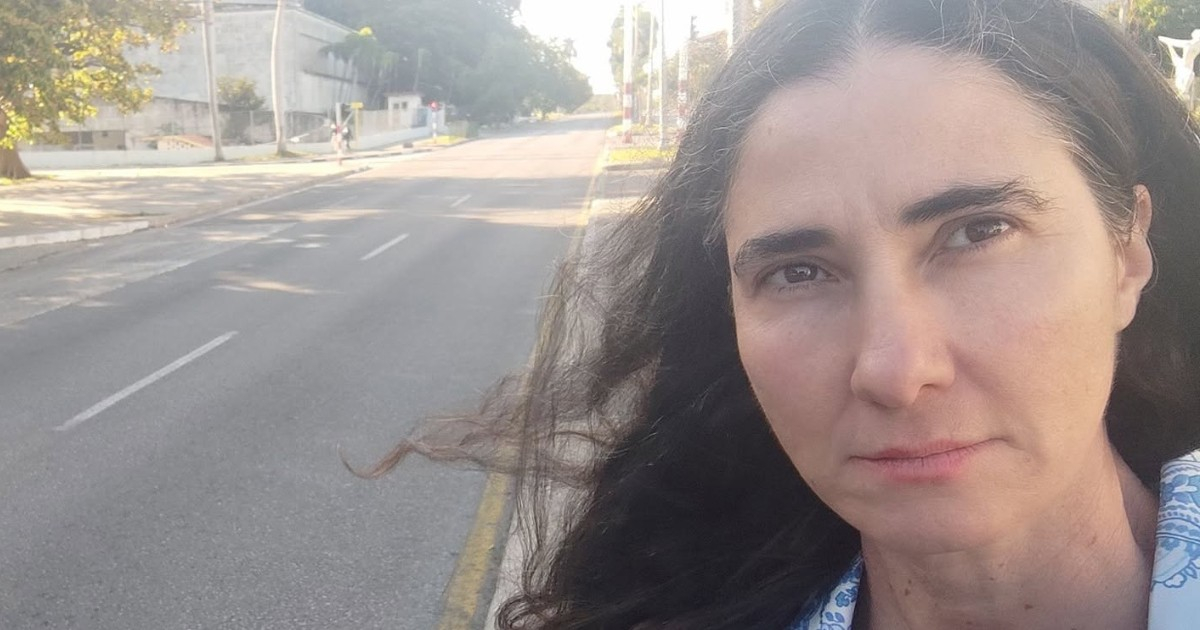
The Cuban State Security detained Yoani Sánchez, founder and director of the independent digital newspaper 14ymedio, in Havana this Thursday. The news was confirmed by her husband, journalist Reinaldo Escobar Casas, through his Facebook account: "Yoani Sánchez has been detained by State Security today in Havana."
Escobar, also a journalist for 14ymedio, was in Madrid at the time of the arrest, alongside his daughter Luz Escobar, an independent Cuban journalist who has been exiled in Spain since October 2022 and to whom Spain granted asylum in August 2026.
A trained philologist and one of the most internationally recognized journalistic voices from Cuba, Sánchez has intensified her coverage from the streets of Havana in recent months, documenting blackouts, neighborhood protests over shortages of water and electricity, the urban decay of Old Havana, and the widespread crisis of basic services.
According to 14ymedio, the arrest took place around 9:30 AM when Sánchez was leaving her home in Nuevo Vedado, Plaza de la Revolución municipality, to shop at the neighborhood market. The journalist had informed her colleagues that she would return soon, but only ten minutes later sent a four-word message alerting them of her detention. At the time of publishing this information, the outlet had not been able to reestablish contact with her nor knew her whereabouts.
The arrest on Thursday is not the first she has experienced in 2026. In January, regime agents intercepted her while she was heading to a diplomatic reception at the residence of the U.S. mission chief, Mike Hammer, and escorted her back to her home with a prohibition on leaving. In March, a plainclothes agent prevented her from leaving her building without identifying themselves or showing a legal order. In September, the Cuban Human Rights Observatory reported that she was detained at her home along with Escobar and other activists to prevent their attendance at an event at the U.S. embassy.
The assault on independent journalism intensified in the early days of November. On November 2, CubaNet collaborator Adelth Bonne Gamboa was violently arrested in the Santos Suárez neighborhood; his computer, phone, camera, and audio equipment were confiscated, and he was fined 3,000 Cuban pesos under Decree-Law 370.
The next day, State Security arrested Camila Acosta, a correspondent for CubaNet and the Spanish newspaper ABC, while she was on her way to a veterinary appointment: she was handcuffed and forcibly taken into a patrol car. After spending several hours in a holding cell at the Playa police station, she was released. “I spent the entire afternoon in the holding cell,” Acosta stated following her release.
On Wednesday, Freedom House condemned the arrests of Acosta and Bonne as part of a systematic campaign to silence independent journalism in Cuba.
The repressive pattern extends beyond Havana. According to the Cuban Observatory for Freedom of Expression from ICLEP, nine Cubans linked to the independent bulletin Páginas Villareñas received threats of imprisonment, dismissal, and retaliation between April and October 2026.
The Cuban Observatory of Human Rights had documented more than 3,000 repressive actions in Cuba during 2026, according to a report published in October, which positions Sánchez's detention as the most visible episode of an escalation that shows no signs of stopping.
Related videos:
Filed under: