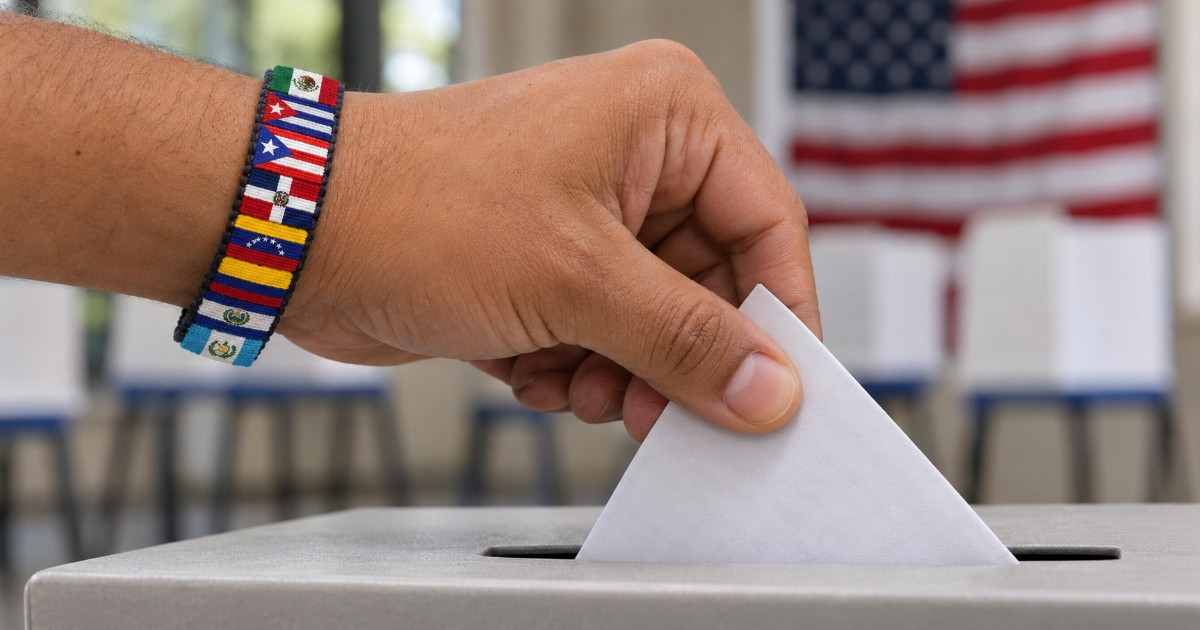
The Latino vote recorded the largest shift in its recent history during the midterm elections on Tuesday, moving away from the Republican Party in massive numbers just two years after driving the highest result Donald Trump had achieved among Hispanics throughout his political career.
According to AS/COA's analysis of the Latino vote in the mid-term elections, the net movement in favor of the Democrats was approximately 21 percentage points compared to 2024, sufficient for the party to take control of both chambers of Congress and win governorships in key states like Texas, Georgia, and Nevada.
Exit polls from the AP/SSRS consortium, consolidated by NBC News, show that 64% of Latinos voted for Democratic candidates compared to 34% who supported Republicans.
The breakdown by gender reveals a significant gap within the community itself: Latino men provided 39% of their support to Republicans compared to 58% who backed Democrats, while Latina women allocated only 30% to Trump's party candidates, with 68% leaning toward Democrats.
The epicenter of the electoral earthquake was Texas, where Democrat Gina Hinojosa defeated Republican Governor Greg Abbott with approximately 52.8% of the votes, making her the first Latina to govern that state and the first Democrat to do so since 1990.
Simultaneously, James Talarico defeated former Attorney General Ken Paxton for the federal Senate, becoming the first Democratic senator elected from Texas since 1988. "I wouldn’t be going to the Senate if it weren’t for the Latinos in our state," Talarico stated in an interview with Noticias Telemundo.
Hinojosa, 52 years old and of Mexican descent, even won in the southern Texas border counties where the Latino population exceeds 80% and where a majority had voted for Trump in 2024. "I am a daughter of the Rio Grande Valley, where people embody the ethics and values of this great state," she said in her victory speech.
The factors that explain the shift are numerous. According to the BBC Mundo report on the significance of the Latino vote in the blue wave, Hispanics cited their frustration with the economy, the state of democracy, and the intensity of deportations under the Trump administration in exit polls. A majority indicated that the president's performance was decisive in their voting decision.
Analyst Mike Madrid, co-founder of The Lincoln Project, summed up the phenomenon with a phrase: "Full-speed disalignment."
A generational factor proved decisive: approximately 4 million young Latinos voted for the first time in this election, and surveys indicated that they overwhelmingly supported the Democrats, widening the gap with older Hispanic sectors.
The exception within the overall landscape was Florida, where the Cuban American community maintained its support for the Republican Party despite discontent with some specific policies of the administration. According to the FIU Cuba Poll 2026, 68% of Cuban Americans in Miami-Dade stated their intention to vote Republican in the congressional elections, matching the historical high from 2024.
The Republican Byron Donalds won the governorship of Florida against the Democrat David Jolly by a narrow margin —approximately 50% to 48.7%— becoming the first black governor of the state.
The researcher Guillermo J. Grenier from FIU explained clearly: "The disappointment with the Trump administration has not displaced Cuban Americans from the Republican Party."
The outcome made Trump the fourth president since 1950 whose party simultaneously loses both chambers in a midterm election, following Eisenhower in 1954, Clinton in 1994, and Bush in 2006.
Related videos:
Filed under: