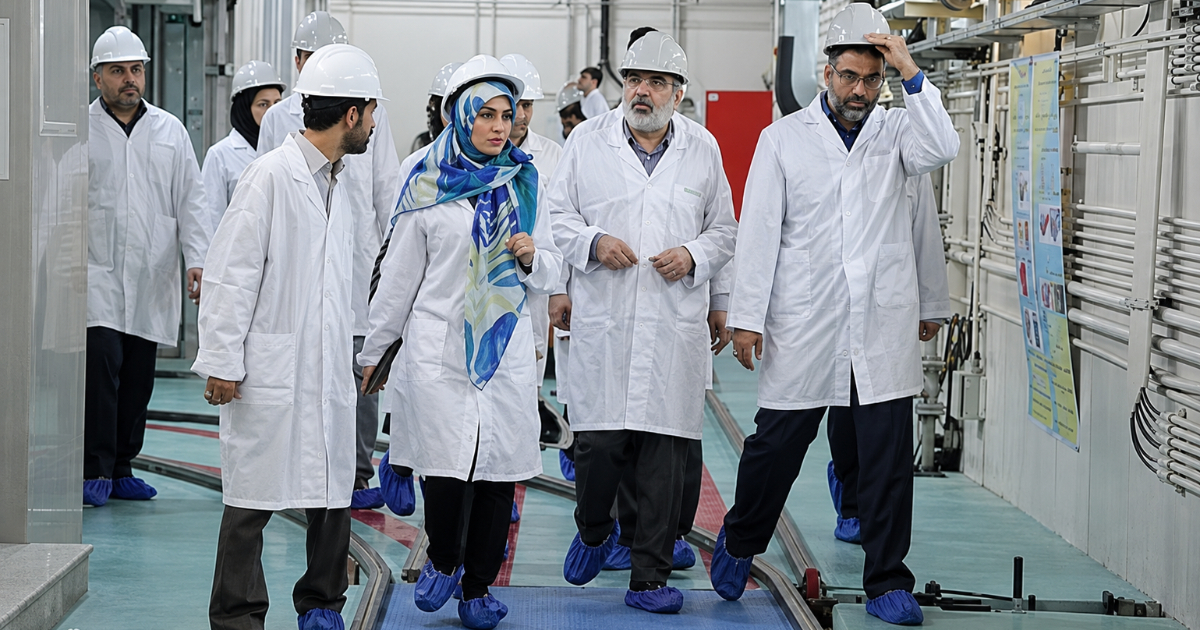
The United States Central Command (CENTCOM) announced this Saturday that the Rewards for Justice program by the State Department is offering up to 20 million dollars —and possible relocation— to anyone who provides information about the Iranian nuclear program, including facilities, equipment, associated personnel, and movements of any of these elements.
The announcement was disseminated through the official account of CENTCOM on X and comes amidst an unprecedented military escalation: the night of Friday marked the eleventh consecutive night of U.S. attacks against Iranian military targets, with the destruction of an air defense system on Qeshm Island in the Strait of Hormuz confirmed by President Donald Trump.
The technical justification for the reward is based on data from the International Atomic Energy Agency (IAEA): in 2025, Iran was enriching uranium to 60% purity, a level that is one technical step away from the 90% required for weapons use.
According to the Rewards for Justice program, «Iran is the only non-nuclear-armed state that produces uranium with such a high level of enrichment», and experts estimate that this amount, if further enriched, could be sufficient for several nuclear weapons.
The IAEA has lost what it terms "continuity of knowledge" regarding Iran's production and inventory of key components such as centrifuges, as it has been unable to carry out comprehensive inspections at the facilities in Natanz, Fordow, and Isfahan since the attacks in 2025.
The Director General of the organization, Rafael Grossi, noted at the end of October that enrichment did not appear to be occurring at that time in those plants, although he could not verify it independently.
In this context, the reward aims directly at gaining human intelligence about what international inspectors can no longer verify on the ground, an information gap that Washington deems critical.
Negotiations between the two countries, mediated by Qatar, remain stalled. Iran conditions any progress on a complete ceasefire and the reopening of the Strait of Hormuz, while Washington demands unequivocal guarantees regarding the nuclear program.
The vice president JD Vance declared on November 2 that any agreement must include a «firm and verifiable» commitment that Iran would not rebuild its nuclear capability.
Despite a memorandum of understanding signed in Switzerland in June 2026 —which established a ceasefire and a 60-day timeframe for negotiations— talks have not progressed. The Trump administration is evaluating three options regarding Iran: resuming large-scale attacks, intensifying sanctions and a maritime blockade, or negotiating with significant concessions from Tehran.
Trump himself stated at the end of October that Washington did not have a strict timeline to reach an agreement and that it was not "in a hurry," a signal that analysts interpret as a margin to maintain military pressure while exploring diplomatic avenues.
The Rewards for Justice program has precedents in similar rewards against terrorist networks such as Al Qaeda, but this is the first time it has been applied so explicitly and publicly to the nuclear program of a sovereign state, underscoring the seriousness with which Washington is assessing the Iranian threat at this moment.
Related videos:
Filed under: