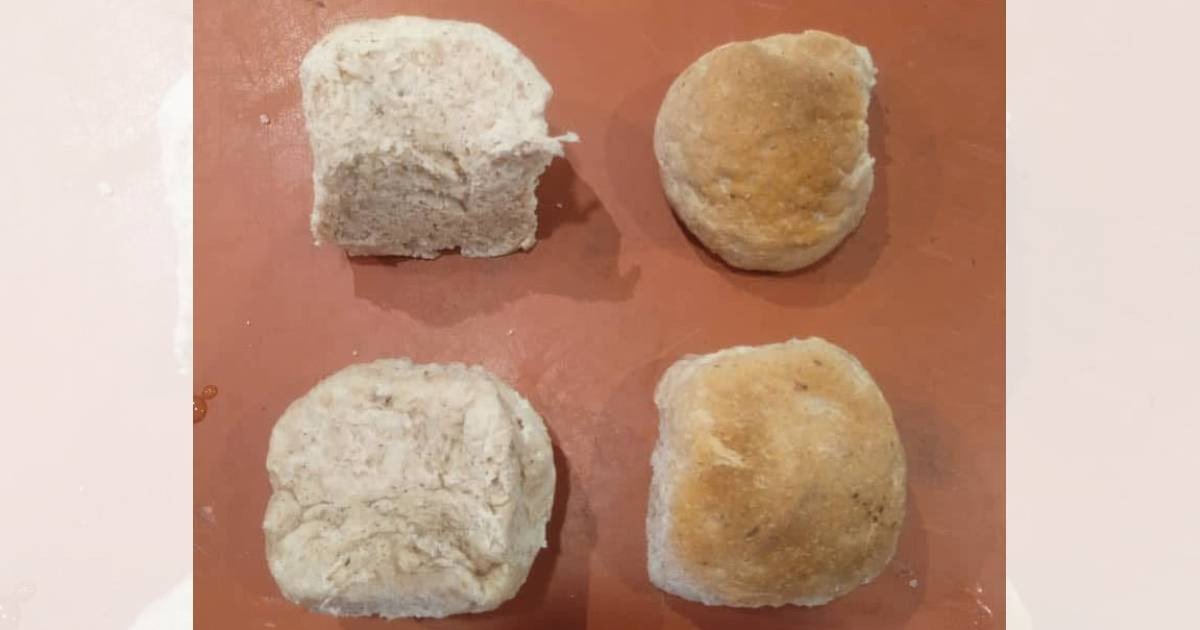
Residents of Holguín have reported the poor quality of the subsidized bread, describing the pieces as tough to chew, poorly baked, and even potentially harmful to health.
The page of Facebook "Holguín Memories" shared a photo this Saturday showing pieces of bread that look like raw or poorly baked dough, accompanied by the question: Is this bread or a test of endurance for your teeth?
He also asked his followers how the product was reaching the warehouses. The responses reflected the dissatisfaction of residents from various neighborhoods.
A resident of Vista Alegre reported that the bread arrives "once a week, but it's worse and uglier." According to his testimony, every time its distribution is announced, "it causes a huge uproar" among the neighbors over "that little piece of hard sand."
From the La Aduana neighborhood, another resident questioned the taste of the product and wrote that "it's unclear whether it's a weevil or a cockroach." She also warned that "at least children should not be given it, as they could be poisoned."
Complaints include irregularities in distribution. A commentator stated that at her store, bread shows up "whenever it feels like it," with deliveries every two to three months and of very poor quality.
Another neighbor pointed out the conditions of the bread made at the bakery located on Mártires Street, between Arias and Aguilera. He described some white, wrinkled pieces that resembled sticks, which, according to him, are made with "water and flour" without yeast and are sold for 100 pesos each.
The reactions were also marked by irony. "The bread from the bodega is meant to be used as a weapon of war; it is highly dangerous, capable of penetrating a tank," wrote one user. Another summed up his criticism in a single word: "This has only one name: communism."
"That's a disgrace, a blackmail of the people; it has no name anymore," remarked another resident of Holguín.
The deterioration of the regulated bread occurs amid a national crisis in the supply of wheat flour. In June, the Minister of Food Industry, Alberto López Díaz, acknowledged that only one of the six contracted flour ships for 2026 had arrived and that a shipment of 5,000 tons was removed before the ship set sail.
The only operating flour mill, located in Cienfuegos, produced about 250 tons daily, compared to the 700 tons needed. The mills in Guantánamo and Santiago de Cuba were inactive at that time.
The shortage of ingredients has forced the mixing of wheat flour with cassava, sweet potato, or corn, alternatives that affect the texture, flavor, and preservation of the product. In Holguín, additionally, bakeries resumed the use of wood-fired ovens since February due to the lack of electricity and fuel, although production was not enough to supply the entire population.
The weight of the subsidized bread has also decreased. In September 2024, the official weight of each piece dropped from 80 to 60 grams. Throughout 2026, there have been reports of breads that are only the size of an egg in several provinces.
In Villa Clara, the distribution has been restricted since February to those under 13 years old and over 65. In Cárdenas, Matanzas, the bread intended for children and seniors arrived at the end of October after five months without distribution, with cracked pieces and little fluffiness.
The options in the private market are also beyond the reach of a significant portion of consumers. Since July, the price of bread in private bakeries can take up a considerable part of family income.
The Cuban Bread Company set in Havana prices of up to 550 pesos per half kilogram, while the minimum monthly salary remains at 3,210 pesos.
Related videos:
Filed under: