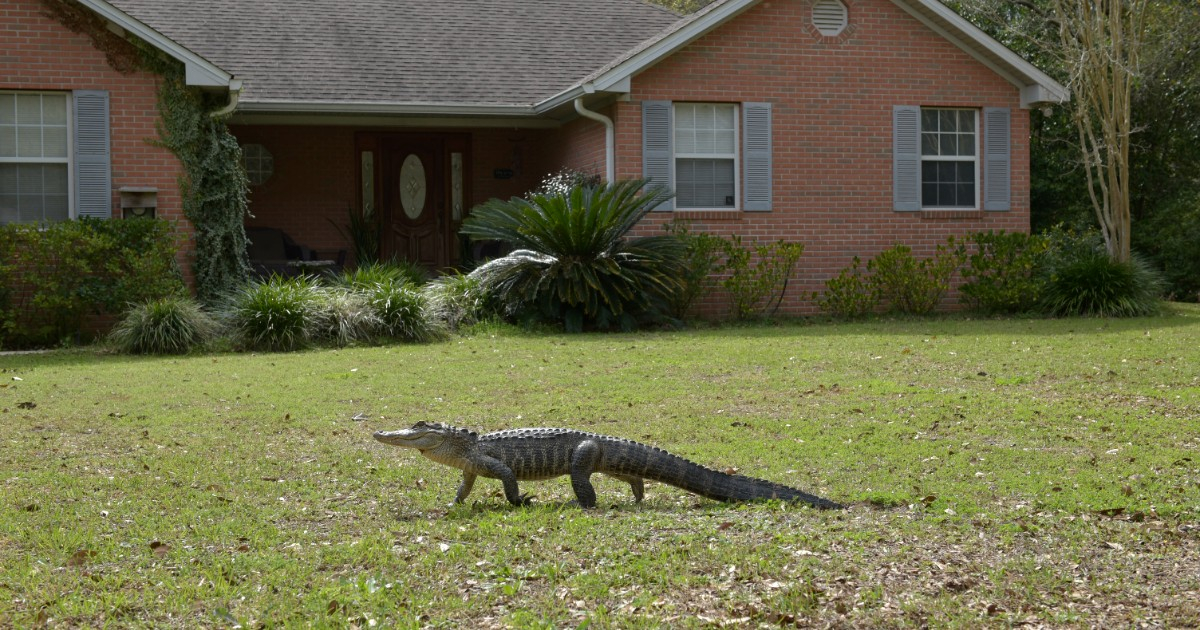
The recent alligator attacks in Florida, including two fatal incidents recorded in 2026, have raised alarms once again among residents and wildlife specialists.
An experienced hunter warns that people's excessive trust and the habit of feeding these reptiles can turn seemingly harmless encounters into dangerous situations.
In statements to the network WESH 2, AJ, a specialized hunter from DNA Outdoors, explained that many people have become so accustomed to coexisting with alligators that they have stopped taking basic precautions when encountering them near homes, lakes, and ponds.
"We have become too accustomed to alligators and do not give them the respect they deserve. People do not realize what they are truly capable of," he warned.
The specialist noted that one of the most dangerous behaviors is feeding alligators, because they can lose their natural fear of humans and start to associate human presence with the possibility of obtaining food.
His warning has a dual dimension: a crocodile that becomes accustomed to being fed may approach people more closely, but it also increases the likelihood that authorities will have to capture and euthanize it for being a threat.
The Florida Fish and Wildlife Conservation Commission (FWC) reminds that feeding these animals is prohibited by state legislation and that doing so can lead to dangerous encounters for both those who provide food and for others who may approach the area later.
AJ also explained that relocating a problematic alligator to another pond typically does not solve the danger, as the animal may attempt to return to the place where it was captured or continue approaching people in search of food.
The FWC maintains a state program for capturing alligators deemed dangerous, aimed at intervening when one of these reptiles poses a threat to people, pets, or property.
Generally, a crocodile that is at least four feet long, approximately 1.2 meters, can be considered problematic if there is reason to believe it poses a danger.
Smaller specimens can also be removed when they appear in pools, garages, or other spaces where they shouldn't be found.
Official records show how often these animals trigger alerts from residents.
According to data from the FWC, during 2025, for example, Orange County recorded 807 notices related to problematic alligators and 527 specimens removed.
The agency has a state program for the management and capture of dangerous alligators, through which residents can report animals that pose a threat to people, pets, or property.
In Volusia County, 386 reports were recorded and 249 specimens were removed, which is approximately 64% of the notices.
Another factor highlighted by specialists is the transformation of natural habitats. During 2026, the FWC explained that the intense drought had reduced the availability of water for alligators, forcing them to move and concentrate in lakes, canals, and ponds where humans also carry out activities.
The high summer temperatures also increase the activity of these reptiles, while their reproductive cycles alter their movements and territorial behaviors.
During the mating season, which begins in spring and peaks in activity between May and June, alligators travel greater distances in search of a mate and may be seen in residential neighborhoods, on roads, golf courses, and residential yards.
FWC has specified, however, that mating is rarely directly related to attacks on people. Its main effect is to increase animal activity, and with that, the chances of encounters.
Heavy rains and flooding can also temporarily change the location of alligators. In October, the FWC warned that these reptiles and snakes may be seen more frequently in flooded areas after major storms, due to the disruption of their habitats and the displacement of water.
Authorities then recommended avoiding any contact with wild animals that appear outside their usual areas, especially when floods make it difficult to distinguish the boundaries between ponds, channels, and spaces frequented by people.
The current concern is also related to the deadly attacks recorded during this year.
The most recent incident occurred on October 16, when Steven Hamilton, a 71-year-old fisherman, died after being attacked by an alligator nearly 12 feet long while he was near a pond at Dr. Bradford Memorial Park in Winter Garden, near Orlando.
The animal, which measured approximately 3.56 meters, bit the man and dragged him into the water. Authorities recovered his body about two hours later, and the alligator was captured and euthanized.
Human behavior also influences many of these encounters. A study from the University of Florida, published in 2025, identified risky behaviors in 96% of the analyzed attacks, including swimming in waters inhabited by alligators or getting too close to the animals.
Professor Frank Mazzotti, one of the researchers, stated that many bites can be prevented when people have a better understanding of their environment and avoid risky behaviors.
Related videos:
Filed under: