While browsing social media this morning, I came across a comment from an outraged Cuban internet user expressing their frustration over the increasing garbage problem in Havana, the unsanitary conditions, and the economic crisis: "This country has gone to waste," they said.
If a Cuban tells you that something "went to bolina," they mean that it has been lost, ruined, or is directionless. It is one of those expressions that everyday speech took from the sea and turned into daily philosophy. Today, it resonates with particular strength to describe the situation in the country.
The Dictionary of the Royal Spanish Academy indicates that «bolina» is «the line used to pull the windward sheet of a sail towards the bow so that it catches the wind more effectively».
"To sail close-hauled" or "to go close-hauled" means to navigate in such a way that the angle between the boat's keel and the wind is as small as possible. It is a demanding form of sailing that, with strong winds and improper maneuvering, can cause damage to the sails and even lead to the mast breaking, leaving the vessel adrift.
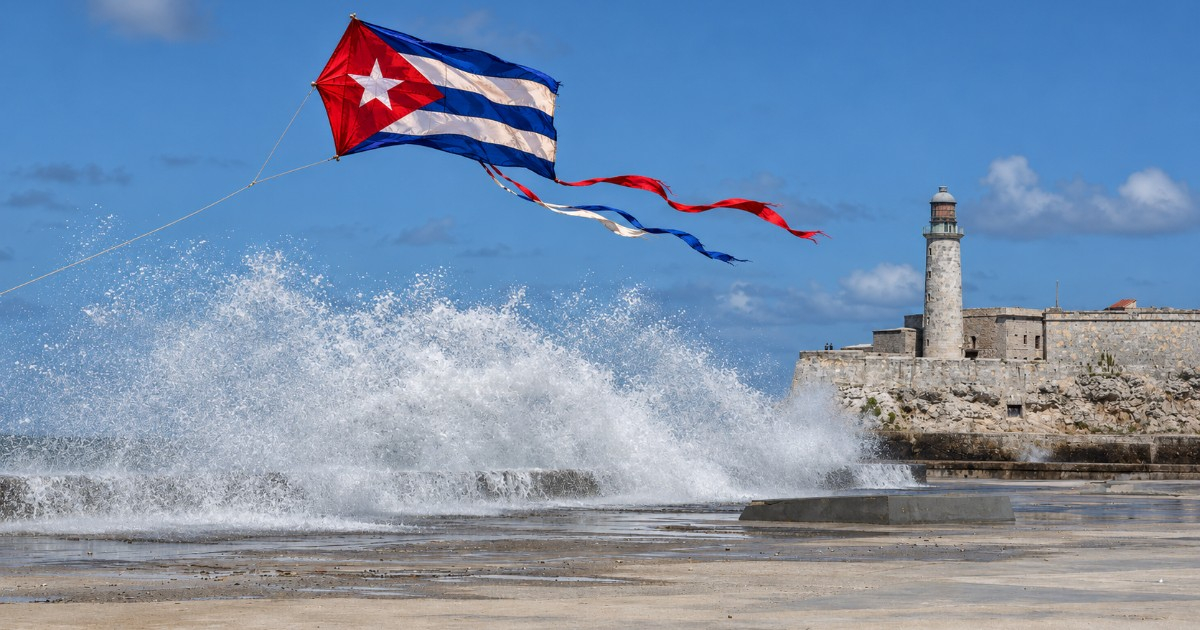
This image helps to understand the figurative meaning that the expression acquired. In Cuba, the phrase is also related to the flight of the kite. When the string that holds it breaks or is cut, the toy is left at the mercy of the wind and “it goes adrift”. This usage has been documented since the 19th century.
He went to bolina: A phrase with historical, political, and cultural significance in Cuba
The expression reached its historical recognition with the chancellor and writer Raúl Roa García, who used it as the title of his book La revolución del 30 se fue a bolina, published in 1969.
Roa described the failure of the revolutionary process that overthrew the dictatorship of Gerardo Machado in 1933, but was unable to establish a transformative program in Cuba. The revolutionary government of the One Hundred Days fell in January 1934 amid U.S. pressures and the maneuvers of Fulgencio Batista, who was then the head of the Army.
In 1977, the troubadour Noel Nicola, founder of the Nueva Trova alongside Silvio Rodríguez and Pablo Milanés, included the song "Se fue a bolina" in his album Comienzo el día.
The piece reflects the tragedy of a generation that did not achieve its goal. It evokes the misery of the year 1933 with expressions like "coffee is worth only a penny, but that penny is nowhere to be seen." Furthermore, it mentions the frustrated aspirations of historical Cuban figures such as Pablo de la Torriente Brau, Julio Antonio Mella, and Rubén Martínez Villena.
Nicola turned the expression into a symbol of a collective failure that Cubans did not want to experience again. He was one of the voices that sang to the revolution, to the social ideals that were proclaimed at the time, and to how political measures impacted the daily lives of citizens.
A later version of "Se fue a bolina" was recorded by Juan Formell y Los Van Van for the tribute album 37 Canciones de Noel Nicola, released after his death.
What Nicola sang about poverty on every corner, the unchecked ambition, the conflicts with the United States, and the wounded hope of a generation resonates today in a new and painful reality.
Cubans in 2026, amidst blackouts, shortages, and mass exodus, use the same expression to describe their present, marked by the failure of the revolution that shattered the dreams of millions.
Therefore, if you come across a Cuban on social media saying: “This country has gone to waste”, understand it. There is a deep pain in their message. There are no ropes, sails, or masts left on the island to cling to. One can only hope that the north wind blows with all its strength so that calm seas and peace may follow.
Related videos:
Filed under: