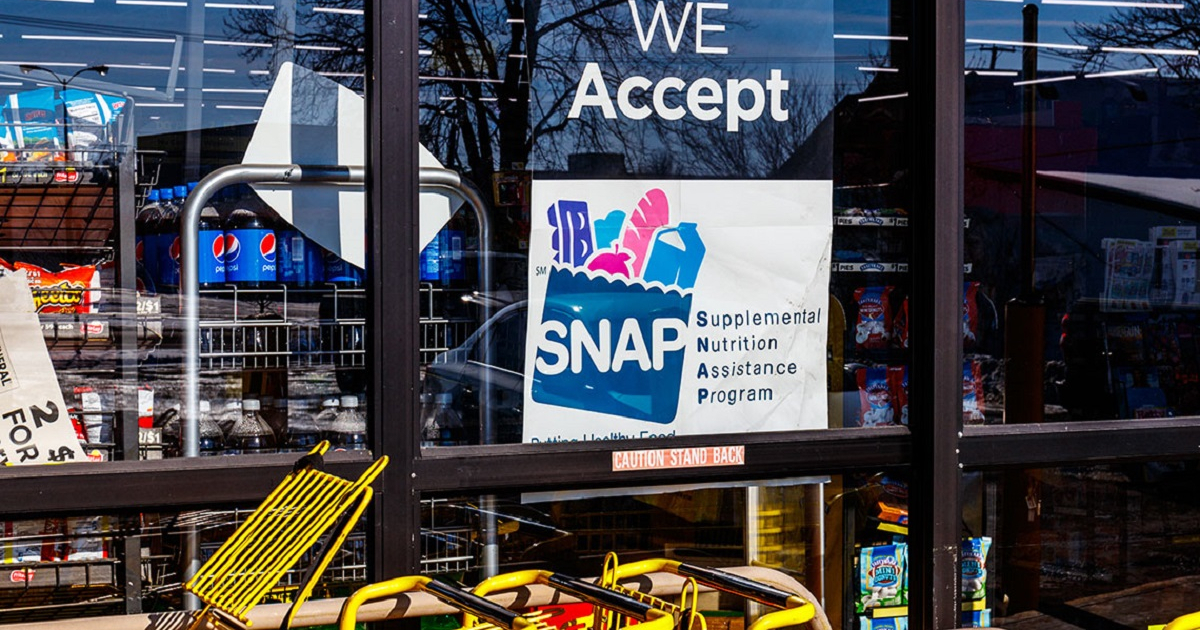
Millions of people in the United States could lose access to food stamps if a new federal government proposal to tighten the requirements of the Supplemental Nutrition Assistance Program (SNAP) goes into effect.
The change would affect the income and savings criteria used to grant this assistance and could also extend to Cuban families residing in Florida who currently receive benefits.
The proposal, presented by the United States Department of Agriculture (USDA), was published this Tuesday in the Federal Register under the title Reforming Categorical Eligibility.
According to official estimates, about 6.3 million beneficiaries from 3.2 million households could stop receiving SNAP by fiscal year 2029, when the measure is expected to reach its full impact.
The figure represents approximately 17.6% of the current participants in the program. However, the proposal has not yet been approved nor does it currently change the benefits that families receive.
The government has opened a public comment period that will remain active until December 10, 2026.
The central change involves restricting a mechanism known as Broad-Based Categorical Eligibility, which allows states to streamline access to SNAP for households that qualify for certain social assistance programs.
Currently, some families can obtain eligibility through non-monetary benefits or services funded by the Temporary Assistance for Needy Families (TANF) program, even when it comes to supports as simple as receiving information about other available services.
The new regulation would eliminate that possibility and reserve categorical eligibility linked to TANF for households that actually receive assistance from that program as defined by federal standards.
It would also eliminate the possibility of considering certain families eligible solely for being authorized to receive a benefit, without having actually received it.
This means that many households currently benefiting from simplified access to SNAP would have to demonstrate again that they meet the federal income and resource limits, including certain savings and other assets that are considered to assess eligibility.
Ordinary federal rules generally require that households without senior or disabled members have gross monthly income of up to 130% of the federal poverty level, and net income of up to 100%, after applying the allowed deductions.
Households with elderly individuals or with disabilities are subject to different rules and do not have to meet the same gross income requirement.
Florida is one of the states where the change could have significant consequences
According to official USDA information, the state currently uses expanded categorical eligibility, with a general gross income limit of up to 200% of the federal poverty level and no overall asset limit for households that qualify through this mechanism.
If the proposal is approved, families that currently rely on that eligibility pathway and do not receive the TANF assistance outlined in the new regulation would have to adhere to the standard federal criteria.
Some may retain their food stamps, while others would no longer meet the requirements due to their income or financial resources.
The Florida Department of Children and Families (DCF), responsible for administering the program in the state, explains that the assessment also considers deductions for housing expenses, utilities, dependent care, and certain medical expenses, among other factors. This is why two families with similar incomes may achieve different results.
For Cubans residing in Florida, the potential impact will depend on both the household's economic situation and the immigration requirements applicable to each member.
Being Cuban, having permanent residency, or being in a process of immigration adjustment does not guarantee the right to receive SNAP on its own.
Current regulations allow certain legal permanent residents and individuals recognized as Cuban or Haitian entrants to access the program, provided they meet the other requirements.
This last category, used to determine access to certain public benefits, may include Cubans with parole, pending asylum applications, or specific immigration procedures, depending on their documentation and circumstances.
The new proposal does not directly eliminate those migration categories. Its aim is to change the way the income and resources of certain households that apply for or receive food assistance are evaluated.
Therefore, a Cuban who currently qualifies for SNAP due to their immigration status may still be affected if they no longer meet the new economic criteria.
The proposal could also have an impact on other food programs that use participation in SNAP as a means to grant benefits.
The USDA estimates that around 1.78 million children would lose automatic eligibility for free school meals.
However, approximately 97% of them would still meet the requirements to obtain free or reduced-price meals through other certification procedures.
In budgetary terms, the Department of Agriculture estimates that the changes would reduce federal spending on SNAP benefits by approximately $44.649 billion during the fiscal years 2027 to 2031.
The Government claims that the reform would better align eligibility with the criteria established by Congress and direct resources to households that demonstrate a need for assistance.
The document itself acknowledges that the measure would increase the administrative workload for the states, which would have to verify the financial resources of more applicants.
For now, there is no definitive date for implementation. The USDA will need to evaluate the comments received and determine whether to approve a final rule, modify its content, or make another decision.
The projections for profit losses in 2029 are contingent upon the proposal being implemented.
Interested individuals can submit comments until December 10, 2026 via Regulations.gov, by searching for the docket FNA-2026-0661, or they can send them via email to sm.fn.snappdbrules@usda.gov, including that docket number and the title of the proposal in the subject line. The USDA warns that the comments received and the identities of those who submit them may be made public.
This initiative is part of other changes to the SNAP requirements and restrictions that began to take effect in 2026, including increased work requirements and modifications to the eligibility conditions for certain immigrants.
For those applying for their residency under the Cuban Adjustment Act, immigration lawyer Willy Allen III previously explained that there is a legal exemption for the public charge inadmissibility ground.
That immigration protection is a different matter from the economic requirements that must be met to receive food vouchers.
In Florida, the accelerated SNAP procedure for households with urgent food needs is still available, allowing for a decision to be made and assistance to be received within a reduced timeframe when the established conditions are met.
This mechanism is part of the current rules and should not be confused with the eligibility changes recently proposed by the USDA.
Related videos:
Filed under: