
Related videos:
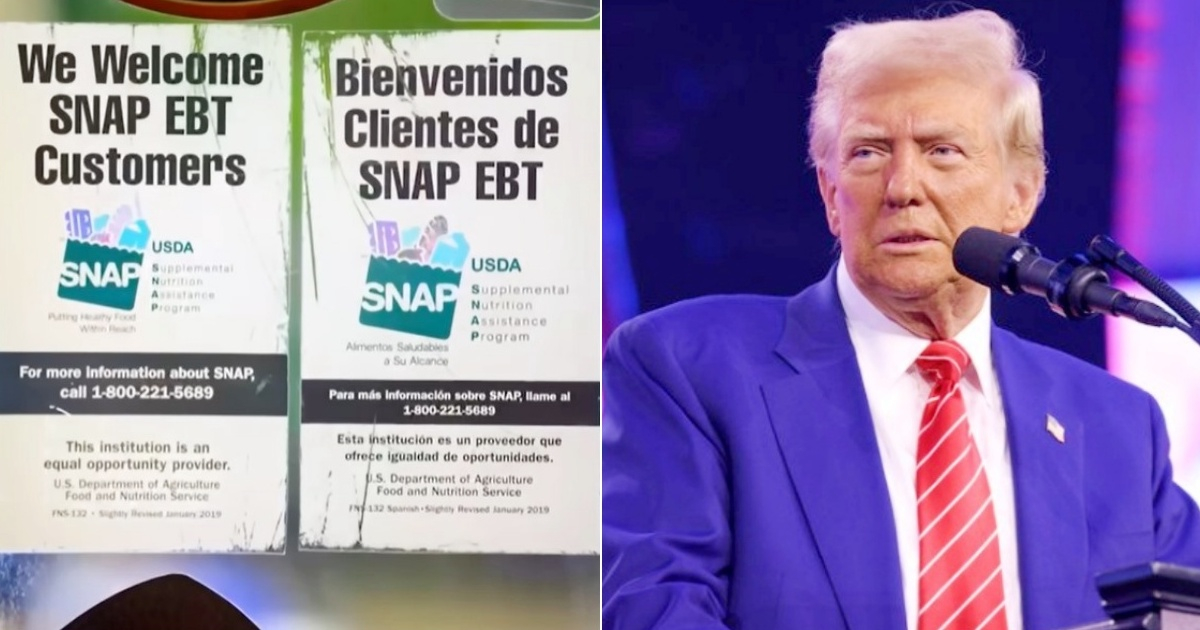
Since February 1, millions of people in the United States began to feel the effects of one of the most drastic reforms in the history of the SNAP food assistance program, also known as food stamps.
The changes, driven by the government of Donald Trump through the federal law One Big Beautiful Bill, involve cuts, new restrictions, and requirements that are already impacting the most vulnerable sectors of the population.
A historic turning point in food assistance
The Supplemental Nutrition Assistance Program (SNAP) was established over eight decades ago with the goal of combating food insecurity in the U.S.
Currently, it benefits about 42 million Americans in 22 million households, which amounts to nearly one in eight residents of the country, according to PEW Research.
However, with the implementation of the reforms on February 1st, that safety net has changed radically.
The legislation was signed by Trump on July 4th, and according to the Congressional Budget Office, it entails a cut of approximately 186 billion dollars to the SNAP program until 2034.
“It is the largest cut to the program since its creation 86 years ago,” noted analysts from USA Today Network.
New demands
Among the most significant changes are the new labor conditions imposed to maintain the assistance:
Adults aged 18 to 65 without dependents must work or attend a job training program for at least 80 hours a month. Previously, this requirement applied only up to the age of 55.
Parents or adults in households with children aged 14 or older must also meet these requirements, even though they were previously exempt if the minor was under 18.
Veterans, homeless individuals, and youth aged 18 to 24 who have exited the foster care system will no longer be exempt.
“From now on, even veterans will have to demonstrate that they are working in order to continue receiving food stamps,” confirmed the Department of Agriculture (USDA).
Furthermore, states will only be able to extend benefits to unemployed individuals if the local unemployment rate exceeds 10%, which drastically reduces the chances of temporary exemptions.
Immigration exclusion: fewer immigrants eligible for assistance
Another radical change affects immigration eligibility:
-Access is limited for U.S. citizens and certain legal permanent residents.
-Eligibility is eliminated for legally present immigrants, including asylum seekers, refugees, and individuals protected for humanitarian reasons, such as survivors of domestic violence or human trafficking.
Restrictions on what can be purchased: Goodbye to sodas and sweets
The law also imposes restrictions on the products that can be purchased with SNAP benefits.
From now on, using benefits to purchase will not be allowed:
-Sugary drinks, sodas, and energy drinks.
-Candies, chocolates, and sweets.
- Ultra-processed and salty snacks.
-Prepared desserts and industrial bakery products.
A report from the USDA estimated that these products accounted for up to 20% of the monthly expenditure of program beneficiaries.
According to the Government, the goal is to "improve public health and reduce chronic diseases associated with poor nutrition", although advocacy organizations consider it a punitive measure that limits options for low-income families.
In states like Florida, these restrictions will be implemented gradually.
Starting April 20, 2026, the prohibition on using SNAP to purchase sugary beverages and non-perishable desserts will come into effect.
Florida, Texas, and other states among the most affected
Six states have been identified as the most impacted by the reform: Florida, Texas, Oklahoma, Louisiana, Colorado, and West Virginia.
In the case of Florida, where 2.9 million people (13% of the population) receive SNAP, the consequences will be especially severe.
The state will have to assume up to $1.6 billion in new costs resulting from the changes, including 15% of the total expenditure on benefits and up to 75% of the administrative costs.
Additionally, 38% of beneficiaries in Florida are minors and 24% are senior citizens, according to data from the Miami Herald.
More than half of households include a person with a disability.
The government's justifications and experts' criticisms
The Trump administration argues that the changes are necessary to "reduce massive fraud" and "ensure that benefits reach those who truly need them."
The Secretary of Agriculture, Brooke Rollins, has stated that "thousands of people who did not qualify were receiving SNAP benefits" and that the reform aims for "fiscal accountability."
However, the Congressional Research Service contradicts that narrative.
In an April 2025 report, it stated that "fraud in SNAP is rare," and that most improper payments are due to unintentional administrative errors.
Social organizations and human rights defenders have strongly criticized the reform.
They warn that, in a context of persistent food inflation, these measures could exacerbate food insecurity and push millions of people even closer to the threshold of hunger.
"The social safety net is being dismantled under a narrative of efficiency, when in reality many of those affected are poor workers, children, and elderly individuals," stated a spokesperson for the Center on Budget and Policy Priorities.
Who qualifies for SNAP now?
The eligibility rules have also been tightened. To qualify for SNAP, criteria such as the following must be met:
-Be a U.S. citizen or a qualified legal resident.
-Having an income below 130% of the federal poverty level (in 2026, this equates to $15,960 for an individual or $33,000 for a family of four).
-Meet the new labor requirements.
-Not having committed offenses related to drugs or SNAP fraud.
Florida, for its part, implemented a regulation in 2024 that penalizes beneficiaries who do not accurately complete the required reports or fail to meet the labor conditions.
A model in transformation
The implementation of the One Big Beautiful Bill marks a paradigm shift in the United States' food assistance policy, redirecting the focus from a logic of universal aid to a system conditioned on employment, citizenship, and strict oversight.
Although for the government it represents a political victory in terms of public spending, for millions of families it means uncertainty, reduced access to food, and more obstacles to survive.
The history of SNAP, which began in 1939 as a national coupon program, is currently experiencing one of its most restrictive chapters.
Filed under: