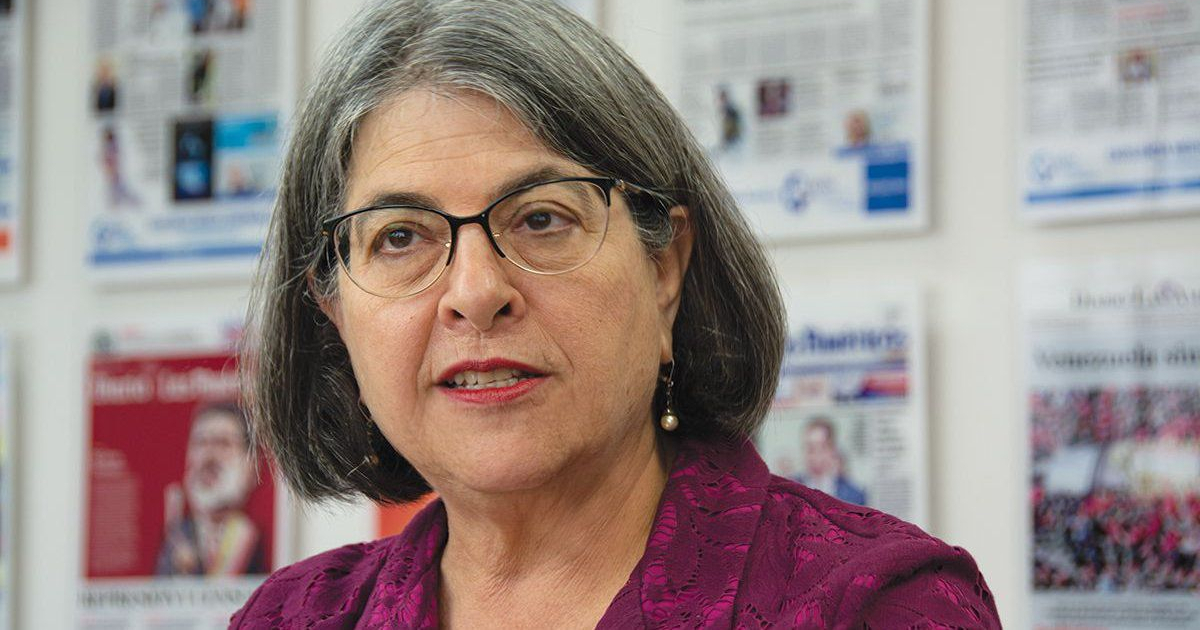
The mayor of Miami-Dade County, Daniella Levine Cava, urged the United States Congress to reinstate Temporary Protected Status (TPS) for thousands of immigrants from countries such as Venezuela, Haiti, Honduras, and Nicaragua, whose immigration protections have been canceled by the Trump administration.
The official called for urgent intervention to prevent more families from losing their work permits and becoming exposed to deportation.
In a post on the social network X, Levine shared a letter dated Tuesday, November 10, addressed to the leading figures of Congress, in which she requested action during the current legislative session, without waiting for the next one.
"The elections last week sent a clear message. Americans want an end to immigration policies that separate families and a different direction to be taken," the mayor stated.
The official stated that Congress has an opportunity to reach agreements and restore protections for immigrants who have been living in the United States for years, working, raising their children, and being part of their communities.
"I am urging congressional leaders to restore Temporary Protected Status for families who have built their lives here, raised their children here, and become part of the social fabric of Miami-Dade," he stated.
The letter is addressed to the Speaker of the House of Representatives, Mike Johnson; the Republican majority leader in the Senate, John Thune; the Democratic minority leader in the House, Hakeem Jeffries; and the Democratic leader in the Senate, Chuck Schumer.
It was also sent to the members of Florida's congressional delegation.
On behalf of the 2.7 million residents of Miami-Dade County, I am writing to urge you to act swiftly —in this session, not the next— to restore Temporary Protected Status, Levine Cava noted in the document.
The mayor proposed three specific measures: the first is to legally reinstate TPS for countries whose designations have been canceled as long as the dangerous conditions that prevent the safe return of their citizens persist, including Haiti, Venezuela, Honduras, and Nicaragua.
He also called for protecting the immigration status and work authorization of those who currently have or recently had TPS, to prevent them from losing their livelihood while Congress explores possible solutions.
The third request seeks to restore mechanisms for judicial review of cancellations and strengthen legislative oversight over the decisions of the Department of Homeland Security (DHS).
At that point, Levine Cava mentioned the proposal Temporary Protected Status Review Act, introduced on July 23, 2026, by Florida Democratic Congresswoman Debbie Wasserman Schultz.
The project aims to establish judicial review procedures for decisions that terminate TPS and subject them to greater oversight by Congress.
The initiative, identified as H.R. 9944, was sent to committees in the House of Representatives and has not yet become law.
Levine Cava recalled that at the beginning of 2025, a total of 17 countries had TPS designations protecting approximately 1.4 million people.
According to the figures presented in his letter, since then 13 designations have ended, affecting more than 1.1 million immigrants.
The mayor defended the role of these immigrant families in the economy of Miami-Dade. She mentioned nurses, home health aides, construction workers, hurricane recovery personnel, restaurant employees, and small business owners.
It was also emphasized that many of those affected are parents of children born in the United States and that, for years, they have undergone background checks, paid taxes, and renewed their documents when required by the authorities.
In their view, removing immigration protections does not make communities safer; rather, it can lead to job losses, harm local businesses, and separate families that have been established for years.
The official stated, moreover, that the conditions that led to the granting of TPS have not disappeared.
She pointed out the violence of gangs and the humanitarian crisis in Haiti, as well as the instability and dangers that, in her assessment, continue to confront Venezuela, Nicaragua, and Honduras.
TPS is a temporary immigration benefit that allows citizens from certain countries to legally stay and work in the United States when their territories are experiencing armed conflicts, natural disasters, or other extraordinary circumstances. It does not equate to permanent residency nor does it automatically provide a pathway to citizenship.
In her letter, Levine Cava insisted that Congress should not wait for new elections or court resolutions to intervene. "Our families cannot wait, and Congress should not, either," she concluded.
Cuba is not included among the countries mentioned by Levine Cava and has never had a TPS designation. Cubans have other mechanisms and categories for immigration protection, with eligibility depending on individual circumstances.
The mayor's call comes after months of administrative and judicial decisions regarding the future of these protections.
On June 25, Levine Cava publicly criticized a decision by the Supreme Court that allowed the termination of TPS for Haitians and Syrians to move forward.
Later, in July, the administration of Miami-Dade warned about the economic consequences of losing TPS for thousands of Haitian workers, especially in sectors such as healthcare, hospitality, and other essential services in South Florida.
Honduran and Nicaraguan immigrants also face restrictions. In February 2026, a federal appeals court suspended a judicial decision that had blocked the cancellation of TPS for citizens of those two countries and Nepal, allowing the Government to temporarily continue with the terminations.
In the Venezuelan case, a decision by the Ninth Circuit Court of Appeals initially opened the possibility of restoring TPS on November 6.
However, a new resolution granted a 14-day administrative stay, delaying the reinstatement of those protections while the litigation continues.
Related videos:
Filed under: