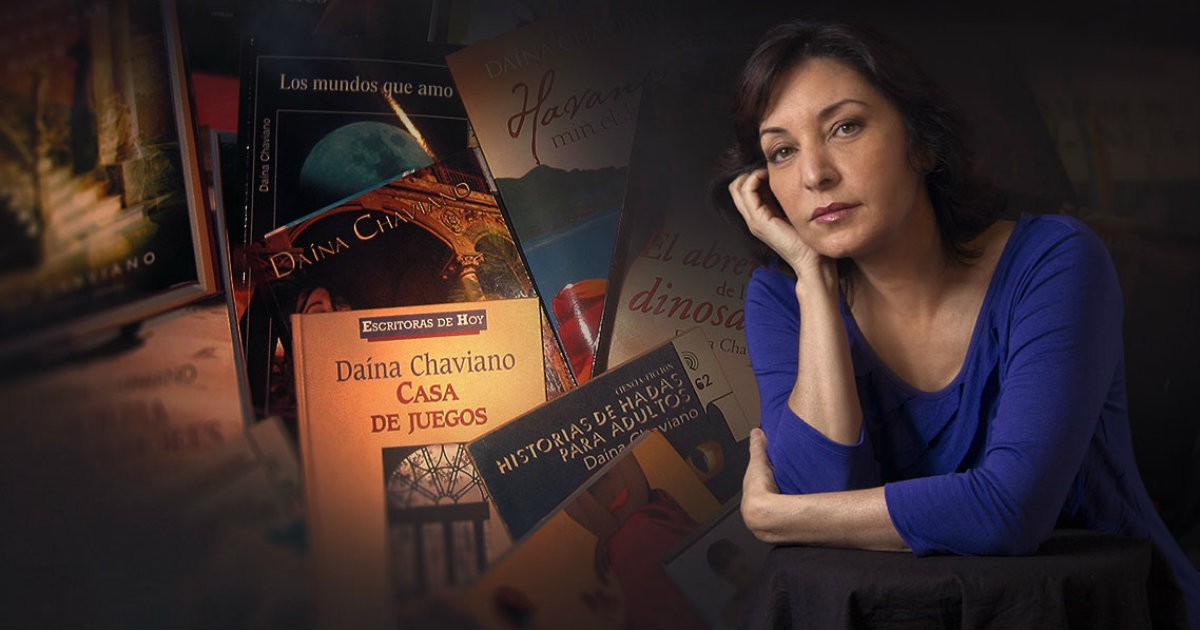
The Cuban-American writer Daína Chaviano will receive the Sheridan Le Fanu Award 2026 in Madrid this Saturday, one of the most prestigious awards in Spanish-language fantasy literature, an acknowledgment that solidifies her position among the great voices of the genre worldwide.
The ceremony will take place at 7:15 PM at the Auditorium of the Germán Sánchez Ruipérez Foundation, in Matadero Madrid, with free admission. The award is given by the Sui Generis Madrid Festival in its XVIII edition, and this year it honors three writers from different traditions: Chaviano, the Russian Anna Starobinets —exiled in Barcelona since 2022— and the Spanish Sofía Rhei.
The festival described the scope of recognition as follows: “This year, the Sheridan Le Fanu travels to three different homes. Two of these authors write in Spanish and one in Russian; together they encompass the Caribbean, Spain, and a Russia from which one had to leave. What they share resonates beneath the surface, a drive to examine what disturbs us and transform it into significant literature.”
Born in Havana in 1957, Chaviano left Cuba in 1991 and settled in Miami, where she developed most of her work that made her the most translated Cuban writer in history.
The Cervantes Virtual Center places her, alongside the Argentine Angélica Gorodischer and the Spanish Elia Barceló, in the so-called "female trinity of science fiction in Spanish," a distinction that the festival itself describes as "the recognition of three women who each, in their own way, opened a territory that barely existed before."
His career began in 1979 when he won the first call for the David Prize for Science Fiction with The Worlds I Love, while he was a student at the University of Havana. Three years later, he founded the first science fiction literary workshop in Latin America, named after Óscar Hurtado. In 1990, he received the Anna Seghers Prize from the Academy of Arts in Berlin.
Already in exile, he created the series "La Habana Oculta," which includes El hombre, la hembra y el hambre —winner of the Azorín Prize for Novel in 1998— and La isla de los amores infinitos, translated into 27 languages and regarded as the most translated Cuban novel of all time. The magazine Críticas described his style as if "Ray Bradbury had married Michael Ende and occasionally flirted with Anaïs Nin."
The award also holds symbolic value for the festival: Elia Barceló received the Sheridan Le Fanu in 2020, and with Chaviano joining this edition, two of the three members of the "female trinity" are now united under the same accolade.
"We like to think that we are closing a circle that critics sketched long ago, and it was up to us to complete it," stated the organizers.
Beyond the awards, Chaviano maintains an active and critical public stance against the Cuban dictatorship. In April 2026, she declared that the current crisis in Cuba is worse than the Special Period of the 1990s and that political change cannot come from within the island. Months later, in July, she published on Facebook a text in which she described the situation as "a silent and insidious genocide that the international community prefers to ignore" and stated that "from that paradise island, only a land submerged in misery remains."
His novels have not been published in Cuba since he left the island 35 years ago, making this recognition in Madrid a symbol of the potential impact that Cuban literature can have when the regime fails to silence it.
Related videos:
Filed under: