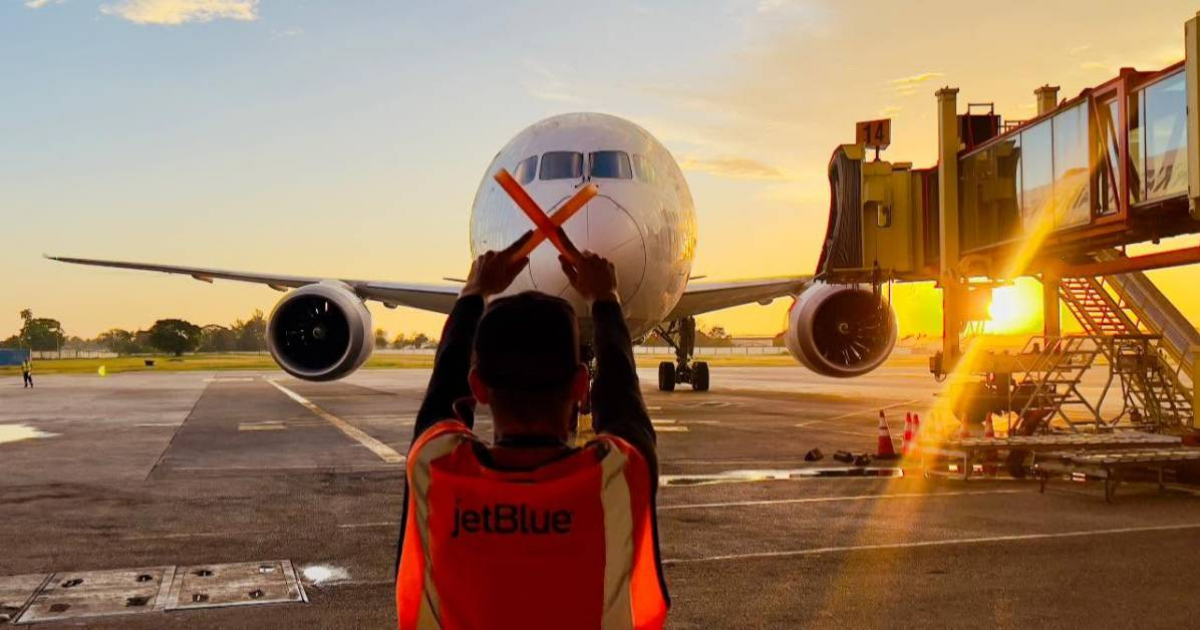
The shortage of aviation fuel in Cuba shows no signs of resolution. The Empresa Cubana de Navegación Aérea (ECNA) issued a new series of ten aeronautical notices on October 30 that extend the lack of Jet A-1 fuel at the same number of airports until 04:00 UTC on December 1, 2026, which is equivalent to 11 PM local time on November 30.
The notices, identified as NOTAM A3875/26 to A3884/26, declare with the technical formula "JET A1 FUEL NOT AVBL" that the standard fuel for commercial turbine aircraft will not be available for refueling at the affected terminals.
The included facilities cover practically the entire geography of the island: the José Martí International Airport in Havana, Juan Gualberto Gómez (Varadero), Jaime González (Cienfuegos), Abel Santamaría (Santa Clara), Ignacio Agramonte (Camagüey), Jardines del Rey (Cayo Coco), Frank País (Holguín), Antonio Maceo (Santiago de Cuba), Sierra Maestra (Manzanillo), and Vilo Acuña (Cayo Largo del Sur).
The restriction does not equate to the closure of airports nor does it automatically cancel all flights, but it forces airlines to seek costly solutions: loading additional fuel from the departure airport —a practice known as fuel tankering—, scheduling technical stops in third countries to refuel, or directly suspending operations.
Air Europa, for example, maintains its Madrid–Havana route but has added a stop in Punta Cana (Dominican Republic) to refuel on the return to Spain. Air China has turned to Nassau (Bahamas) as a supply point for its flights between Beijing, Madrid, and Havana.
This new extension replaces a previous one that was set to expire on November 1, which in turn had replaced another that expired on October 1. The crisis has been documented continuously since February 2026, when nine airports received the first notice of this kind.
Important warning: December 1 does not guarantee the restoration of supply. According to the specialized portal Click-Cuba, "the December date is an expiration date for the NOTAM, not a guarantee that the supply will be restored then, as ECNA may modify, replace, or cancel the notices before their expiration."
The cumulative impact on Cuban aviation and tourism is devastating. At least 11 airlines suspended or reduced operations to Cuba during 2026, resulting in over 1,700 canceled flights.
Among the companies that suspended services are Air Canada, Iberia, Air Transat, WestJet, Sunwing, Air France, Turkish Airlines, Rossiya, and Nordwind. Iberia has extended the suspension of its direct route from Madrid to Havana until June 30, 2027.
Tourism figures reflect the collapse: Cuba received only 477,707 visitors between January and September 2026, which is equivalent to 34.9% of the volume recorded in the same period of 2025, according to data from the National Office of Statistics and Information (ONEI) collected by Infobae. September was the worst month of the year, with only 27,354 international arrivals.
In this context, the Venezuelan airline Conviasa announced the resumption of flights between Caracas and Havana starting next Thursday, with two weekly frequencies, although it has not publicly indicated how it will ensure fuel in the Cuban capital, where restrictions remain fully in effect.
Related videos:
Filed under: