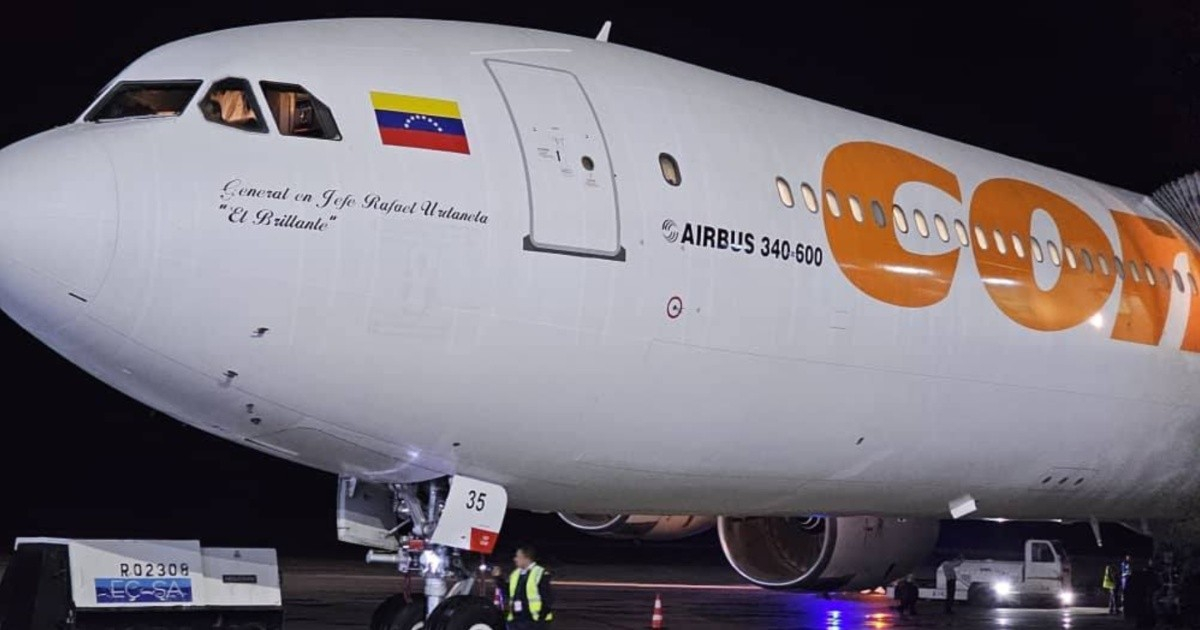
The Venezuelan state airline Conviasa will resume its flights between Caracas and Havana this Friday, after approximately two weeks of suspension, amid the aviation fuel crisis affecting ten Cuban airports.
The company will operate two weekly flights on Wednesdays and Fridays, despite the fact that restrictions on the supply of Jet A-1 remain officially in place until December 1, reported the medium Infobae.
The route had been suspended for approximately two weeks while the company focused its operations on the Venezuelan domestic market.
The Cuban Air Navigation Company (ECNA) issued the aeronautical advisories NOTAM A3875/26 to A3884/26 on October 30, declaring "JET A1 FUEL NOT AVBL" —aviation fuel not available— at key terminals such as José Martí International Airport in Havana, Varadero, Santa Clara, Camagüey, Holguín, and Santiago de Cuba, among others.
The restriction does not mean the formal closure of airports or the automatic cancellation of international routes, but it requires airlines to operate without relying on local supply.
Conviasa did not publicly explain how it will address the fuel supply for its flights to Cuba.
The options available for companies are to load at the origin the necessary volume for the entire round trip — feasible on short routes from the United States, Mexico, or the Caribbean — or to make technical stops in third countries, which increases operational costs and may reduce the capacity to transport passengers or cargo.
Other airlines have already adopted these strategies: according to a report by 14ymedio, Copa Airlines has taken on additional fuel in Panama, Air Europa makes a technical stop in Punta Cana before returning to Madrid, and Air China turned to Nassau, Bahamas, where it faced cancellations in October and organized an extraordinary flight to repatriate stranded passengers.
This is not the first time that Conviasa has adjusted its operations for this reason. In February, the company rescheduled its connections between Caracas, Havana, and Managua for several days due to fuel restrictions in Cuba and immigration requirements from Nicaragua. Months later, in June, it suspended the route following the closure of Maiquetía airport due to earthquakes in Venezuela.
The Caracas-Havana route also has a significant commercial dimension: Cubans use it to acquire goods in Venezuela that are intended for resale on the island, including hardware items and solar panels.
The return of Conviasa comes at a time of severe deterioration in air connectivity with Cuba. Iberia has suspended its direct route from Madrid to Havana until the end of June 2027, Delta eliminated its service from Atlanta in June and reduced frequencies from Miami, and at least 11 airlines suspended operations at some point during 2026, with over 1,700 flights canceled throughout the year.
International tourism reflects that collapse: between January and August 2026, Cuba received only 450,353 visitors, a decrease of 64.4% compared to the same period in 2025, and in September, only 27,354 foreign tourists arrived, the lowest figure for that month outside of the pandemic years.
As Infobae pointed out, Conviasa's return will occur "in a scenario of reduced air connectivity and dependence on external operational solutions to maintain flights to Cuba."
Related videos:
Filed under: