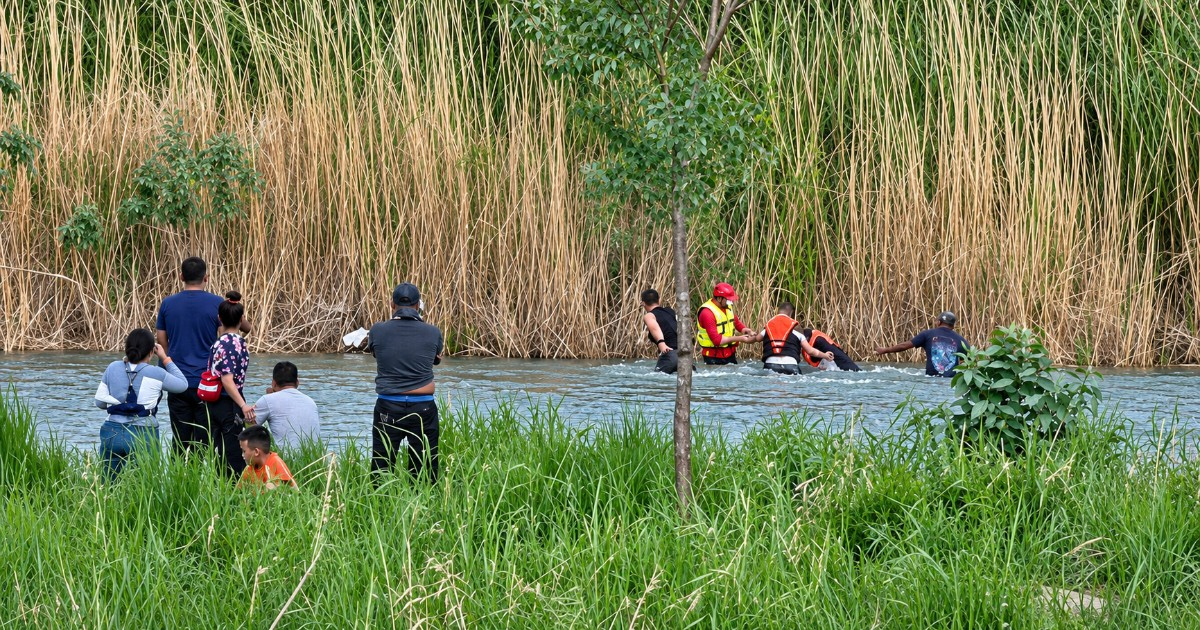
For years, thousands of migrants have paid large sums of money to coyotes to enter the United States illegally. Now, some are turning to those same traffickers to do the opposite: leave the country and cross into Mexico without going through official immigration checks, out of fear of ending up detained by ICE.
The phenomenon, described as a form of reverse migration, was recently addressed by the Mexican newspaper El Mañana, which gathered warnings from immigration lawyers and border analysts about individuals who prefer to pay traffickers rather than risk detention when they attempt to voluntarily leave the United States.
According to the consulted specialists, some people without immigration status fear that, when they present themselves at an international bridge to return to Mexico, they may be intercepted by agents of the Immigration and Customs Enforcement (ICE), transferred to a detention center and subjected to formal deportation proceedings.
The situation was also documented on October 22 by Univision San Antonio, which interviewed immigration attorney Haim Vásquez. The specialist explained that some migrants are considering hiring coyotes to return to Mexico because they fear being detained by ICE.
One day later, another report from Univision described how smugglers might be exploiting that concern to offer clandestine transfers into Mexican territory.
Among the mentioned routes are the Rio Bravo and desert areas of Arizona, which have traditionally been used for irregular entry into the United States.
However, changing direction does not eliminate the dangers of crossing. In addition to exposure to drowning, extreme temperatures, abandonment, and extortion, those who hire these services may face additional legal consequences if intercepted by the authorities.
The reports continued in November. On the 11th, TV Azteca reported that immigration lawyers in Baja California had also identified this practice.
The lawyer Josefina Orozco warned that returning clandestinely to Mexico can be counterproductive for those seeking to avoid detention, especially if they have a criminal record or outstanding immigration issues.
Representatives from shelters in Baja California confirmed that some individuals are afraid to go to official border crossings and are seeking alternatives through traffickers.
Experts recommend seeking legal advice before attempting to return.
In this regard, they pointed out that U.S. authorities have mechanisms to communicate the intention to voluntarily leave the country, including the app, which allows users to register this decision with the government.
However, using the tool does not automatically eliminate the potential immigration consequences of each case.
In the case of Cubans, there are numerous instances of payments made to coyotes to embark on the journey to the United States.
In September, the story of a Cuban who paid $10,000 to traffickers to reach the country was revealed, but he ended up spending over a year in detention and was deported to Cuba without having lived a single day free on U.S. soil.
The movement of Cubans from the United States to Mexico has also increased, although mainly through official deportations, a different situation from the clandestine crossings facilitated by coyotes.
In March, the increase of Cubans deported to cities in southern Mexico was documented, including Tapachula, where some arrived after spending long periods in U.S. detention centers.
One such case was that of Dylan, a 32-year-old Cuban who spent 10 months in ICE custody in California. According to his testimony released in June, he thought he would be sent to Cuba, but ended up in Villahermosa, Tabasco, without documents or money, after a land transfer of more than 40 hours.
In this regard, the organization Human Rights Watch documented in May the challenges faced by Cubans and other foreigners deported to Mexico, including prolonged detention periods, lack of documentation, and obstacles to regularizing their status in the receiving country.
Related videos:
Filed under: