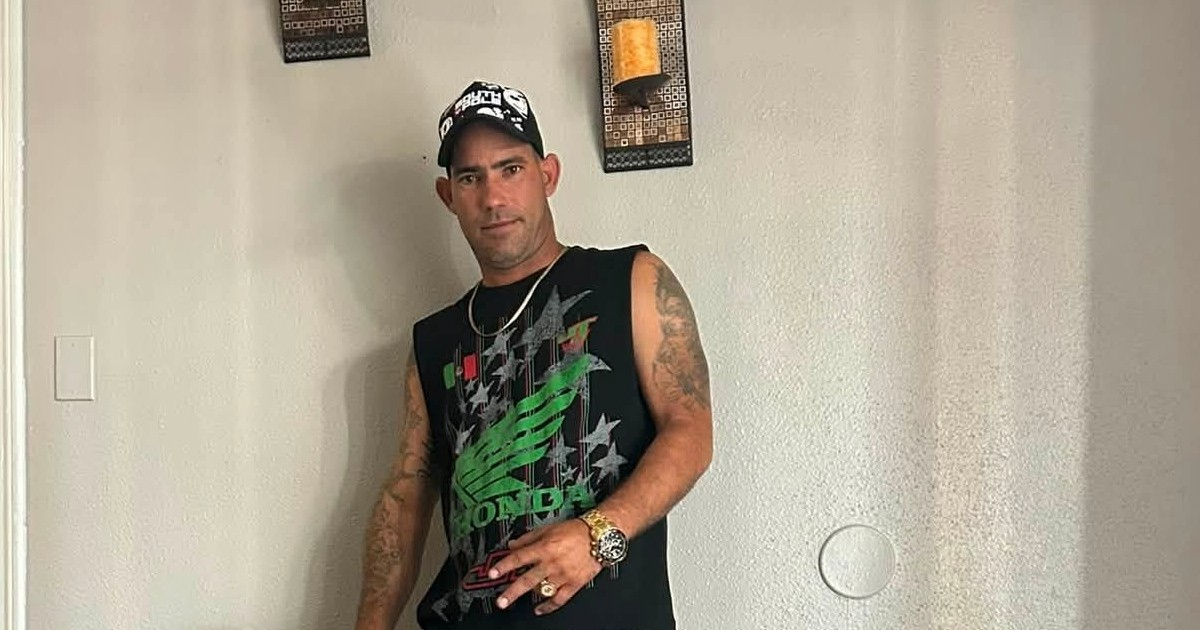
A Cuban from Camagüey who resided in Austin, Texas, reported this Thursday having been deported to Mexico despite having a valid parole, work permit, active driver's license, and a pending permanent residency application for two years in the United States.
"Today, with a heavy heart, I want to make this announcement: today I am deported in Mexico due to an application for permanent residency submitted two years ago, and I have still not received any response," said Juan Alberto in a Facebook post with photos of his loved ones.
The Cuban recounted that he left his family in the U.S. "without a father, without a husband, and with a broken heart and not knowing when I will be able to embrace my children and my wife again."
El caso de Juan Alberto refleja la incertidumbre que enfrentan miles de cubanos con procesos migratorios en curso. Sigue toda la información actualizada sobre deportaciones, parole y residencia en nuestra sección de
I was deported without ever having committed any crime. My only crime was always working to support my family and with a parole, with my valid license, with my work permit,” he pointed out, without adding further details about his case.
A Cuban woman shared that she had been waiting for three and a half years for her residency with the I-220A form after being deported, leaving her daughter—now a resident—in the United States: “What they have done to us is an injustice.” Another compatriot, who was deported directly to Cuba before managing to leave again, remarked: “You hold onto the hope that you’re still in Mexico and that someday you’ll have the chance to cross. Stay strong and always think of your family; don’t do anything illegal so that one day you can reunite with your family.”
According to a report by Human Rights Watch titled "They Leave Us Here to Die," published on May 27, 2026, between January 20, 2025, and March 9, 2026, the United States deported approximately 4,353 Cubans to Mexico, making them the largest national group among the nearly 13,000 individuals transferred to that country during this period. Of this total, 26% —around 1,132 people— had no criminal record in the United States, indicating that immigration policy is not limited to those with a criminal history.
The backdrop of these deportations is the elimination of the humanitarian parole program CHNV—intended for Cubans, Haitians, Nicaraguans, and Venezuelans—by the Trump Administration. The Department of Homeland Security stopped accepting new applications on January 28, 2025, and began cancelling individual permits in April of that year. The Supreme Court upheld the measure in May 2025.
In response to the Cuban government's refusal to accept repatriation flights, Washington began sending deported Cubans to Mexico as a "third country," under an unwritten agreement between both governments, the legality of which was still being reviewed by the Supreme Court in October 2026. The Department of Justice acknowledged in March 2026 that it had transferred approximately 6,000 Cubans to Mexico in the previous year.
Deported Cubans in Mexico Are Stranded Mainly in Tapachula, Chiapas, and Villahermosa, Tabasco, without documents, work permits, or a clear path to regularization. Activists estimated in May 2026 that around 800 Cubans remained in Tapachula and nearly 3,000 in Villahermosa, awaiting procedures with the Mexican Commission for Refugee Assistance, which can take months.
Related videos:
Filed under: