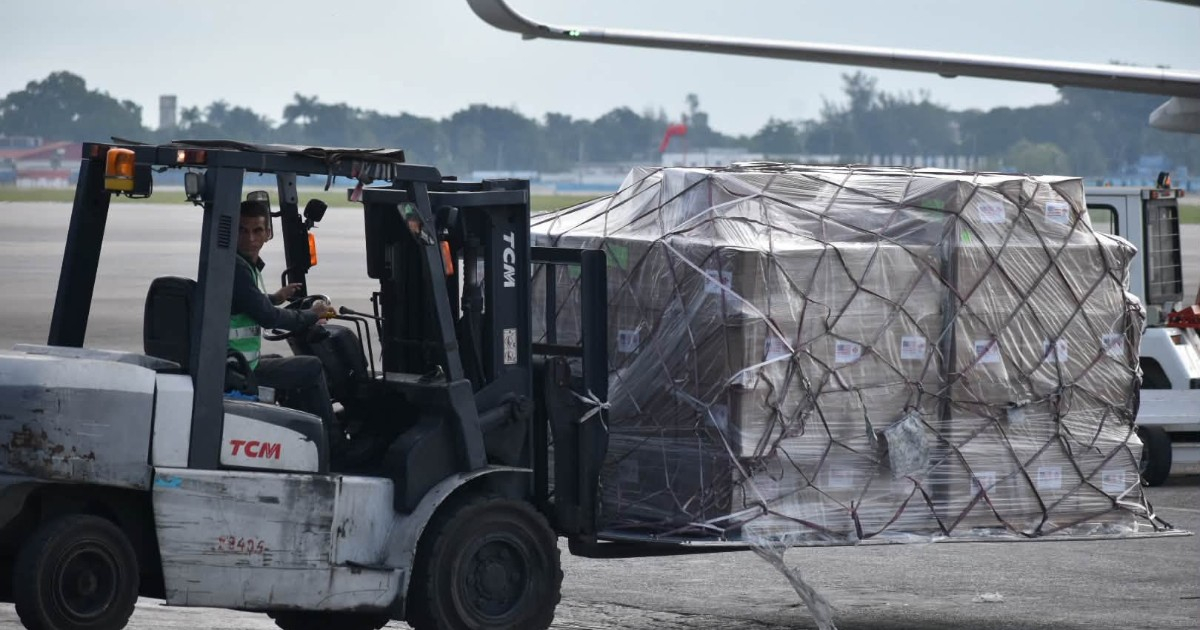
A third flight loaded with supplies from the United States landed on Thursday at José Martí International Airport, destined for the most vulnerable families of the Diocese of Pinar del Río, as Cáritas Cuba reported.
The shipment, channeled through the network of Cáritas Cuba, included 700 hygiene kits and 700 food modules to be distributed immediately among the households with the greatest needs in the diocese.
Cáritas volunteers will once again serve the communities of the parishes of Bahía Honda and Guanajay, and for the first time in this delivery cycle, they will include the community of San Martín de Porres in Taco Taco.
This third shipment is part of the 100 million dollar humanitarian aid program for Cuba announced by Secretary of State Marco Rubio on May 8, 2026, following his meeting with Pope Leo XIV in Rome.
Of that total, 60 million dollars are managed through Catholic Relief Services (CRS) in coordination with the Catholic Church and Cáritas Cuba, while the remaining 40 million are allocated to other independent humanitarian organizations.
The mechanism is specifically designed so that supplies reach families directly, without going through the Cuban government or the military conglomerate GAESA: CRS purchases the products in the United States, and Caritas distributes them through its parish network and home visits.
The food kits contain rice, beans, oil, sugar, spaghetti, sardines, and tuna. The hygiene kits include soap, cream, toothbrushes, water purification tablets, sanitary pads, containers, and rechargeable lamps.
The assistance prioritizes elderly individuals living alone, pregnant or breastfeeding women at risk, children under five years old, and people with disabilities or dependence.
For the Diocese of Pinar del Río, this is the third consecutive shipment. The first arrived on October 8, 2026, and was distributed in rural communities of Candelaria and Quiebra Hacha; the second, on October 27, reached rural areas of Guanajay and Bahía Honda. Each of these shipments also included 700 food kits and 700 hygiene modules.
The humanitarian situation in Pinar del Río is critical. According to data from October 2026, more than 169,700 people were facing severe issues with access to drinking water, with 46 pumping units out of service and power outages lasting over 16 hours a day that hindered the operation of the pumping stations.
Some communities went without piped water for periods ranging from 67 days to over three months, in a situation worsened by severe food instability resulting from the economic crisis that the island has been experiencing after decades of dictatorship.
The program has also reached other dioceses: Camagüey, Ciego de Ávila, Santa Clara, and Matanzas, where a third flight arrived at Varadero airport last Monday.
Cáritas Pinar del Río summarized the spirit of the initiative with a phrase that reflects the magnitude of the need: "In a setting marked by food insecurity and difficulties in accessing drinking water, this aid represents a vital lifeline for households."
Related videos:
Filed under: