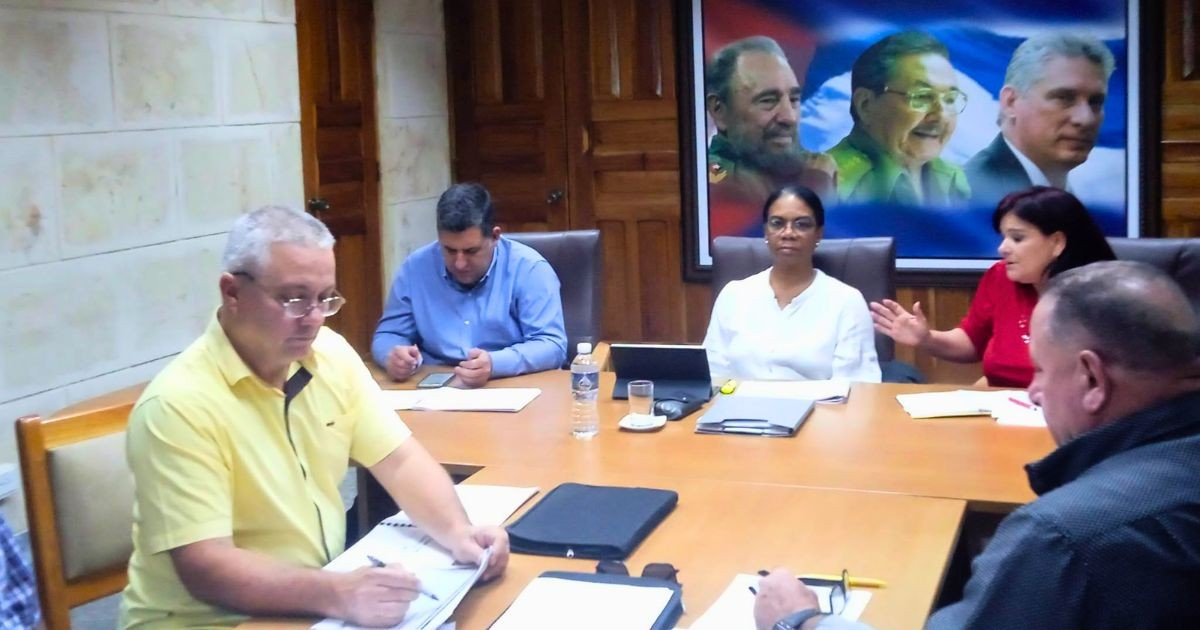
More than 169,700 residents of Pinar del Río have been without regular access to drinking water for weeks —and in some cases months— according to government data, and the Cuban regime responds with what it knows best: holding meetings and announcing programs.
This Saturday, the Provincial Government of Pinar del Río announced that the Deputy Prime Minister Inés María Chapman Waugh conducted a new follow-up visit to Vueltabajo, accompanied by the General Director of the Electric Union, Rubén Campos Olmos, and Junior Alexis Pérez from the National Institute of Hydraulic Resources.
According to the official publication, Chapman "insisted that the priority must be water supply, which is why a comprehensive water-energy program must be implemented to achieve it." For something to be "the priority," it doesn't seem to be treated as very urgent, at least based on the time it has taken to resolve it.
The government diagnosis points to two causes: the breakdown of 46 pumping units and six booster pumps, and the national energy crisis, which leaves pumping stations without electricity for more than 16 hours a day. What the statement omits is the true magnitude of the accumulated disaster: by mid-month, communities in the province had gone without the vital supply for between 67 days and more than three months, and the 30-inch pipeline, which supplies over 60% of the capital's population, was operating with barely half of its equipment.
The human figures behind those technical data are devastating. Residents of La Estrella, in San Juan and Martínez, reported more than four months without home supply, and some were boiling rainwater for drinking and cooking. On Calle Real, the main artery of the city of Pinar del Río, residents had accumulated more than 50 days without water; and in areas near the pediatric hospital, that number was exceeded.
At the end of August, three active outbreaks of hepatitis were reported in municipalities of the province, linked to the collapse of the water purification system. The provincial government acknowledged in September that it had invested over 100 million pesos without resolving the issue, while the Provincial Bureau of the Communist Party revisited the same complaints as always with no improvement in the service.
The crisis is by no means exclusive to Pinar del Río: the regime admitted this month that approximately 2.5 million Cubans had their water service affected or interrupted, and that more than 80% of national incidents were due to power outages and pumping failures.
Public reaction to the new official announcement was characterized by skepticism that no longer conceals frustration. "Hahaha, this is like the third time the same thing has happened; the one thing we don't get is the water, hahaha," wrote one internet user. Another was more graphic: "I only see many leaders gathered in a well-lit room […] trying to solve what many others have also tried to solve in meetings with air conditioning and bottles of water, and that's how it has been and will be, and almost always these meetings end with a nice lunch and goodbye until next time."
The responses ranged from irony to despair. "They've discovered lukewarm water..." noted one user. "Give some encouraging news; the people don't care about that kind of lie, they need a solution to the problem," demanded another voice. "In Cuba, we are experts at describing problems. I would like to see, before I die, a leader of any kind in my country explaining, proposing, brainstorming, and implementing a strategic, logical plan to solve at least one of the many issues that afflict us," declared a third.
The phrase that best captures the collective mood was written by an internet user with a blend of humor and resignation: "They're going to need to call NASA."
Related videos:
Filed under: