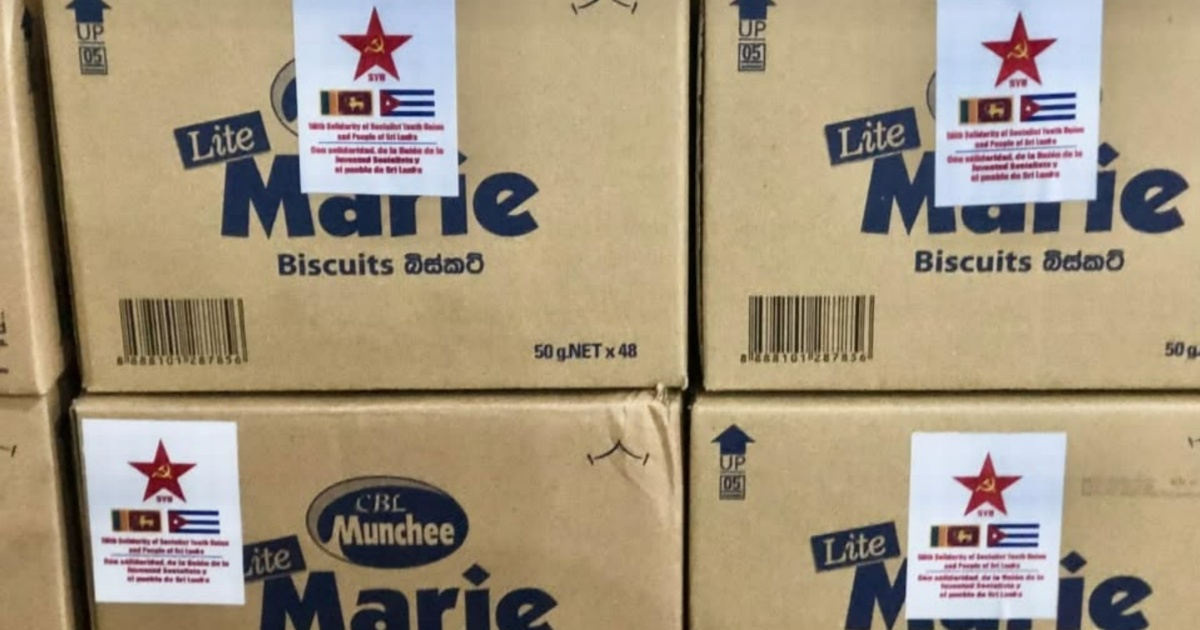
Fifty citizens of Sri Lanka who studied in Cuba will donate 160 kilograms of essential medicines to Cuban hospitals, according to an announcement made this Saturday by Sri Lankan professor Channa Jayasumana in an interview with the media outlet Ideas Multimedios.
The medications, primarily manufactured in Sri Lanka and India, will soon arrive on the island with the aim of alleviating the severe shortage of drugs facing the Cuban hospital system. The source did not specify the exact arrival date, the names of the medications, or the hospitals that will receive them.
Jayasumana, a toxicologist and former Minister of Health of Sri Lanka, also revealed the existence of a trilateral scientific agreement between specialists from Cuba, Sri Lanka, and El Salvador at the National Institute of Nephrology "Dr. Abelardo Buch López" in Havana, focused on the study of chronic kidney disease.
This pathology particularly severely affects Sri Lanka, where its prevalence is around 70%, especially among rice farmers. Recent research points to exposure to agrochemicals, combined with heat and dehydration, as significant factors in its development.
The donation arrives at a critical moment for Cuban healthcare. In April of this year, there were 461 out of 651 medications missing from the National Basic Drug List in state pharmacies, which represents over 70% of the official list. Months later, in July, BioCubaFarma acknowledged that it could not guarantee nearly 300 of the 395 medications it was supposed to supply to the healthcare system.
This is not the first international donation received by Cuban hospitals this year. In August, the Movement of Landless Rural Workers from Brazil delivered 7.6 tons of medication to the Hermanos Ameijeiras Hospital in Havana.
That same month, the Juan Bruno Zayas Alfonso Hospital in Santiago de Cuba received medical supplies —including amoxicillin, ibuprofen, and Foley catheters— donated by the Siboney Collective of Solidarity with Cuba from Chile, and the Hermanos Cordové Pediatric Hospital in Manzanillo received materials for therapy, oncology, and cardiology.
Cooperation between Cuba and Sri Lanka in the field of health has intensified in recent months. In May of this year, Sri Lankan parliamentary representatives and the Cuban ambassador Patricia Lázara Guerra identified health as a priority sector for expanding bilateral relations. In October, during a meeting in Jaffna, both countries discussed the expansion of student exchange programs for medical students; at that time, three young individuals from that city were studying medicine in Cuba.
The connection between Sri Lankan graduates and the island is established through the Latin American School of Medicine, which has trained nearly 29,000 professionals from over 100 developing countries since 1998.
The Cuban Ministry of Public Health itself described the gesture as "once again, graduates of the Latin American School of Medicine are giving back through actions what they learned in Cuba," although the crisis prompting these donations is a result of decades of mismanagement of the healthcare system under the dictatorship, exacerbated by the structural dependence that the regime itself has created.
Related videos:
Filed under: