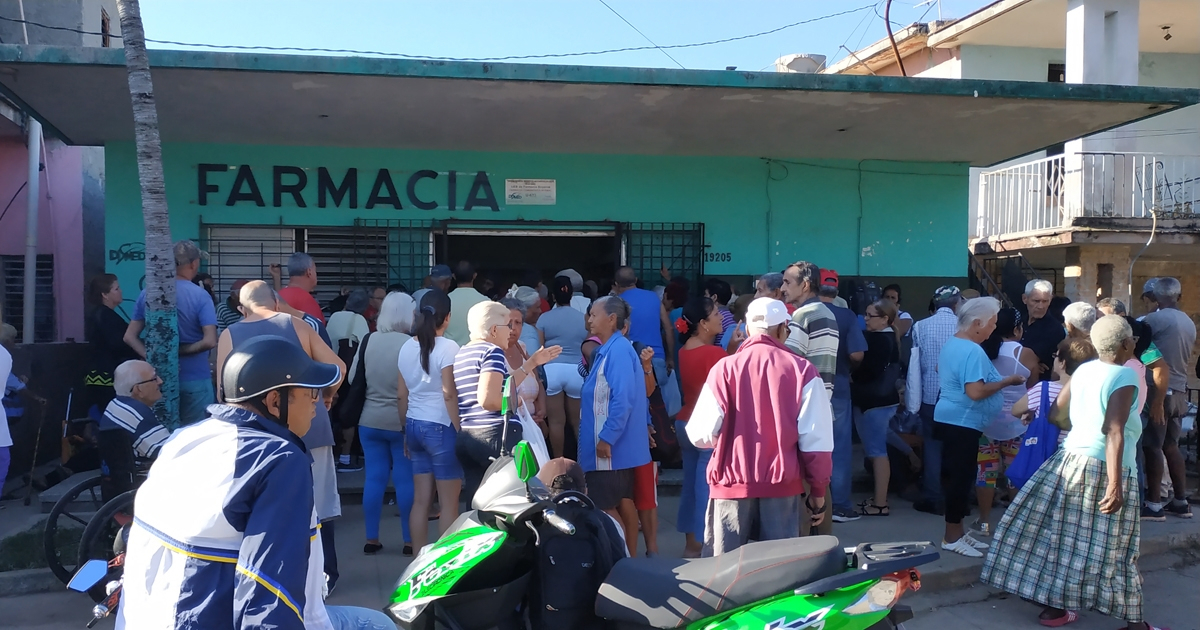
A Cuban resident in Havana reported this Sunday on Facebook that, after a year and two months of being unable to obtain the salbutamol aerosol she needs to treat her asthma, she finally found it at her neighborhood pharmacy, but the medication expires in January 2027, which is in just two months.
Juliette Isabel Fernández Estrada filed the complaint this Sunday, accompanied by photographs of the inhaler box manufactured by the company MedSol, based in Boyeros, Havana. The images show lot number 675025 with an expiration date of January 2027.
"After many months, 'some' medications finally arrived at the pharmacy in my neighborhood. And after a year and two months of constant shortages, I was able to buy the salbutamol spray I need for my asthma. Today, in November 2026, they are selling a medication that expires in two months, in January 2027," wrote the author.
His conclusion was straightforward: "The unbearable Cuban state, after neglecting its duty for so long, sells medicines that are about to expire or are outright expired."
The case is not isolated. In September, a resident of Bayamo reported that a state pharmacy in Granma was selling paracetamol and azithromycin that expired on the 30th of that month, when the report was published on the 11th, leaving less than three weeks of shelf life.
The report highlights an issue with inventory management: medications may have remained stored in state warehouses while pharmacies were reporting shortages, and they are only distributed when they are about to expire.
Salbutamol in aerosol form has been one of the most elusive medications for Cuban patients for years. In May 2026, patients in Güines, Mayabeque, reported the complete absence of the bronchodilator in local pharmacies. In June, a mother recounted that she had to take her asthmatic son to the hospital because there were no aerosols available for home treatment.
The shortage of medications in Cuba reached enormous proportions in 2026, acknowledged even by the authorities themselves. In April, there were 461 out of 651 medications missing from the national essential list, more than 70% of the total. In August, President Miguel Díaz-Canel admitted that only about 30% of the essential medications were available. In Ciego de Ávila, authorities acknowledged that pharmacies had only 60 out of 603 medications, close to 10% of the provincial essential list.
BioCubaFarma, the main state pharmaceutical group, reported in June that it had not produced approximately 300 of the 395 medications it was supposed to supply to the healthcare system, pointing out a funding gap exceeding 250 million dollars required to purchase raw materials. Foreign Minister Bruno Rodríguez added that the lack of fuel was hindering the distribution of about 50% of the medications that were produced in the country.
In the wake of the collapse of the state system, solidarity networks emerged in Havana that distribute donated medications for free. In July, the government approved Decree 160/2026 to allow private entities to manage pharmacies, but by early October, none were operating with a final license, and the regulation reserves to the State the control of medication imports, which does not address the underlying problem.
Related videos:
Filed under: