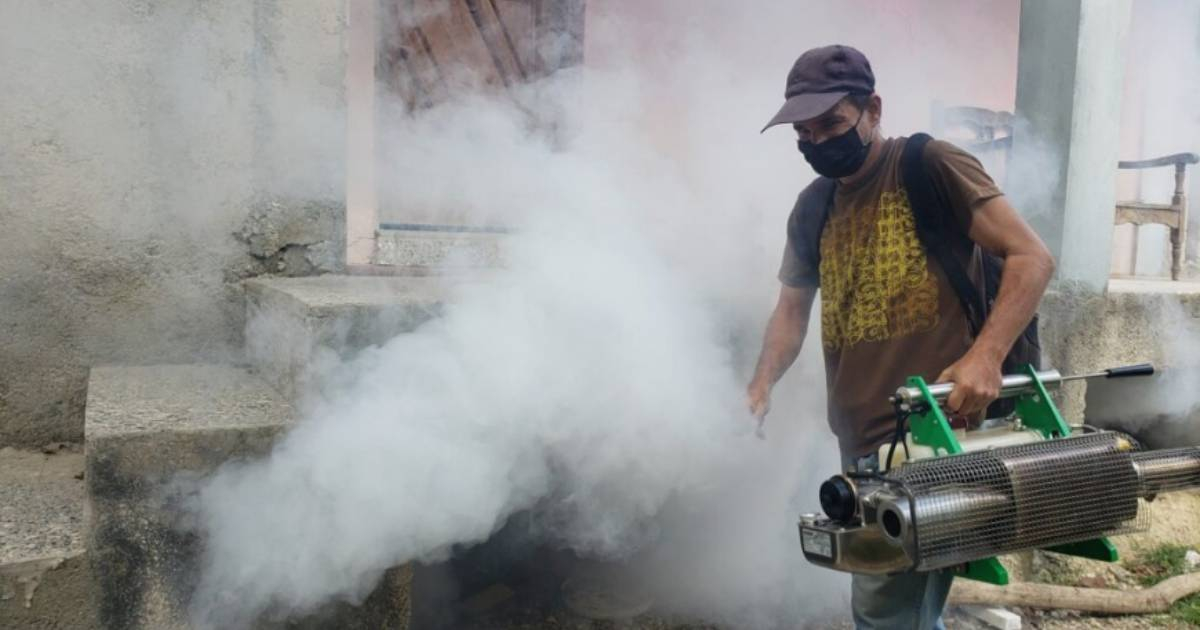
Dengue continues to spread in Cuba and 15,859 cases have been reported so far in 2026, a figure that exceeds ten times the usual levels for this time of year, amid a context of power outages, water shortages, and a lack of fuel that complicate both mosquito control and healthcare access.
According to the Global Dengue Observatory, a project by researchers from the London School of Hygiene and Tropical Medicine, the country had an estimated 15,859 cases up to October, according to data updated on November 4th.
The new balance represents an increase of 4,624 cases compared to the previous estimate, which placed the total at 11,235 at the beginning of October. This figure exceeds the 4,102 infections recorded for September and the 3,214 in August.
The evolution reflects a sustained increase during the second half of the year, precisely when Cuba is experiencing the season with the highest presence of the Aedes aegypti mosquito, a transmitter of dengue.
However, the figures do not represent a count of individually confirmed diagnoses. The Observatory combines available epidemiological data with statistical models to estimate the number of cases during months when official reports are missing.
The last month for which the platform has reported data from Cuba is June 2026.
Since then, international estimates have allowed for tracking the likely evolution of the disease, while the Ministry of Public Health (MINSAP) has not released a comparable national update that accurately reflects the infections, hospitalizations, and deaths in the subsequent months.
The situation was already concerning at the beginning of October, when international estimates exceeded 11,000 cases and were 9.2 times higher than expected levels. A month later, the estimated total is approaching 16,000.
The rise of dengue coincides with serious challenges in sustaining mosquito control campaigns. In Santiago de Cuba, health authorities themselves acknowledged that the fumigation efforts depend on the fuel available in the municipalities.
Dr. Yaimara Gutiérrez de la Cruz, director of the Provincial Center for Hygiene, Epidemiology, and Microbiology, explained at the end of September that it was necessary to increase the treatment against adult mosquitoes due to the high infestation rates. However, she specified that these actions would be carried out "depending on the availability of fuel in the municipalities."
The specialist then identified the transmission of mosquito-borne diseases in Santiago de Cuba, Palma Soriano, and Contramaestre.
The lack of fuel for carrying out the fumigations had already been acknowledged by provincial authorities months earlier.
In Las Tunas, restrictions have also been documented in the treatment against mosquitoes due to fuel shortages. In October, provincial health authorities indicated that spraying had only started in certain municipalities, while other areas were experiencing an increase in patients with fever.
The difficulties are not limited to the fumigation brigades. Prolonged power outages affect the pumping and distribution of water, forcing numerous families to store it in containers within their homes. When these containers remain uncovered or do not receive proper treatment, they can become breeding grounds for mosquitoes.
The Pan American Health Organization (PAHO) warned in an analysis published in March that Cuba's energy restrictions are impacting water supply, medical services, emergency transportation, and emergency response capabilities.
The agency also stated that interruptions in vector surveillance and control efforts increase the risk of outbreaks of mosquito-borne diseases.
The health crisis is exacerbated by the difficulties in obtaining medications, laboratory reagents, and other supplies necessary for diagnosing and treating patients.
The lack of resources complicates the clinical monitoring of those who develop severe symptoms, especially when there are also transportation issues in getting to hospitals and polyclinics.
The PAHO documented that during 2025 there were 30,692 suspected cases of dengue reported in Cuba, of which 441 were confirmed through laboratory tests, as well as 19 fatalities associated with the disease.
Dengue can cause high fever, muscle pain, headache, nausea, and intense discomfort. In some patients, severe complications may arise, particularly as the fever begins to subside.
For Cuban families, prevention also relies on basic resources that are scarce in many homes: mosquito nets, repellents, well-sealed water containers, and materials for eliminating breeding grounds.
Relatives living abroad can contribute by sending personal protective equipment and household supplies, while those planning to travel to the island should take extra precautions against insect bites.
The vector control crisis has recent precedents. During the dengue and chikungunya epidemic at the end of 2025, Cuban authorities acknowledged difficulties in maintaining mass fumigation due to shortages of fuel, chemicals, and malfunctioning equipment, issues that continue to impact healthcare response capabilities.
Related videos:
Filed under: