The Minister of Tourism, Juan Carlos García Granda, publicly acknowledged that the Cuban tourism sector has lost around 20,000 active jobs in less than a year: the workforce decreased from approximately 103,000 employees at the end of 2025 to just 83,000 in November 2026, according to Infobae, based on statements from the official during the state program Mesa Redonda.
The nearly 22,000 workers who stopped operating in hotels, agencies, and tourist establishments were not formally laid off; the regime reclassified them as "interrupted"—a provision in Cuban labor law that prevents dismissal when an activity is halted—placing them in hospitals, industries, and other state entities.
The problem is that keeping the contract does not equate to maintaining the income.
Tourism was one of the few coveted state jobs in Cuba, precisely because of the tips in foreign currency, service-related payments, and other informal income that set it apart from the ordinary state salary. A waiter or receptionist reassigned to a hospital or factory retains their employment connection but loses all of that.
The Decree 149/2026 establishes that, once relocation alternatives have been exhausted, a guarantee equivalent to 60% of the daily basic salary may be paid starting from the second month, which is a minimal fraction of what they were earning before.
Economist Ricardo Torres had anticipated it back in June, in statements to EFE. In his opinion, between 20,000 and 30,000 workers could be affected by the collapse of activity; with the added concern that retaining an employment contract did not prevent the loss of real income.
The decline in employment reflects the collapse of demand. Cuba welcomed only 477,707 international tourists between January and September, a drop of 65.1% compared to the same period in 2025, according to data from the National Office of Statistics and Information. By the end of October, the country had accumulated 506,074 visitors against an annual target of 1,757,480, representing a fulfillment of just 28.8% of the plan.
The minister himself admitted that the deterioration is not just temporary: the reduction in employment is not only due to difficulties in recent months but also to a gradual decline in tourism marketing since the health emergency, he stated in Mesa Redonda.
Before the pandemic, the sector employed between 140,000 and 150,000 workers. Formal tourism employment has fallen by more than 40% since then, and recovery has never materialized.
The collapse accelerated in 2026 with the mass exit of foreign hotel chains. Following U.S. sanctions against GAESA — the military conglomerate that controls Cuban tourism through Gaviota — Meliá Hotels International completed its withdrawal from the island in July after 36 years and 34 managed hotels. Iberostar ceased operations at 12 of its 18 properties linked to Gaviota since June. Altogether, the departures affected more than 30,000 rooms.
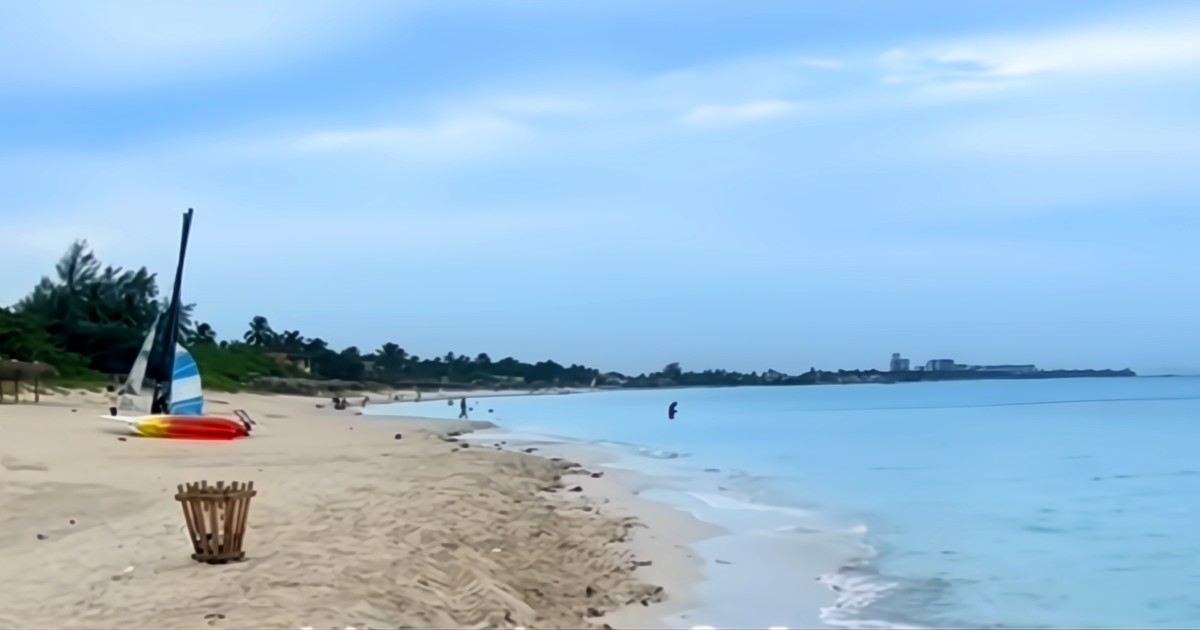
Prime Minister Manuel Marrero Cruz acknowledged before the National Assembly in July that 73% of hotel facilities remained closed and that about 25,000 workers were in a state of "availability." The Italian press described Varadero this month as a ghost town, with 80% of hotels closed and deserted beaches.
The paradox that the regime does not explain is that, while hotels are closing and workers are being sent to hospitals, the construction and renovation of hotel facilities have continued in recent years. The Selection La Habana hotel, linked to Gaviota, inaugurated in February 2025 after an announced investment of 200 million dollars, is the most recent example of a gamble that starkly contrasts with the minimal occupancy and the exodus of international managers.
In June, the Parliament approved a package of 176 economic reforms that includes more than a dozen measures for tourism—private management of hotels, independent travel agencies, franchises of brands like Tropicana and El Floridita—but its real impact depends, among other things, on the availability of fuel and air connectivity, both of which are at historic lows.
Related videos:
Filed under: