Meliá Hotels International closed the first nine months of 2026 with a consolidated net profit of 93.5 million euros, a 47.4% decrease compared to the same period last year, according to the results submitted to the National Securities Market Commission on Tuesday.
The impact is even more pronounced in the net profit attributed to shareholders: 67.1 million euros, compared to 150.9 million in the same period of 2025, representing a decline of 55.5%.
The determining factor was the cessation of operations in Cuba, whose financial impact the company quantified at 79.8 million euros under the heading of "discontinued activities."
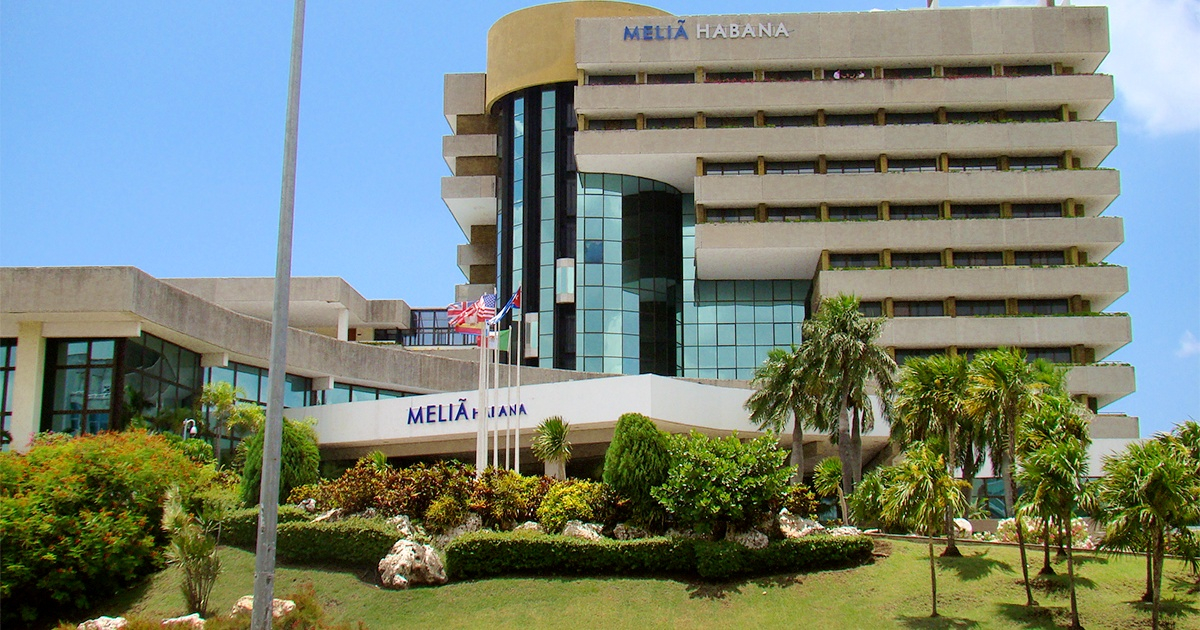
The 34 hotels and 14,053 rooms that the Mallorca-based chain managed on the island are listed in its accounts as a discontinued operation, after completing its exit on July 24, marking the end of 36 years of continuous presence since May 1990.
The departure was a direct consequence of U.S. sanctions. Trump signed Executive Order 14404 on May 1, under whose authority GAESA was sanctioned on May 7. Washington established a transition period until June 5 for foreign companies to sever ties with the Cuban military conglomerate.
In July, the Trump administration expanded sanctions against the Cuban Ministry of Tourism and nine other state entities, eliminating any legal avenue to continue.
The president and CEO of Meliá, Gabriel Escarrer Jaume, summarized the situation in July with a phrase that highlighted the pressure being faced: “The truth is that we do not know what will happen. We are following the instructions of the U.S. State Department.”
Despite the impact in Cuba, the operating business of the chain showed resilience. Consolidated revenues, excluding capital gains, grew by 7.3% to 1.707 billion euros, while EBITDA, also excluding capital gains, increased by 3.2% to 443 million.
The company itself acknowledged in its statement that "the underlying business continues to show solid growth, led by Spain and supported by strong rates, customer mix, and demand."
The revenue per available room (RevPAR) recorded a notable increase of 16.5% for the year-to-date through September; however, this figure is distorted by the departure from Cuba. Excluding that effect, the actual increase was 7.6% in constant currency, driven by markets such as the Balearic Islands and Menorca.
The financial markets had already welcomed the decision to leave the island. Deutsche Bank continues to regard Meliá as its only buy recommendation among European hotel companies, with a target price of 13 euros per share. Banco Sabadell, for its part, had described the Cuban presence as “a source of uncertainty that has been penalizing the group for years”.
The departure of Meliá was not an isolated case. Iberostar, Barceló, and Blue Diamond Resorts also left the island during the same period, leaving more than 30,000 out of the 86,559 available rooms in Cuba without international management, which is 35% of the total. The combined losses for the Spanish companies were estimated to be between 80 and 100 million euros.
The cost for the Cuban regime is devastating. According to data from the National Office of Statistics and Information (ONEI), Cuba received only 477,707 international visitors between January and September 2026, a collapse of 65.1% compared to the same period the previous year.
The Prime Minister Manuel Marrero Cruz acknowledged in July that 73% of hotel facilities were closed and around 25,000 workers were in a state of availability, an official euphemism referring to hidden unemployment.
The 34 hotels that Meliá stopped managing are now in the hands of Cuban state companies such as Cubanacán, Gran Caribe, and Gaviota, the latter belonging to GAESA, but without the international marketing that the Spanish chains provided for more than three decades.
Related videos:
Filed under: