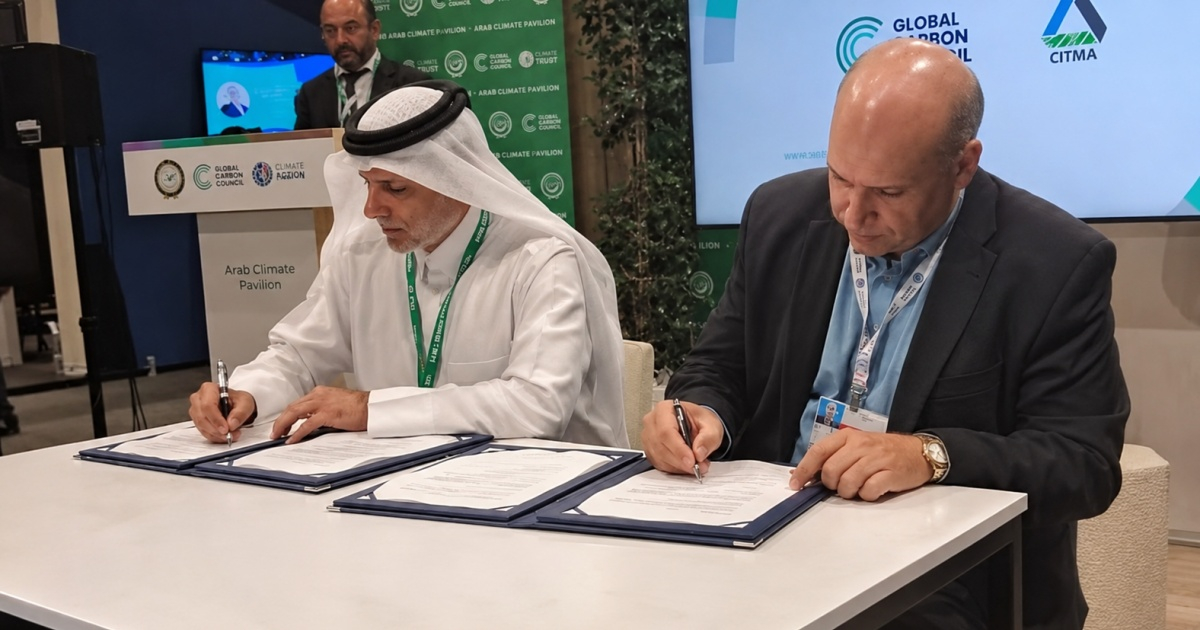
The Ministry of Science, Technology and Environment (CITMA) of Cuba signed a Memorandum of Understanding with the Global Carbon Council (GCC), an international carbon credit certification organization based in Qatar, during the side events of COP31 in Antalya, Turkey, as reported by Juventud Técnica.
The agreement paves the way for Cuba to develop environmental projects capable of generating tradable credits in international markets, with the potential to attract foreign currency.
However, the signing of the memorandum does not imply immediate income nor guarantees that the projects will secure funding.
During the signing, the First Deputy Minister of CITMA, Rudy Montero, expressed gratitude for the support from the GCC and conveyed the Cuban government's confidence in the opportunities this mechanism provides.
The international organization expressed its interest in continuing exchanges to advance the implementation of the agreement.
The Cuban state controls carbon credit operations
The initiative comes after the Cuban government established a regulatory framework that concentrates the supervision of activities related to the carbon market in state authorities.
The Resolution 106/2025 of CITMA, published in September 2025, regulates these operations and designates the ministry as the National Designated Authority to oversee and control the system.
Article 4 of the regulation establishes that the Cuban State exercises its sovereignty and property rights over natural resources, including captured or retained carbon.
The regulation covers both voluntary and regulated markets and applies to individuals and legal entities, whether Cuban or foreign, public or private.
The participation of private companies and foreign investors is subject to the framework of authorizations and supervision established by the Cuban authorities.
The regulations regarding the use and transfer of credits include administrative controls over these operations. CITMA also manages the corresponding register and requires project holders to provide periodic information about their activities and transactions.
In this way, private participants must comply with the applicable state procedures to develop projects and market the corresponding credits. However, the regulation of these operations does not necessarily mean that the state receives all the income generated by each project.
The projects must also align with the economic and social priorities established by the Government, the National Economic and Social Development Plan until 2030, and the official climate change adaptation programs.
How can Cuba obtain foreign currency through carbon credits?
A carbon credit generally represents one metric ton of carbon dioxide equivalent whose emission has been avoided or reduced, or that has been removed from the atmosphere through a certified project.
These credits can be traded among companies, organizations, or governments interested in offsetting emissions or fulfilling specific environmental commitments, in accordance with the rules of the relevant market.
The Global Carbon Council, established in 2016, develops certification programs for initiatives related to renewable energy, energy efficiency, methane capture, industrial emissions reduction, and other environmental activities.
In the case of Cuba, projects for generating renewable energy, restoring ecosystems, utilizing waste, or improving energy efficiency could be promoted, provided they meet the technical requirements of the certification program.
To generate marketable credits, promoters must demonstrate reductions or removals of emissions according to recognized methodologies, establish measurement and monitoring mechanisms, and subject the results to the required validation and verification processes.
Additionality, which aims to demonstrate that the climate benefits of the project exceed those that would have occurred in its absence, is one of the fundamental criteria of many certification programs.
Only after completing the corresponding procedures will credits eligible for commercialization be issued.
The memorandum signed during COP31 does not identify quantities of credits that Cuba can sell nor does it establish expected revenue. It also does not imply that there are buyers committed to future Cuban projects.
The acquisition of resources will depend on the ability to develop viable initiatives, finance their execution, validate environmental results, and find buyers.
The agreement arrives as Cuba reorganizes the ministry responsible for the environment
The signing of the memorandum occurs during a reorganization of the Central Administration of the Cuban State, which includes the dissolution of the current Ministry of Science, Technology, and the Environment (CITMA) and the redistribution of its responsibilities among new ministerial structures.
The Law 186 on the Organization of the Central State Administration, published in the Official Gazette on November 2, 2026, and effective from the 9th, establishes the creation of the Ministry of Environment, Habitat, and Hydraulic Resources, which will take over the direction and control of environmental and climate policy, as well as the sustainable management of natural resources.
The legislation also establishes the Ministry of Higher Education, Science, and Innovation, which will concentrate the responsibilities related to science, technology, and innovation.
The transitional provisions allow up to one year to implement organizational changes and transfer human, material, and financial resources to the entities that will take on the corresponding functions.
The law also establishes that the new entities will be considered legal successors to those whose competencies they absorb, including in their international relations and commitments.
Therefore, although CITMA signed the memorandum with the Global Carbon Council, the future management of environmental responsibilities related to the carbon market will need to adapt to the new ministerial structure.
The law does not explicitly specify which administrative unit will assume the authorizations and the registration of credits established in Resolution 106/2025.
Related videos:
Filed under: