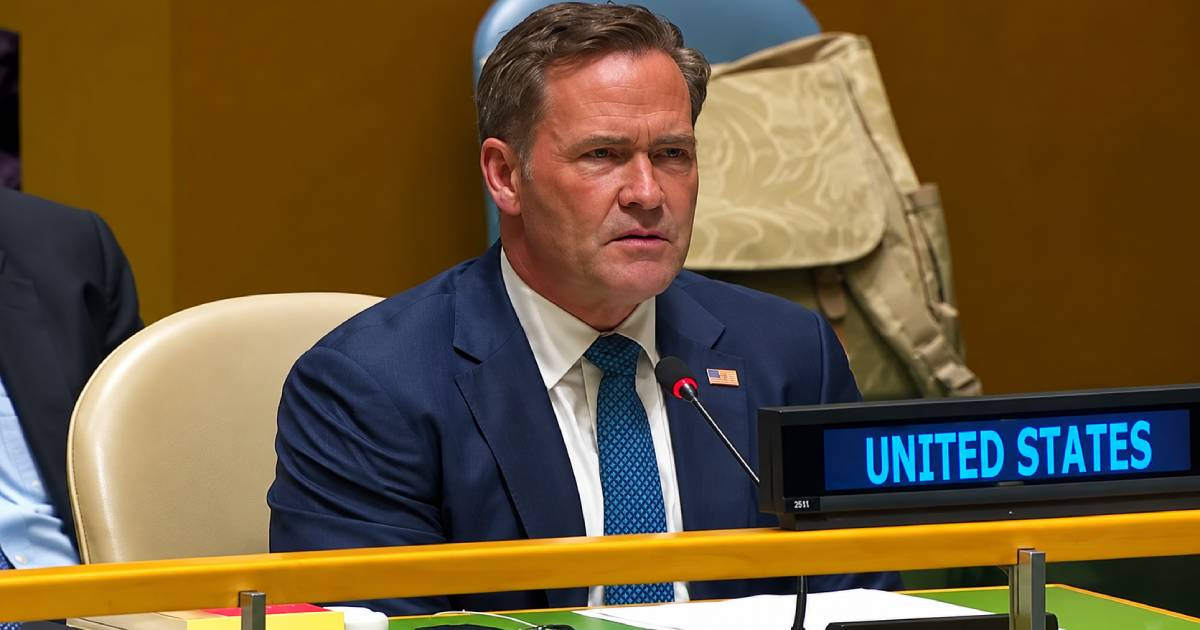
The United States ambassador to the United Nations, Mike Waltz, asserted that the Cuban people will achieve freedom and expressed his hope that this moment will come during the presidency of Donald Trump and the tenure of Marco Rubio as Secretary of State.
"The Cuban people will be free. And I pray that they finally taste freedom under the presidency of Trump and the mandate of Secretary Rubio," Waltz wrote in an opinion column published on November 16 in Fox News.
The American diplomat urged to maintain international pressure against the Cuban regime, which he accused of corruption, repression, and of consistently blaming Washington for the difficulties faced by the island's population.
"Cuba's rulers can shout at diplomats, but they cannot silence the cry for freedom," asserted Waltz, referring to the confrontation he had with representatives of the Cuban government during a recent session of the UN General Assembly.
The ambassador recalled that Cuban officials pounded their desks, shouted, and tried to intimidate him when he questioned the economic privileges of the ruling elite in light of the shortages of food, medicine, and electricity that millions of citizens are enduring.
Waltz also highlighted the results of the voting that took place on October 28 regarding the annual UN resolution against the U.S. embargo. The document was approved with 130 votes in favor, while another 63 countries did not support it: 17 voted against, 25 abstained, and 21 did not participate.
The U.S. representative interpreted that outcome as a sign of growing international scrutiny toward Havana and urged to continue denouncing human rights violations and the situation of political prisoners on the island.
In his article, he specifically mentioned José Daniel Ferrer and Luis Manuel Otero Alcántara, two well-known Cuban dissidents whom he met at the United Nations following their respective releases from prison.
He also questioned the financial resources of the military conglomerate GAESA and argued that the international community should listen to those who have suffered imprisonment and political persecution in Cuba, rather than uncritically accepting the arguments of the Havana government.
The ambassador concluded his statement by urging other countries to seek explanations regarding the economic resources controlled by the regime, corruption, and the political prisoners who remain incarcerated.
Trump declared on November 12 that he would "consider a" brief military campaign against Cuba and that he wanted to resolve "the Cuban issue" before the end of his term.
The State Department spokesperson, Tommy Pigott, supported those statements this weekend by characterizing the island as a direct threat to U.S. national security.
Related videos:
Filed under: