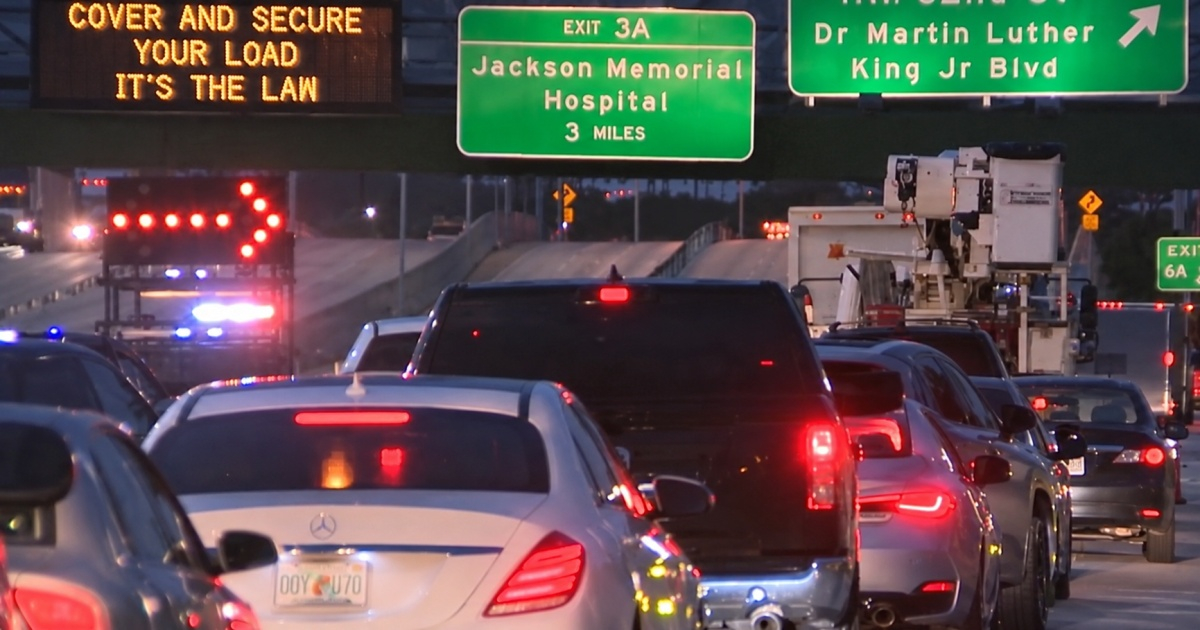
Approximately 4.62 million Florida residents will travel at least 80 kilometers (50 miles) from their homes during the Thanksgiving period of 2026, according to the forecast from AAA – The Auto Club Group.
The figure represents a slight decrease of 0.2% compared to the previous year, although the number of travelers remains close to historical highs.
The busiest period will run from Tuesday, November 24, to Monday, November 30, with Thanksgiving Day on Thursday, November 26.
On a national scale, AAA forecasts 81.5 million travelers, which is 0.1% less than in 2025. This decrease marks the end of a three-year streak of consecutive records that began in 2023.
Mark Jenkins, spokesperson for AAA – The Auto Club Group, warned that Floridians should not expect less crowded roads or airports.
Although the number of trips is stabilizing, millions of people will travel during a concentrated period, so it is advisable to plan ahead and allow for extra time.
Florida leads the most popular destinations
Florida tops the ranking of national destinations for Thanksgiving based on reservations made through AAA Travel.
Four cities from the state are among the top ten, including the three that top the list: Orlando, Fort Lauderdale, and Miami, in that order. Tampa ranks sixth.
According to AAA, theme parks, cruises, and warm weather are some of the main attractions driving visits to Florida during this time.
In the ranking of international destinations based on the same reservations, Budapest takes the top spot, followed by Cancun and Paris.
Barcelona ranks fourth and Puerto Vallarta fifth.
More than nine out of ten Florida travelers will be traveling by car
Of the 4.62 million residents of Florida who will travel during the holidays, approximately 4.24 million will do so by car, accounting for about 92% of the total.
The figure represents a reduction of 0.2% compared to 2025.
Another 290,000 Floridians will travel by plane, a decrease of 1.1% compared to last year, while around 92,000 will use cruises, buses, trains, and other means of transportation.
This last category is the only one that reports growth in the state, with an increase of 2.8%.
The trend is similar across the United States. AAA estimates that 72.9 million people will travel by road, compared to 73.1 million in 2025.
Domestic flight travel will reach 5.96 million, while approximately 2.6 million Americans will use other means of transportation, a category that will grow by 4.1%.
Gasoline, flights, and hotels are more expensive
The rising costs of travel are one of the factors that, according to AAA, contribute to the slight decrease expected. Consumers are facing higher expenses for transportation and accommodation, in addition to pressures on their household budgets.
In Florida, the average price of regular gasoline was $3.62 per gallon on November 15, compared to the $2.93 recorded about a year earlier.
Although fuel prices have started to decline, they remain considerably higher than those of 2025.
At the national level, gasoline prices reached historic highs for their respective months in August, September, and October 2026. AAA indicated that the national average was around $3.82 per gallon in mid-November.
Air travel also turns out to be more expensive.
According to reservations analyzed by AAA, round-trip tickets for domestic flights have an average price of $800, a 17% increase compared to Thanksgiving 2025.
Domestic hotel reservations average $615 per stay, an increase of 5%. AAA clarifies that this figure reflects the total cost of the booking, which typically includes multiple nights, rather than the price of a room per night.
The best and worst times to travel by road
The company specialized in traffic analysis INRIX predicts that Tuesday, November 24, and Wednesday, November 25, will be the most challenging days for travelers. Sunday, November 29, and Monday, November 30, will see a significant amount of return traffic.
On Tuesday the 24th, the heaviest traffic is expected between 2:00 p.m. and 8:00 p.m., while on Wednesday the 25th, the worst hours will be from noon until 7:00 p.m.
INRIX recommends leaving before 1:00 p.m. on Tuesday and before noon on Wednesday.
Thursday, the 26th, Thanksgiving Day, is expected to be the day with the lowest traffic.
On Friday the 27th, heavier traffic is expected between 1:00 p.m. and 7:00 p.m., and on Saturday the 28th, between noon and 9:00 p.m.
For the return trip, complications are expected on Sunday the 29th between noon and 8:00 p.m., while on Monday the 30th, the busiest period will be from 2:00 p.m. to 7:00 p.m.
Drivers returning on Sunday should consider leaving before 11:00 a.m., and those traveling on Monday should depart before 1:00 p.m. The times correspond to the local hour of each metropolitan area.
INRIX warns that major metropolitan areas such as New York, Washington D.C., Los Angeles, and Boston could experience more than double the usual congestion on certain routes.
Regarding vehicle rentals, Hertz anticipates that Tuesday, the 24th, and Wednesday, the 25th, will be the busiest days for picking up cars. Orlando is among the U.S. cities with the highest number of advance bookings, along with Phoenix, Las Vegas, Atlanta, and Denver.
Delays and unexpected expenses worry travelers from Florida
A survey by AAA conducted among 400 residents of Florida from August 5 to 13, 2026, revealed that 62% had experienced at least one travel-related issue in the previous two years.
In addition, 13% of respondents reported having incurred unexpected expenses for accommodation, transportation, or other services as a result of disruptions during their travels.
The main concerns identified were the increase in travel costs and flight delays or cancellations, mentioned by 36% of participants in each case. Adverse weather conditions ranked next, with 34%.
AAA recommends comparing total costs before booking, including luggage fees, parking, and ground transportation.
It also advises considering alternative airports, reviewing travel insurance terms, and maintaining some flexibility in itineraries.
For those who drive, the organization insists on checking tires, batteries, and fluid levels before heading out.
During the Thanksgiving period of 2025, AAA handled over half a million roadside assistance requests related to flat tires, dead batteries, locked vehicles, and towing services.
Related videos:
Filed under: