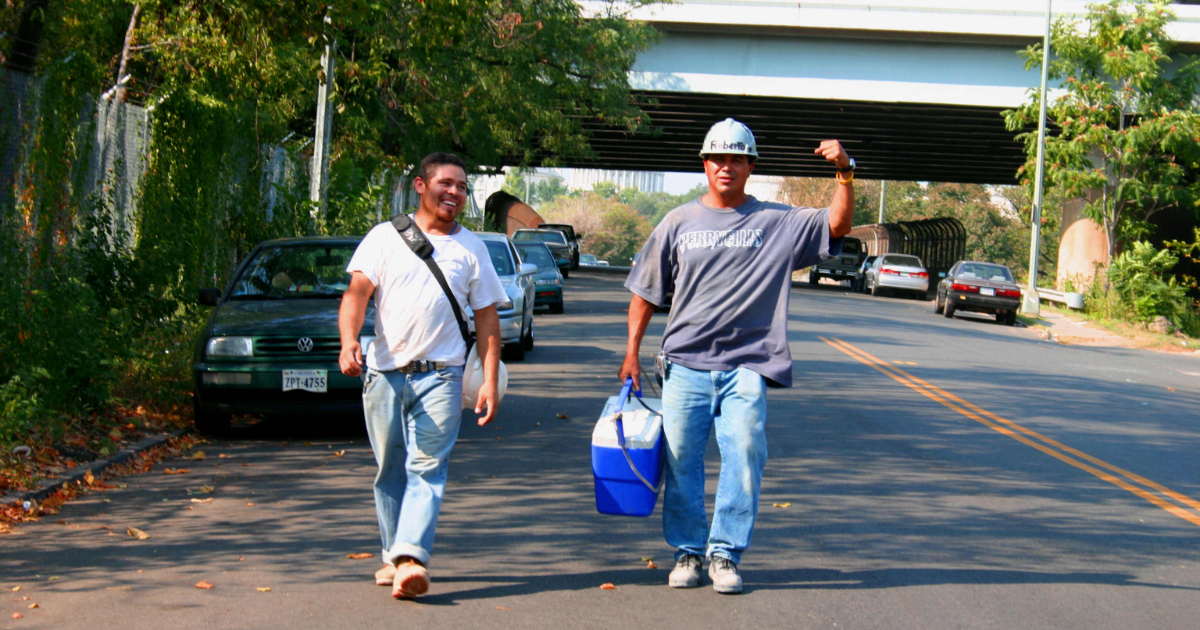
The migratory offensive of the Donald Trump administration is leaving construction sites without workers in northeast Florida and threatens to cause a new increase in housing prices.
Business leaders in the sector warn that detentions by Immigration and Customs Enforcement (ICE) and the fear of new raids are causing workers to leave, including some who are legally authorized to work in the United States.
Scott Brannock, president of the Northeast Florida Builders Association, explained in statements published by News4JAX (WJXT) that since late May and early June numerous crews of workers have disappeared who were engaged in concrete work, structural carpentry, drywall installation, painting, and landscaping.
According to the businessman, some workers have been detained by immigration authorities, while others voluntarily left the region out of fear of being arrested during their work shift.
"Fewer houses will be built because there aren't enough people to build them,” warned Brannock, who stated that the issue will directly impact buyers.
"The prices of homes are going to rise because it's as simple as supply and demand," he added.
The business leader explained that the concern is not limited to undocumented immigrants. There are also workers with legal permits who have decided to leave their jobs or move to other states where they believe they face less risk of being detained.
Among the destinations, he mentioned the Carolinas and western states of the country, to which experienced workers who previously worked on residential and commercial projects in Jacksonville and its surroundings would be relocating.
Brannock clarified that his association does not advocate for irregular immigration, but questioned the consequences that migration operations are having on businesses that require labor to keep their projects active.
The situation was also documented by Jacksonville Daily Record, in a report that includes testimonies from several builders affected by the loss of staff.
One of the businesspeople explained that an employee from a contracting company had been detained by ICE on four occasions despite being legally in the United States.
Other business representatives stated that employees with valid immigration documents have stopped attending work sites out of fear of new interventions.
Companies are also facing higher expenses because they must pay more to hire available workers and take on the interest from loans used to finance projects that remain stalled.
In an interview with Action News Jax, Brannock estimated that some areas of the sector had lost between 60% and 70% of their workforce.
The association noted that the labor required to construct the wooden structure of a home, which previously cost around $10,000, can now exceed $22,000 and reach up to $26,000.
A raid on the construction of a school
The statements come after a migration operation that took place on November 5 at the site of the future Palatka Primary School in Putnam County, Florida.
ICE agents conducted an operation at the location and detained several workers, as shown in videos released during the operation. The Putnam County Sheriff's Office confirmed that its agents collaborated with federal authorities.
Personnel from the Palatka Police Department and the Florida Fish and Wildlife Conservation Commission (FWC) also participated, assisting in locating individuals who fled during the deployment.
According to reports published following the operation, images showed at least 13 people handcuffed, although authorities did not provide complete information regarding the identity, nationality, or immigration status of all those detained.
The proximity of the site to an operational school necessitated a partial preventive closure for several hours. The school superintendent, Rick Surrency, stated that construction work was halted for three to four hours.
For the workers in the area, episodes like this have increased the uncertainty about the possibility of going to work daily without encountering a migration operation.
Josue Chavez, an employee dedicated to irrigation systems on a job site in northern Jacksonville, explained to News4JAX that the labor shortage impacts nearly all trades related to construction.
"Every single trade" has fewer workers, Chavez pointed out.
The worker reported that he has seen employees scatter in the presence of authorities and that some days there simply isn't enough staff on the worksites.
The impact on Cubans working in construction
Construction is one of the labor activities in which Cuban immigrants work in Florida, especially in tasks such as remodeling, carpentry, painting, roof installation, and property maintenance.
For those with an unresolved immigration status, ICE operations can represent an additional concern.
Among them are Cubans with I-220A forms, expired temporary stay permits, or migration protection requests still in process.
However, having an I-220A, having applied for asylum, or having a pending residency petition does not automatically grant employment authorization nor does it solely determine whether a person can be detained or deported. Each case depends on their immigration history and the documents they have in order.
The fear of raids had already been reflected in another incident that occurred in October. Four Hispanic workers stayed on the roof of a establishment in Pensacola Beach for over two hours while ICE agents waited below, demanding that they come down.
Workers were conducting repairs on a building affected by a hurricane. The incident, recorded on video, raised concerns in the local Hispanic community and highlighted how the presence of immigration agents can disrupt even recovery and maintenance efforts of properties.
Immigrant advocacy organizations remind us that individuals retain constitutional rights during immigration interventions, regardless of their nationality.
The American Civil Liberties Union (ACLU) recommends staying calm, not fleeing or obstructing agents, avoiding the presentation of false documents, exercising the right to remain silent, and seeking legal advice before signing any documents that may affect your immigration status.
The organization also explains that there are differences between the public and private areas of a workplace, and that the authority to enter or conduct searches may depend on the type of order the agents have and the circumstances of each intervention.
Fewer workers, more expensive housing
The departure of workers can have consequences that extend beyond the construction companies themselves. When a company takes longer to complete a housing project, financing costs increase, delivery schedules are delayed, and the number of new properties available for buyers and renters decreases.
Brannock believes that these costs will ultimately be passed on to the selling price of homes. He also warns that contractors are charging higher fees to compensate for the risk of losing personnel or experiencing disruptions during the execution of projects.
These warnings come at a time when Florida is already facing housing accessibility challenges related to mortgage interest rates, insurance, and maintenance costs.
The conditions, however, are not the same across all market segments. For instance, a recent report from Redfin revealed that in the metropolitan area of Miami, there were nearly four condominium sellers for every buyer, a situation that contrasts with the shortage of workers that new home builders in Jacksonville are reporting.
While builders warn of rising costs and a potential decrease in future supply, some buyers in the condominium market have more properties to choose from. Therefore, Brannock's statements do not imply that all home prices in Florida are increasing.
Trump admitted that the deportations were too harsh
The warnings from the construction sector coincide with an acknowledgment from the U.S. president himself regarding the consequences of his immigration policy.
On November 8, during an interview with the 60 Minutes program of CBS News, Trump admitted that the deportations of immigrants who had been working in the United States for years may have been "too harsh" and that these measures politically harmed Republicans in the midterm elections.
The president specifically mentioned workers from sectors such as hospitality, cleaning, and landscaping, some of whom have no criminal records and possess a long work history in the country.
Trump expressed his willingness to explore a solution for certain immigrants established in the United States, but he did not announce a suspension of ICE operations or a pathway to legal status.
Related videos:
Filed under: