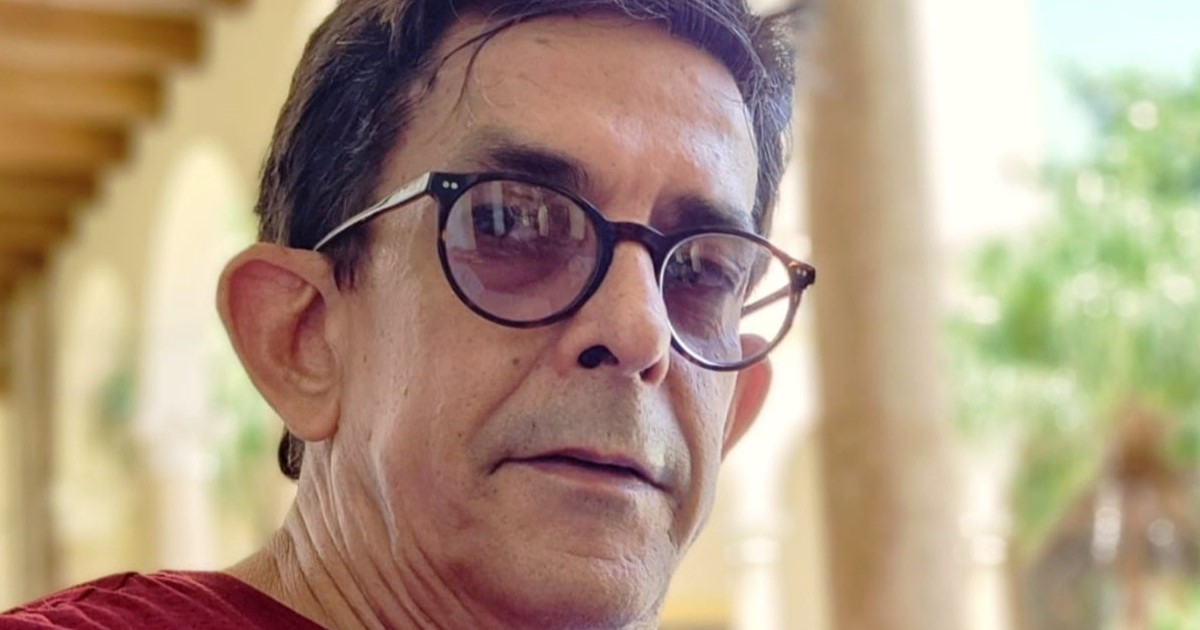
On the occasion of the 507th anniversary of Havana, the Cuban humorist Ulises Toirac shared a text that blends irony, history, and criticism regarding the current state of the Cuban capital, concluding with an uplifting reflection on the resilience of the city.
In the post on Facebook, Toirac started with his characteristic tone: "Today marks the 507th anniversary of Havana. No, I'm not going to be a buzzkill. Well, yes, but in the end."
After a clever historical review—ranging from the founding of the town in 1519, through the English takeover in 1762, to the construction of the republican Capitol "a meter taller than that of Washington, because we've always been that ambitious"—the actor arrived at the core of his message.
"Since '59, there's little that can be mentioned without shedding a few tears. And in recent years, the neglect and trash seem to want to swallow it whole," he wrote, describing the deterioration the city is experiencing under the current government.
Toirac was explicit in stating that his sadness is not for the city itself, but for those who inhabit it: "For us, who live in its deterioration and unhealthiness."
And he closed his text with a poetic image in which Havana speaks in the first person: "I stand tall... And I have flourished like after every pillaging by corsairs and pirates, like after the English nearly destroyed me. I am like this... I was born to become more beautiful by rising from the ruins left by barbarities."
Havana celebrated its 507th anniversary on Monday, November 16, transformed into a city where buildings crumble, trash fills the streets and sidewalks, and hundreds of thousands of people struggle to obtain water, food, and medicine.
The Cuban capital, which for centuries was one of the major urban and cultural centers of the Caribbean, reached its anniversary with a significant portion of its deteriorated architectural heritage, many buildings lost or threatened by neglect, and a
According to estimates from Cuban officials, around 1,000 building collapses occur each year in Havana.
But the crisis in Havana is not limited to its buildings. It also manifests in the impoverishment of its residents, emigration, the deterioration of public services, and protests.
This is not the first time Ulises Toirac has denounced this reality. Last July, he published a video in which he described the accumulation of waste in every neighborhood of Havana as an "infection" that spreads throughout the capital.
Related videos:
Filed under: